

The Iran Escalation Playbook: What History Suggests Traders Should Watch Right Now
Not a market overview. Not speculation.
This is a cross-asset trading roadmap built on how markets have historically responded to major Iran-linked geopolitical escalations — from the June 2019 Gulf tanker attacks, to the January 2020 Soleimani strike, to the March 2026 Israel/U.S.–Iran war.
Across all three, the pattern is surprisingly consistent: markets shock first, verify second, and normalize later. If you can identify which phase the market is in, you can trade with more structure and less emotion. The key is not reacting to every alert. It is knowing which signals confirm whether the fear trade is still valid or already unwinding.
If You Only Have 2 Minutes: The Priority Map
Not all five assets matter equally at the same time. Historically, they tend to matter in this order:
-
Oil — the lead signal: The first and most important market in an Iran escalation. If oil is moving on real supply disruption, everything else follows.
-
Gold US Dollar — the cleanest early hedge: Usually the clearest safe-haven reaction after oil, especially during the first panic phase.
-
Stocks Bitcoin — the later-stage momentum trade: Usually more interesting after the first panic wave, once markets begin repricing rather than reacting.
| Asset |
Phase Bias |
Signal to Watch |
What Breaks the Pattern |
| Oil |
Spike first, often fades later |
Strait of Hormuz tanker traffic |
Hormuz closure lasts longer than expected |
| Gold |
Strong early hedge, usually front-loaded |
Spot gold vs. US real yields |
Oil shock drives aggressive rate repricing |
| US Dollar |
Tactical safe-haven bid |
USD/JPY |
Fed or global liquidity intervention |
| Stocks |
Selloff first, selective rebound later |
VIX term structure |
Oil-driven inflation forces hawkish reset |
| Bitcoin |
Risk asset first, rebound asset later |
Exchange outflows, funding, open interest |
Deeper deleveraging and liquidity stress |
Major Gulf-region escalations rarely produce identical price action, but they often produce the same sequence:
Phase 1 — Shock (Days 1–3): Headlines dominate. Oil and gold usually jump first. The dollar firms. Stocks and Bitcoin often weaken as traders cut risk.
Phase 2 — Repricing (Days 4–14): Markets begin separating fear from verified disruption. This is where the best setups often appear, because the market starts asking what is actually damaged — not just what might be.
Phase 3 — Normalization (Days 15–45): If critical infrastructure remains intact and the conflict does not widen materially, the fear premium often fades. That is when oil retraces, gold cools, the dollar eases, and rebound trades in stocks and Bitcoin become more attractive.
Practical takeaway: first identify the phase, then choose the asset. Most trading mistakes happen when traders use a Phase 1 strategy in a Phase 2 market.
Cross-Asset Reaction Pattern — 2026 vs. 2019 vs. 2020
| Asset |
Event: March 2026 Israel/U.S.–Iran war Nature: Full war shock / Hormuz disruption fears Data as of March 11, 2026 |
Event: June 2019 Hormuz/Tanker Crisis Nature: Tanker attacks / drone downing / shipping-lane risk |
Event: January 2020 Soleimani Strike Nature: U.S. strike on Qassem Soleimani followed by Iranian missile retaliation |
| Oil |
Violent spike on direct supply disruption fears (Source) |
Risk premium rose on shipping-lane concerns (Source) |
Oil spiked sharply after the Soleimani strike, then gave back gains relatively quickly as escalation did not disrupt supply materially. (Source) |
| Gold |
Strong safe-haven rally (Source) |
Gold strengthened on geopolitical safe-haven demand (Source) |
Gold rallied on escalation fears, then eased as tensions stabilized (Source) |
| Bitcoin |
Falls initially / behaves like risk asset, then rebounds (Source) |
Rises sharply, but driven by both macro and crypto-specific momentum (Source) |
Bitcoin rose during the escalation, but its safe-haven status remained contested (Source) |
| US Dollar |
Strengthens as investors seek safety (Source) |
Dollar supported by safe-haven demand, though the move was modest (Source) |
Firms modestly (Source) |
| Stocks |
Broad selloff; energy/defense outperform. Currently rebound rally, especially in oversold sectors. (Source) |
Choppy / mild pullback (Source) |
Brief selloff, then fast recovery (Source) |
Practical takeaway: The pattern is not that every asset reacts the same way every time. It is that the sequence is consistent. Oil tends to produce the most exaggerated first move. Gold and the dollar tend to carry the clearest early haven bid. Stocks and Bitcoin often produce more interesting opportunities later, once panic starts giving way to verification.
March 2026 Israel-Iran War in Focus: Oil, Gold, Dollar, Stocks, Bitcoin Price Changes
| Time |
Event |
Oil |
Gold |
Bitcoin |
US Dollar |
Stocks |
| Before conflict |
Conflict not fully erupted |
Trading near baseline levels |
Stable / mildly firm around pre-crisis levels |
Range-bound / risk-on sentiment mixed |
Stable |
Stable to positive |
| Early stage |
The U.S. and Israel launched attacks on Iran, disrupting the Strait of Hormuz |
Jumps sharply as supply disruption fears emerge |
Rises sharply as safe-haven demand increases |
Drops initially on risk-off panic |
Strengthens as investors seek safety |
Fall globally, especially airlines, transport, and emerging markets |
| Escalation |
Iran retaliates, and supply disruption fears rise |
Continues climbing amid fears of prolonged supply disruption |
Continues upward, potentially hitting new short-term highs |
Highly volatile; may recover partly but remains pressured |
Further strengthens |
Further declines, energy stocks outperform broader market |
| Peak |
Severe volatility in oil prices, supply disruption, and geopolitical risks peaked |
Surges dramatically as the market prices in worst-case supply risks |
Surges strongly, often one of the best-performing assets in crisis |
Sharp volatility; often trades lower with temporary safe-haven narrative debated |
Very strong, driven by flight to liquidity |
Sharp selloff, with major indices under pressure; oil producers and defense stocks may rally |
| Current (March 11) |
Trump signals possible quick end to war, triggering market correction |
Pulls back sharply, though still well above pre-conflict levels |
Pulls back modestly, but remains elevated vs. pre-conflict |
Rebounds as risk appetite improves |
Eases slightly as panic fades |
Rebound rally, especially in oversold sectors |
Practical takeaway: This no longer looks like a pure panic market. It looks like a market testing whether the initial fear premium went too far. If disruption remains contained, normalization can continue. If Hormuz conditions worsen, the cycle can snap back into shock very quickly.
The Asset-by-Asset Trade Roadmap
1. Crude Oil: The Lead Signal
Oil is the most important market in Iran or Gulf-region escalations because it reflects the one risk that matters most: physical supply disruption. In both June 2019 and January 2020, oil spiked hard on fear — then cooled once it became clear supply was still moving.
Signal to watch
Strait of Hormuz tanker traffic. If vessels keep moving, the market may be overpricing fear. If traffic slows materially, the fear trade is being confirmed.
What breaks the pattern
A prolonged Hormuz disruption. If the strait stays shut longer than expected, oil stops being a headline trade and becomes a real supply-shock trade.
Practical takeaway: If tanker traffic remains broadly normal, consider that the oil spike may fade. If traffic starts halting or rerouting sharply, assume the oil movement can extend.
2. Gold: The Early Hedge
Gold is usually the cleanest Phase 1 hedge. It tends to react quickly to geopolitical fear, and unlike oil, it does not need actual supply disruption to move.
Signal to watch
Spot gold versus US real yields. If gold stays strong even as real yields rise, that suggests genuine safe-haven demand. If gold softens as real yields move up, the haven bid may be fading.
What breaks the pattern
An oil-driven inflation shock that forces aggressive rate repricing. Rising real rates can cap gold even during geopolitical stress.
Practical takeaway: If gold holds firm against rising real yields, the haven trade may still have room. If gold fades while yields rise, consider reducing exposure rather than chasing more upside.
3. The US Dollar: The Liquidity Signal
The dollar is less about geopolitics itself and more about liquidity. When fear is high, markets often rotate into dollars first and ask questions later.
Signal to watch
USD/JPY. When the dollar starts losing ground to the yen, it often signals that peak panic is passing and the safe-haven rotation is easing.
What breaks the pattern
Fed or coordinated central bank intervention. If policymakers inject liquidity aggressively, the dollar safe-haven bid can reverse fast.
Practical takeaway: If USD/JPY keeps rising, risk-off pressure may still be building. If USD/JPY reverses lower, the market may be moving out of panic mode.
4. Stocks: The Later-Stage Opportunity
Equities usually react badly in Phase 1, but historically, the better opportunity often comes later — after panic has peaked and the market begins reassessing the actual damage.
Signal to watch
The VIX term structure. When spot VIX moves back below the 3-month VIX contract, it suggests the acute fear phase is fading and market conditions are becoming more stable.
What breaks the pattern
An oil-shock inflation wave that forces a hawkish reset. If high oil feeds inflation and pushes the Fed away from easing, the dip can become a deeper macro selloff.
Practical takeaway: If the VIX structure normalizes and oil stops accelerating, broad equities may become more attractive. If oil stays elevated and inflation risk worsens, stay defensive longer.
5. Bitcoin: The Rebound Trade
Bitcoin is usually not the cleanest Phase 1 expression of geopolitical risk. It tends to trade like a high-beta risk asset during the initial panic, then becomes more interesting later if liquidity stress eases.
Signal to watch
Exchange outflows, funding, and open interest. If coins are leaving exchanges while leverage resets, that can signal healthier positioning for a rebound.
What breaks the pattern
A broader liquidity crunch. If forced selling intensifies across markets, Bitcoin can keep falling even if on-chain signals improve.
Practical takeaway
If exchange outflows rise while leverage cools, Bitcoin may be set up for a rebound. If funding stress and liquidation pressure worsen, avoid treating BTC as a safe haven.
Trading the Rotation Across Markets: Why Execution Setup Matters
Iran-linked shocks rarely stay confined to one asset class. Oil moves first. Gold and the dollar absorb early defensive flows. Stocks sell off, then stabilize. Bitcoin often lags early and rebounds later.
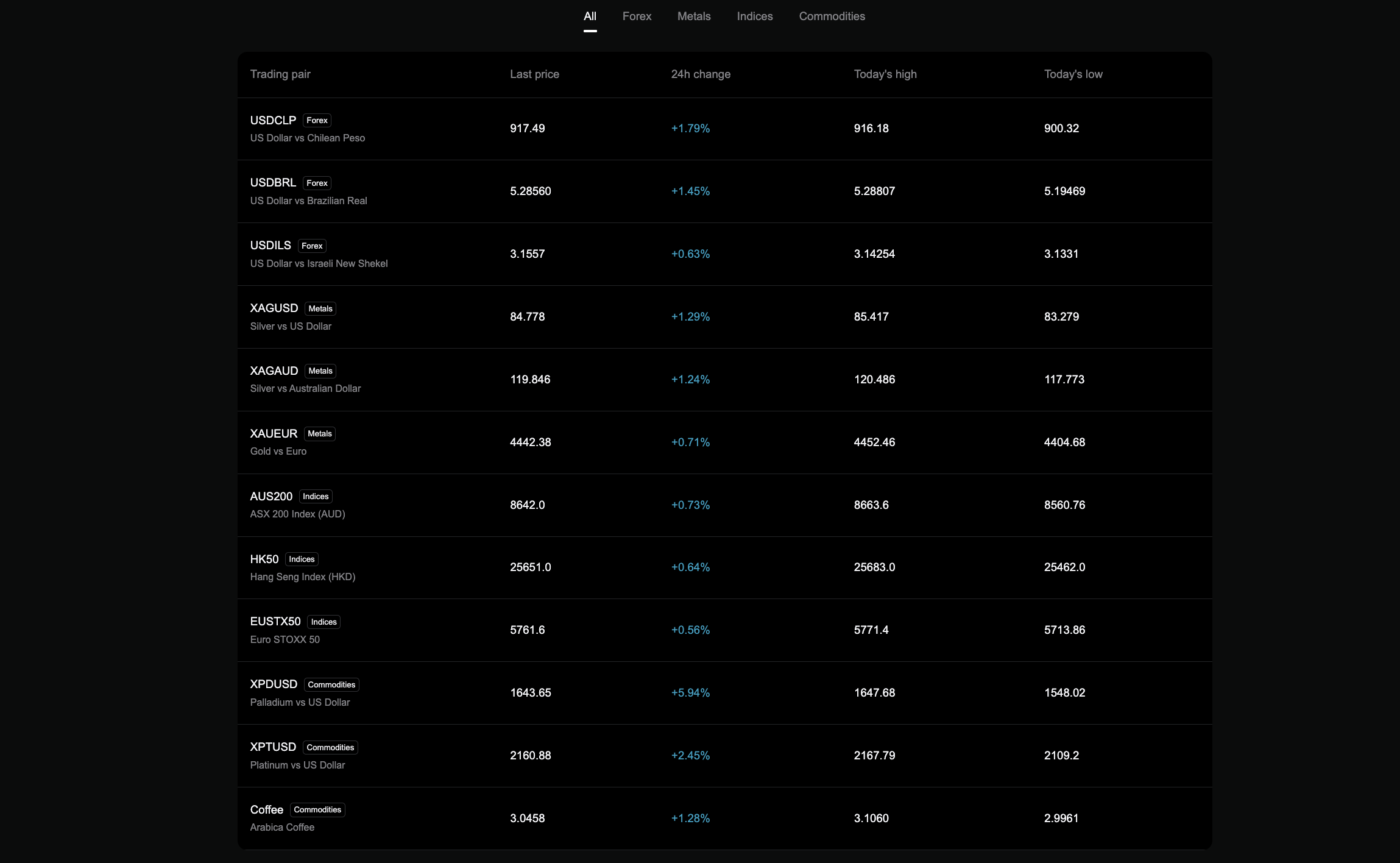
For traders following that rotation, execution can become the bottleneck. Managing crypto on one platform, then switching elsewhere for gold, oil, forex, or stock indices creates friction exactly when speed matters most.
That is where Bitget CFD becomes relevant.
The Bitget CFD Advantage: Moving Beyond the Basics
Bitget CFD is not just another place to trade. It is designed as an access layer for traders who want more consistent exposure across markets without constantly switching platforms or funding rails.
Why Use USDT for Traditional Markets?
Using USDT as margin for traditional-market exposure allows you to:
-
avoid repeated currency conversions and fees,
-
move capital more efficiently between crypto and traditional markets,
-
and maintain a single, unified unit of account.
In Bitget CFD, USDT acts as the transport layer, while assets such as gold, oil, forex pairs, and stock indices retain their full market exposure. So if a geopolitical shock first creates an oil trade, then rotates into gold, dollar, or index opportunities, the transition can be much more seamless.
The Professional Execution Environment
Bitget CFD is built on MT5, a professional execution environment widely used across global markets. That gives users access to:
-
real-time pricing from leading liquidity providers,
-
advanced charting and indicators,
-
multiple order types,
-
and compatibility with automated trading strategies.
The point is simple: when markets are moving fast, your workflow should not slow you down.
Final Takeaway
History does not offer guarantees. But it does offer patterns.
For traders, the edge is rarely in reacting fastest to the headline. More often, it comes from understanding which moves tend to overshoot, which signals matter most, and what would invalidate the historical pattern altogether.
Trade with a plan. Trade with Bitget.
Disclaimers:
(1) Figures are approximate scenario estimates intended for market analysis and communication purposes. Actual intraday moves may vary based on liquidity conditions, policy response, and conflict developments.
(2) All mentioned signals are not guaranteed buy/sell signals.
(3) This article is for informational and educational purposes only and does not constitute investment, financial, or trading advice. Market reactions to geopolitical events can vary significantly, and past patterns do not guarantee future outcomes. Always conduct your own research and manage risk carefully.


- If You Only Have 2 Minutes: The Priority Map
- Cross-Asset Reaction Pattern — 2026 vs. 2019 vs. 2020
- March 2026 Israel-Iran War in Focus: Oil, Gold, Dollar, Stocks, Bitcoin Price Changes
- The Asset-by-Asset Trade Roadmap
- 1. Crude Oil: The Lead Signal
- 2. Gold: The Early Hedge
- 3. The US Dollar: The Liquidity Signal
- 4. Stocks: The Later-Stage Opportunity
- 5. Bitcoin: The Rebound Trade
- Trading the Rotation Across Markets: Why Execution Setup Matters
- Final Takeaway
 How to Trade Crypto on Bitget Using MetaScalp2026-03-11 | 5m
 Where Will Oil Prices Go Amid the Israel-iran Conflict?2026-03-11 | 5m