What Is United States Oil Fund LP (USO Stock)? A Guide to the Best Way to Invest in Oil
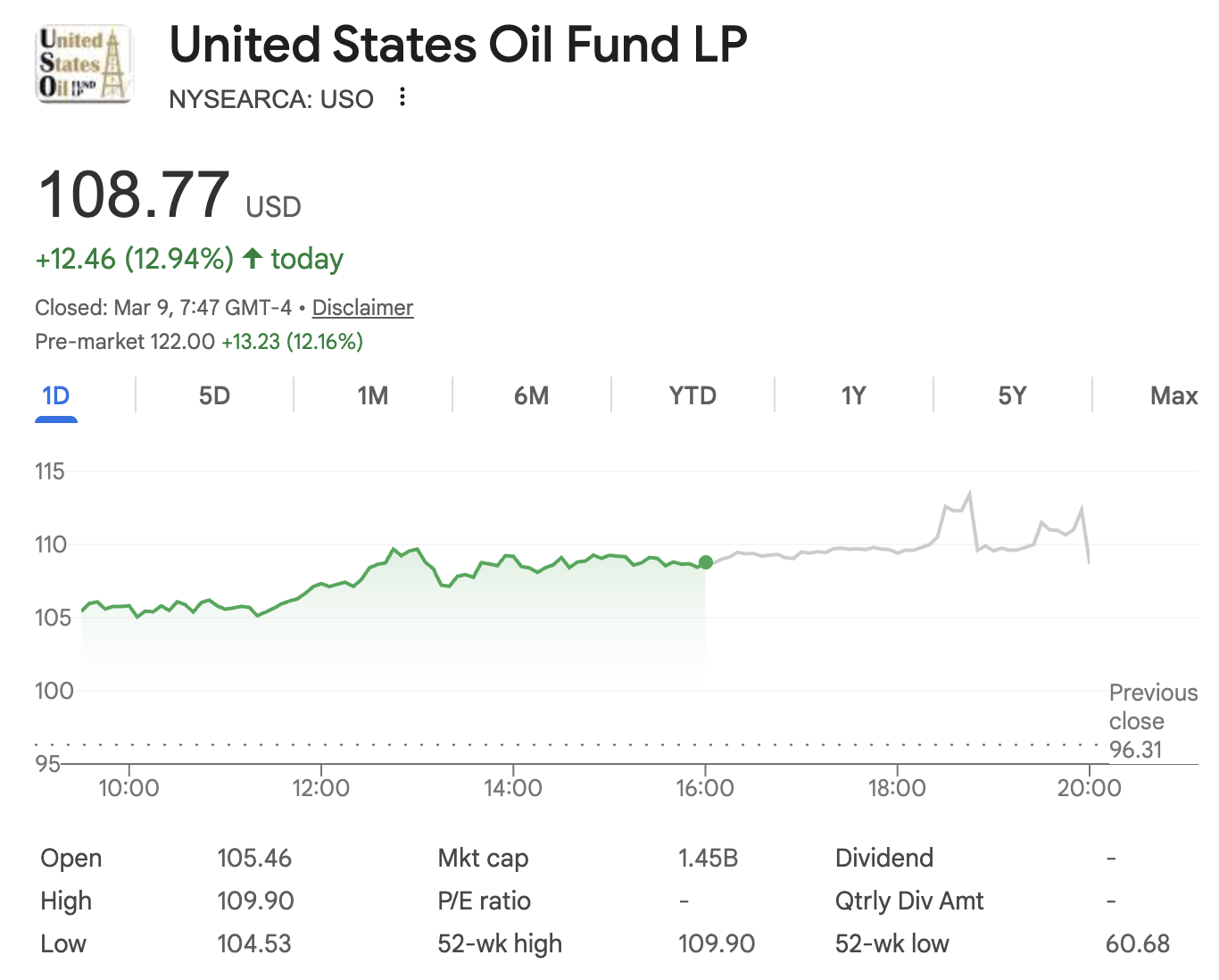
Oil markets are back in focus as supply risks, geopolitical tensions, and shifting production expectations continue to move crude prices. In recent sessions, traders have paid closer attention to the United States Oil Fund, better known as USO stock, after fresh warnings tied to Gulf energy production helped lift sentiment across the oil market. As crude prices react to weather disruptions, inventory trends, and OPEC+ decisions, many investors are asking whether USO stock is a smart way to gain exposure to oil.
This guide explains what USO stock is, why it has recently surged, whether it is a good way to invest in oil, and what may shape its outlook going forward.
Source: Google Finance
What Is USO Stock and How Does the United States Oil Fund Work?
USO stock refers to shares of the United States Oil Fund, LP, an exchange-traded product created to track the daily price movements of West Texas Intermediate (WTI) crude oil. Rather than holding physical barrels of oil, the fund invests mainly in near-term crude oil futures contracts and related instruments.
This structure makes USO stock different from a traditional stock. It does not represent ownership in an oil producer such as ExxonMobil or Chevron. Instead, it offers investors exposure to oil price movements through the futures market in a format that can be bought and sold through a regular brokerage account.
The main appeal of USO stock is convenience. Investors who want to trade oil prices without opening a commodities futures account can use the fund as a simpler alternative. However, because the fund relies on futures contracts, its performance may differ from the spot price of oil, especially over longer periods.
Why Has USO Stock Been Rising Recently?
Recent gains in USO stock have been closely tied to stronger crude oil prices and renewed concerns about supply disruptions. A key catalyst has been warnings related to Gulf energy production, which raised concerns about tighter oil supply and pushed traders toward oil-linked products.
Several factors have helped support the recent move in USO stock:
Gulf production risks
Storm threats, infrastructure warnings, and production interruptions in the Gulf of Mexico can reduce near-term supply expectations. When markets see a risk of lower output, oil prices often move higher, which can benefit USO stock.
OPEC+ supply discipline
Production decisions from OPEC+ continue to play a major role in global oil pricing. When the group keeps supply tight or signals restraint, crude prices often remain supported, helping lift USO stock.
Geopolitical tensions
Conflicts and political instability in major energy-producing regions can quickly add a risk premium to crude oil. That kind of uncertainty tends to increase interest in USO stock as traders seek direct exposure to rising oil prices.
Inventory data and demand expectations
Weekly U.S. crude inventory reports and broader demand signals from major economies also affect the outlook. Falling stockpiles or stronger-than-expected demand can create bullish momentum for USO stock.
How Has USO Stock Performed Over Time?
The price history of USO stock reflects the volatility of the oil market. It has gone through sharp rallies and steep declines as crude prices reacted to global growth trends, production policy, and unexpected disruptions.
One of the most notable periods for USO stock came in 2020, when oil prices collapsed amid a historic demand shock. Because the fund is tied to futures contracts, that period exposed the risks of commodity-based products during extreme market stress. Although USO stock later recovered along with oil prices, its long-term performance has not always matched the full rebound in physical crude.
That is an important point for investors. USO stock tends to work best as a short-term trading tool rather than a long-term buy-and-hold investment. It can track daily oil price moves reasonably well, but over time, the mechanics of rolling futures contracts can reduce returns.
What Makes USO Stock Different From Buying Oil Company Shares?
Many investors compare USO stock with oil company stocks, but the two are not the same.
When you buy an oil producer, you are investing in a business that may generate profits, pay dividends, improve efficiency, and expand production. The value of an oil stock depends not only on crude prices but also on management quality, balance sheet strength, and operational performance.
By contrast, USO stock is designed to track oil prices more directly. It does not pay dividends, and it does not benefit from company-level growth. Its value is tied mainly to futures-based exposure to WTI crude.
For investors who want direct sensitivity to oil price moves, USO stock may be more suitable than energy equities. For those looking for income, business fundamentals, or longer-term value creation, oil company shares may be the better choice.
Is USO Stock a Good Way to Invest in Oil?
Whether USO stock is a good investment depends largely on an investor’s goals, risk tolerance, and time horizon.
Why some investors choose USO stock
-
It offers easy access to oil exposure through a standard brokerage account.
-
It is widely traded and generally liquid.
-
It allows investors to react quickly to short-term oil market developments.
-
It can serve as a tactical vehicle during periods of rising crude prices.
The main risks of USO stock
-
It holds futures contracts rather than physical oil.
-
Its returns can diverge from spot oil prices over time.
-
It is highly sensitive to market volatility and sudden news events.
-
It may underperform in certain futures market structures, especially during contango.
Contango occurs when longer-dated oil futures are more expensive than near-term contracts. Since the fund must regularly roll its positions forward, this can create a drag on performance. That is one of the most important reasons USO stock may not always be the best long-term way to invest in oil.
USO Stock Price Prediction: What Could Happen Next?
A realistic USO stock price prediction depends heavily on the direction of crude oil prices. If supply remains constrained and demand stays resilient, USO stock could continue to find support. Gulf production risks, OPEC+ discipline, and tighter inventories may all help maintain a constructive outlook.
On the other hand, downside risks remain. A slowdown in global growth, weaker fuel demand, or an unexpected increase in oil production could pressure WTI prices and weigh on USO stock. The fund is also vulnerable to changes in futures market structure, which can affect performance even if oil prices do not collapse.
In the near term, investors watching USO stock should pay close attention to:
-
OPEC+ production announcements
-
U.S. inventory reports
-
Gulf weather and production updates
-
Economic data from major oil-consuming countries
-
Broader geopolitical developments
Rather than focusing only on a fixed target, it is more useful to view USO stock as a market-sensitive product whose outlook changes quickly with global energy conditions.
What Is the Best Way to Invest in Oil Today?
There is no single best way to invest in oil, because the right choice depends on investment style and risk appetite. Still, investors generally have several options:
1. USO stock
For short-term traders who want direct oil exposure, USO stock can be a practical tool. It is easy to access and closely linked to WTI price movements over short periods.
2. Oil company stocks
Investing in "Supermajors" (e.g., ExxonMobil, Chevron) or oil service companies provides exposure to oil prices along with the benefit of quarterly dividends. These are often better suited to longer-term investors.
3. Energy ETFs
Funds that hold baskets of oil and gas companies can provide diversified exposure to the energy sector with lower company-specific risk.
4. Oil futures
Direct futures trading offers the purest exposure to oil prices, but it is more complex and generally better suited to experienced traders.
5. Broader commodity exposure
Some investors prefer diversified commodity funds rather than relying only on crude oil. This can help reduce the volatility associated with a single market.
For many retail investors, USO stock may be the easiest way to trade short-term oil momentum, while energy stocks or sector ETFs may be more suitable for long-term positioning.
Conclusion
As oil prices respond to supply warnings, geopolitical risks, and production policy, USO stock has once again drawn investor attention. The fund offers a convenient way to gain exposure to crude oil without trading futures directly, which is why it remains one of the best-known oil-linked products in the market.
Still, investors should understand that USO stock is primarily a short-term trading vehicle, not a perfect long-term proxy for oil itself. Its futures-based structure can create performance gaps over time, especially when market conditions are unfavorable. For traders seeking tactical exposure to oil price moves, USO stock may be useful. For long-term investors, however, oil equities or diversified energy funds may offer a more balanced approach.
If you are considering USO stock, it is important to follow oil market fundamentals closely and assess whether your investment horizon matches the way the fund is designed to work.
Disclaimer: This article is for informational purposes only and does not constitute financial advice. Investors should conduct their own research before making any investment decisions.