
Bitget: #4 mondial en volume de trading quotidien!
Part de marché du BTC59.27%
Frais de gaz ETH actuels: 0.1-1 gwei
Bitcoin Rainbow Chart: Accumulate
BTC/USDT$72630.50 (+5.55%)Indice Fear and Greed22(Peur extrême)
Altcoin Season Index:0(Saison du Bitcoin)
Total des flux nets des ETF Spot Bitcoin +$225.2M (1j) ; +$1.47B (7j).Pack de bienvenue pour les nouveaux utilisateurs d'une valeur de 6200 USDT.Récupérer
Tradez à tout moment et en tout lieu grâce à l'application Bitget !Télécharger maintenant
Bitget: #4 mondial en volume de trading quotidien!
Part de marché du BTC59.27%
Frais de gaz ETH actuels: 0.1-1 gwei
Bitcoin Rainbow Chart: Accumulate
BTC/USDT$72630.50 (+5.55%)Indice Fear and Greed22(Peur extrême)
Altcoin Season Index:0(Saison du Bitcoin)
Total des flux nets des ETF Spot Bitcoin +$225.2M (1j) ; +$1.47B (7j).Pack de bienvenue pour les nouveaux utilisateurs d'une valeur de 6200 USDT.Récupérer
Tradez à tout moment et en tout lieu grâce à l'application Bitget !Télécharger maintenant
Bitget: #4 mondial en volume de trading quotidien!
Part de marché du BTC59.27%
Frais de gaz ETH actuels: 0.1-1 gwei
Bitcoin Rainbow Chart: Accumulate
BTC/USDT$72630.50 (+5.55%)Indice Fear and Greed22(Peur extrême)
Altcoin Season Index:0(Saison du Bitcoin)
Total des flux nets des ETF Spot Bitcoin +$225.2M (1j) ; +$1.47B (7j).Pack de bienvenue pour les nouveaux utilisateurs d'une valeur de 6200 USDT.Récupérer
Tradez à tout moment et en tout lieu grâce à l'application Bitget !Télécharger maintenant

Les données proviennent de fournisseurs tiers. Cette page et les informations qu'elle contient ne recommandent aucune cryptomonnaie en particulier. Vous souhaitez trader des cryptos listées ? Cliquez ici
S'inscrire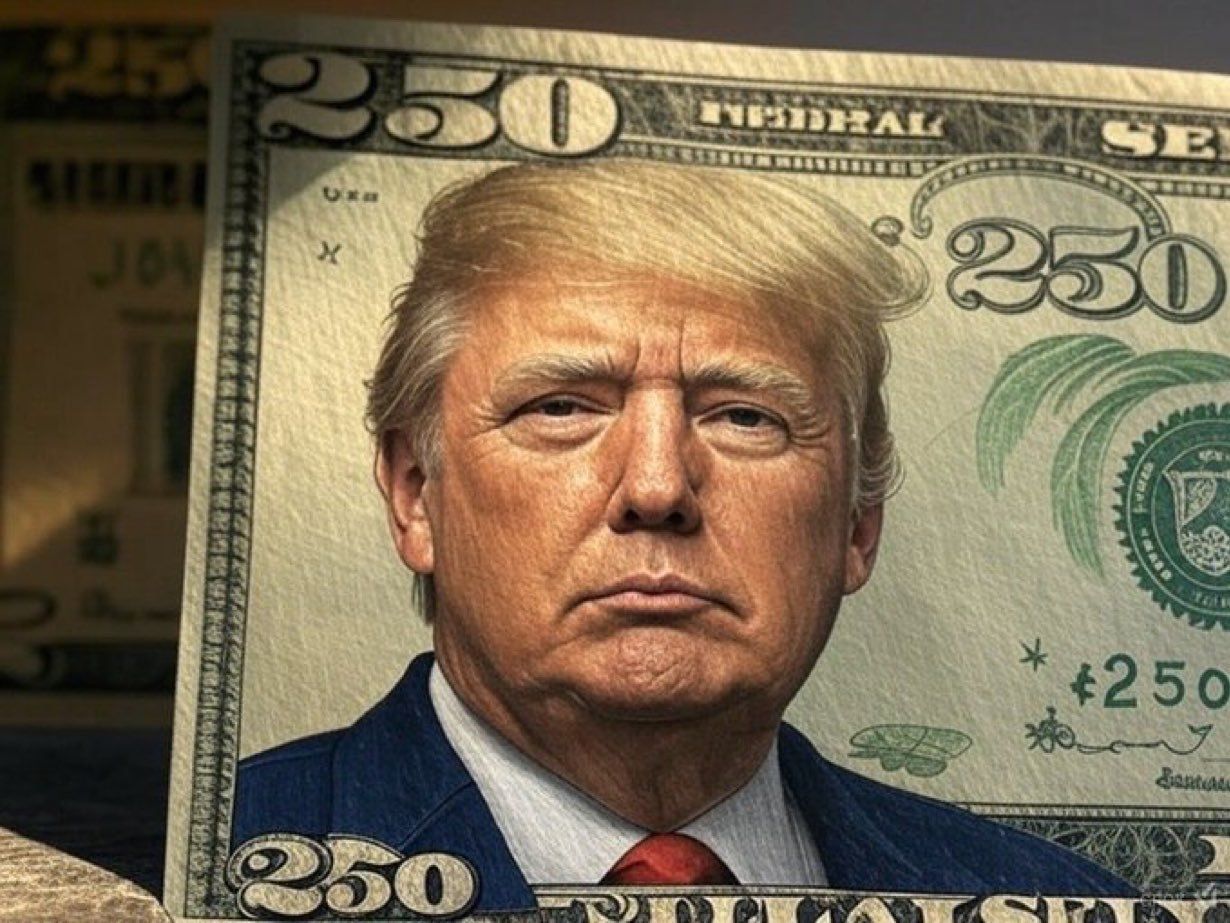
Prévisions des prix de $250 Trump Bill...⚡️ ($250⚡️)
Non listé
Combien pourrait valoir $250 Trump Bill...⚡️ en 2026, 2027, 2030 et au-delà ? Quel est le prix prévu de $250 Trump Bill...⚡️ pour demain, cette semaine ou ce mois-ci ? Et quel retour sur investissement pourriez-vous obtenir en détenant $250 Trump Bill...⚡️ jusqu'en 2050 ?
Cette page met à votre disposition des outils de prédiction du prix de $250 Trump Bill...⚡️ à court et à long terme, afin de vous aider à évaluer l'évolution future du prix de $250 Trump Bill...⚡️. Vous pouvez également définir vos propres prédictions pour estimer la valeur future de $250 Trump Bill...⚡️.
Il est important de noter que, compte tenu de la volatilité et de la complexité inhérentes au marché des cryptomonnaies, ces prédictions, tout en offrant un aperçu des fourchettes de prix et des scénarios potentiels, doivent être considérées avec prudence et scepticisme.
Cette page met à votre disposition des outils de prédiction du prix de $250 Trump Bill...⚡️ à court et à long terme, afin de vous aider à évaluer l'évolution future du prix de $250 Trump Bill...⚡️. Vous pouvez également définir vos propres prédictions pour estimer la valeur future de $250 Trump Bill...⚡️.
Il est important de noter que, compte tenu de la volatilité et de la complexité inhérentes au marché des cryptomonnaies, ces prédictions, tout en offrant un aperçu des fourchettes de prix et des scénarios potentiels, doivent être considérées avec prudence et scepticisme.
Tableau prévisionnel des prix de $250 Trump Bill...⚡️ pour 2026 et au-delà
Prédiction du prix de $250 Trump Bill...⚡️ dans les 10 prochains jours sur la base d'un taux de croissance quotidien prévu de +0,014%.
Prix aujourd'hui (Mar 5, 2026)
$0.{9}1681
Prix demain (Mar 6, 2026)
$0.{9}1681
Prix dans 5 jours (Mar 10, 2026)
$0.{9}1682
Prix ce mois-ci (Mar 2026)
$0.{9}1684
Prix le mois prochain (Apr 2026)
$0.{9}1691
Prix dans 5 mois (Aug 2026)
$0.{9}1719
Prix en 2026
$0.{9}1722
Prix en 2027
$0.{9}1808
Prix en 2030
$0.{9}2093
D'après les prévisions de prix quotidiennes à court terme de $250 Trump Bill...⚡️, le prix de $250 Trump Bill...⚡️ devrait être de $0.$0.{9}16911681 le Mar 5, 2026, de $0.{9}1681 le Mar 6, 2026, et de $0.{9}1682 le Mar 10, 2026. D'après les prédictions de prix mensuelles de $250 Trump Bill...⚡️, le prix de $250 Trump Bill...⚡️ devrait être de $0.{9}1684 en Mar 2026, de {9} en Apr 2026, et de $0.{9}1719 en Aug 2026. D'après les prédictions de prix annuelles à long terme de $250 Trump Bill...⚡️, le prix de $250 Trump Bill...⚡️ devrait être de $0.{9}1722 en 2026, de $0.{9}1808 en 2027, et de $0.{9}2093 en 2030.
Prédiction du prix de $250 Trump Bill...⚡️ aujourd'hui
Le prix actuel de $250 Trump Bill...⚡️ ($250⚡️) est de $0.{9}1680, avec une variation de prix sur 24h de 0.00%. Le prix de $250 Trump Bill...⚡️ ($250⚡️) devrait atteindre $0.{9}1681 aujourd'hui. En savoir plus sur : Prix de $250 Trump Bill...⚡️ aujourd'hui.
Prédiction du prix de $250 Trump Bill...⚡️ en Mar 2026
Le prix de $250 Trump Bill...⚡️ ($250⚡️) devrait évoluer de Infinity% en Mar 2026, et le prix de $250 Trump Bill...⚡️ ($250⚡️) devrait atteindre $0.{9}1684 d'ici fin Mar 2026.
Prédiction de prix de $250 Trump Bill...⚡️ pour 2026
Le prix de $250 Trump Bill...⚡️ ($250⚡️) devrait évoluer de Infinity% en 2026, et le prix de $250 Trump Bill...⚡️ ($250⚡️) devrait atteindre $0.{9}1722 d'ici la fin de l'année 2026.
Prédiction du prix de $250 Trump Bill...⚡️ à long terme : 2027, 2030, 2035, 2040, 2050
Ce qui suit est un modèle de prédiction des prix de $250 Trump Bill...⚡️ sur la base d'un taux de croissance fixe. Il ne tient pas compte des fluctuations du marché, des facteurs économiques extérieurs ou des situations exceptionnelles, et se concentre uniquement sur la tendance moyenne du prix de $250 Trump Bill...⚡️. Il aide les investisseurs à analyser et à calculer rapidement le potentiel de profit d'un investissement en $250 Trump Bill...⚡️.
Saisissez votre taux de croissance annuel prévu pour le prix de $250 Trump Bill...⚡️, et voyez comment la valeur de $250 Trump Bill...⚡️ évoluera à l'avenir.
Saisissez votre taux de croissance annuel prévu pour le prix de $250 Trump Bill...⚡️, et voyez comment la valeur de $250 Trump Bill...⚡️ évoluera à l'avenir.
Prédiction de prix annuelle de $250 Trump Bill...⚡️ sur la base d'un taux de croissance annuel prévu de 5%.
%
Croissance annuelle prévue. Saisissez un pourcentage compris entre -100% et +1000%.
| Année | Prix prédit | ROI total |
|---|---|---|
2027 | $0.{9}1808 | +5.00% |
2028 | $0.{9}1899 | +10.25% |
2029 | $0.{9}1994 | +15.76% |
2030 | $0.{9}2093 | +21.55% |
2035 | $0.{9}2672 | +55.13% |
2040 | $0.{9}3410 | +97.99% |
2050 | $0.{9}5554 | +222.51% |
Sur la base d'un taux de croissance annuel de 5%, le prix de $250 Trump Bill...⚡️ ($250⚡️) devrait atteindre $0.{9}1808 en 2027, $0.{9}2093 en 2030, $0.{9}3410 en 2040, et $0.{9}5554 en 2050.
Prédiction de prix de $250 Trump Bill...⚡️ pour 2027
En 2027, sur la base d'un taux de croissance annuel prévu de 5%, le prix de $250 Trump Bill...⚡️ ($250⚡️) devrait atteindre $0.{9}1808. Sur la base de ces prédictions, le rendement cumulé de l'investissement issu de la détention de $250 Trump Bill...⚡️ jusqu'à la fin de l'année 2027 serait de 5.00%.
Prédiction de prix de $250 Trump Bill...⚡️ pour 2030
En 2030, sur la base d'un taux de croissance annuel prévu de 5%, le prix de $250 Trump Bill...⚡️ ($250⚡️) devrait atteindre $0.{9}2093. Sur la base de ces prédictions, le rendement cumulé de l'investissement issu de la détention de $250 Trump Bill...⚡️ jusqu'à la fin de l'année 2030 serait de 21.55%.
Prédiction de prix de $250 Trump Bill...⚡️ pour 2035
En 2035, sur la base d'un taux de croissance annuel prévu de 5%, le prix de $250 Trump Bill...⚡️ ($250⚡️) devrait atteindre $0.{9}2672. Sur la base de ces prédictions, le rendement cumulé de l'investissement issu de la détention de $250 Trump Bill...⚡️ jusqu'à la fin de l'année 2035 serait de 55.13%.
Prédiction de prix de $250 Trump Bill...⚡️ pour 2040
En 2040, sur la base d'un taux de croissance annuel prévu de 5%, le prix de $250 Trump Bill...⚡️ ($250⚡️) devrait atteindre $0.{9}3410. Sur la base de ces prédictions, le rendement cumulé de l'investissement issu de la détention de $250 Trump Bill...⚡️ jusqu'à la fin de l'année 2040 serait de 97.99%.
Prédiction de prix de $250 Trump Bill...⚡️ pour 2050
En 2050, sur la base d'un taux de croissance annuel prévu de 5%, le prix de $250 Trump Bill...⚡️ ($250⚡️) devrait atteindre $0.{9}5554. Sur la base de ces prédictions, le rendement cumulé de l'investissement issu de la détention de $250 Trump Bill...⚡️ jusqu'à la fin de l'année 2050 serait de 222.51%.
Combien gagnerez-vous grâce à vos actifs $250 Trump Bill...⚡️ ?
Si vous investissez $100 en $250 Trump Bill...⚡️ cette année et conservez ce montant jusqu'en 2027, les prédictions de prix suggèrent un profit potentiel de $5, reflétant un ROI de 5.00%. (Les frais ne sont pas inclus dans cette estimation).
Avertissement : ceci n'est pas un conseil d'investissement. Les informations communiquées sont fournies à titre informatif uniquement. Aucune information, aucun contenu, service ou autre élément proposé sur cette page ne constitue une sollicitation, une recommandation, une approbation ou un conseil financier, en investissement ou autre, de quelque nature que ce soit. Demandez une consultation professionnelle indépendante sous forme de conseils juridiques, financiers et fiscaux avant de prendre toute décision d'investissement.
Tableau de prédiction du prix de $250 Trump Bill...⚡️ à court terme
Prévision de prix quotidienne de $250 Trump Bill...⚡️ sur la base d'un taux de croissance quotidien prévu de 0.014%
Quelles sont les prévisions de prix pour $250 Trump Bill...⚡️ pour demain, dans 5 jours, 10 jours et au-delà ?%
Croissance quotidienne prévue. Saisissez un pourcentage compris entre -100% et +1000%.
| Date | Prix prédit | ROI total |
|---|---|---|
Mar 6, 2026 (Demain) | $0.{9}1681 | +0.01% |
Mar 7, 2026 | $0.{9}1681 | +0.03% |
Mar 8, 2026 | $0.{9}1682 | +0.04% |
Mar 9, 2026 | $0.{9}1682 | +0.06% |
Mar 10, 2026 (5 jours) | $0.{9}1682 | +0.07% |
Mar 11, 2026 | $0.{9}1682 | +0.08% |
Mar 12, 2026 | $0.{9}1683 | +0.10% |
Mar 13, 2026 | $0.{9}1683 | +0.11% |
Mar 14, 2026 | $0.{9}1683 | +0.13% |
Mar 15, 2026 (10 jours) | $0.{9}1683 | +0.14% |
Basé sur un taux de croissance quotidien de 0.014%, le prix de $250 Trump Bill...⚡️ ($250⚡️) devrait atteindre $0.{9}1681 le Mar 6, 2026, $0.{9}1682 dans Mar 10, 2026, et $0.{9}1683 dans Mar 15, 2026.
Prédiction de prix de $250 Trump Bill...⚡️ pour Mar 6, 2026
Basé sur le taux de croissance quotidien de 0.014% pour la prévision de prix de $250 Trump Bill...⚡️, la valeur estimée de 1 $250 Trump Bill...⚡️ sera de $0.{9}1681 le Mar 6, 2026 (Demain). Le ROI attendu de l'investissement et de la détention de $250 Trump Bill...⚡️ jusqu'à la fin du Mar 6, 2026 est de 0.01%.
Prédiction de prix de $250 Trump Bill...⚡️ pour Mar 10, 2026
Basé sur le taux de croissance quotidien de 0.014% pour la prévision de prix de $250 Trump Bill...⚡️, la valeur estimée de 1 $250 Trump Bill...⚡️ sera de $0.{9}1682 le Mar 10, 2026 (5 jours). Le ROI attendu de l'investissement et de la détention de $250 Trump Bill...⚡️ jusqu'à la fin du Mar 10, 2026 est de 0.07%.
Prédiction de prix de $250 Trump Bill...⚡️ pour Mar 15, 2026
Basé sur le taux de croissance quotidien de 0.014% pour la prévision de prix de $250 Trump Bill...⚡️, la valeur estimée de 1 $250 Trump Bill...⚡️ sera de $0.{9}1683 le Mar 15, 2026 (10 jours). Le ROI attendu de l'investissement et de la détention de $250 Trump Bill...⚡️ jusqu'à la fin du Mar 15, 2026 est de 0.14%.
Prévision de prix mensuelle de $250 Trump Bill...⚡️ sur la base d'un taux de croissance mensuel prévu de 0.42%
Quelles sont les prévisions de prix pour $250 Trump Bill...⚡️ pour le mois prochain, dans 5 mois, 10 mois et au-delà ?%
Croissance mensuelle prévue. Saisissez un pourcentage compris entre -100% et +1000%.
| Date | Prix prédit | ROI total |
|---|---|---|
Apr 2026 (Mois suivant) | $0.{9}1691 | +0.42% |
May 2026 | $0.{9}1698 | +0.84% |
Jun 2026 | $0.{9}1705 | +1.27% |
Jul 2026 | $0.{9}1712 | +1.69% |
Aug 2026 (5 mois plus tard) | $0.{9}1719 | +2.12% |
Sep 2026 | $0.{9}1726 | +2.55% |
Oct 2026 | $0.{9}1734 | +2.98% |
Nov 2026 | $0.{9}1741 | +3.41% |
Dec 2026 | $0.{9}1748 | +3.84% |
Jan 2027 (10 mois plus tard) | $0.{9}1756 | +4.28% |
Basé sur un taux de croissance mensuel de 0.42%, le prix de $250 Trump Bill...⚡️ ($250⚡️) devrait atteindre $0.{9}1691 en Apr 2026, $0.{9}1719 en Aug 2026, et $0.{9}1756 en Jan 2027.
Prédiction de prix de $250 Trump Bill...⚡️ pour Apr 2026
Basé sur un taux de croissance mensuel de 0.42%, le prix prévu de $250 Trump Bill...⚡️ ($250⚡️) en Apr 2026 (Mois suivant) est de $0.{9}1691. Le ROI attendu de l'investissement et de la détention de $250 Trump Bill...⚡️ jusque fin Apr 2026 est de 0.42%.
Prédiction de prix de $250 Trump Bill...⚡️ pour Aug 2026
Basé sur un taux de croissance mensuel de 0.42%, le prix prévu de $250 Trump Bill...⚡️ ($250⚡️) en Aug 2026 (5 mois plus tard) est de $0.{9}1719. Le ROI attendu de l'investissement et de la détention de $250 Trump Bill...⚡️ jusque fin Aug 2026 est de 2.12%.
Prédiction de prix de $250 Trump Bill...⚡️ pour Jan 2027
Basé sur un taux de croissance mensuel de 0.42%, le prix prévu de $250 Trump Bill...⚡️ ($250⚡️) en Jan 2027 (10 mois plus tard) est de $0.{9}1756. Le ROI attendu de l'investissement et de la détention de $250 Trump Bill...⚡️ jusque fin Jan 2027 est de 4.28%.

Articles sur les tendances de prédiction de prix des cryptomonnaies

AMP Cryptocurrency News & Price Prediction Guide 2026
Overview
This article examines AMP cryptocurrency's fundamentals, price prediction methodologies, and reliable sources for tracking its latest developments, while comparing major trading platforms for accessing AMP tokens.
AMP is a collateral token designed to secure instant, verifiable transactions on the Flexa network, a payment infrastructure enabling merchants to accept digital asset payments with fraud protection. Understanding where to find credible AMP news and how analysts approach price predictions requires examining both the token's technical utility and the broader market dynamics affecting collateral-based cryptocurrencies in 2026.
Understanding AMP Cryptocurrency and Its Market Position
What Is AMP and How Does It Function
AMP operates as a digital collateral token built on the Ethereum blockchain, serving as the backbone of the Flexa payment network. When users make purchases through Flexa-enabled merchants, AMP tokens are staked as collateral to guarantee transaction completion before blockchain confirmations occur. This mechanism addresses the speed limitations inherent in traditional cryptocurrency payments, where merchants would otherwise wait minutes or hours for network confirmations.
The token's utility extends beyond simple payment facilitation. AMP holders can stake their tokens in collateral pools, earning rewards while simultaneously securing the network. This dual-purpose design creates economic incentives for token holders while providing merchants with instant settlement guarantees. The Flexa network has partnered with major retailers including Nordstrom, Whole Foods, and GameStop, though adoption rates vary significantly by region and merchant category.
From a technical perspective, AMP implements the ERC-20 standard with additional collateral management features. The total supply is capped at 99.2 billion tokens, with approximately 42.2 billion in circulation as of early 2026. This supply structure differs markedly from deflationary tokens, as AMP's value proposition centers on utility and staking yields rather than scarcity-driven appreciation.
Market Performance and Historical Context
AMP reached its all-time high of approximately $0.121 in June 2021 during the broader cryptocurrency market surge. Since then, the token has experienced significant volatility, trading between $0.002 and $0.015 throughout 2024-2025. This price range reflects both the challenges facing payment-focused cryptocurrencies and the evolving regulatory landscape for digital asset transactions.
Several factors have influenced AMP's price trajectory. Regulatory scrutiny intensified in 2023 when the U.S. Securities and Exchange Commission included AMP in enforcement actions against certain exchanges, questioning whether the token constituted an unregistered security. While Flexa has maintained that AMP functions purely as utility collateral, this regulatory uncertainty has dampened institutional interest and limited exchange listings compared to other payment-focused tokens.
Trading volume patterns reveal that AMP maintains relatively consistent liquidity on major exchanges, with daily volumes ranging from $8 million to $35 million depending on market conditions. The token shows higher correlation with Ethereum (0.72 correlation coefficient) than with Bitcoin (0.58), likely due to its ERC-20 infrastructure and gas fee dependencies for staking operations.
Where to Find Reliable AMP Cryptocurrency News
Official and Primary Sources
The most authoritative source for AMP developments remains the official Flexa blog and documentation portal, where the development team publishes technical updates, partnership announcements, and network statistics. The Flexa Medium publication provides monthly transparency reports detailing transaction volumes, merchant integrations, and collateral pool performance metrics. These primary sources offer unfiltered information directly from the project team, though readers should balance this with independent analysis.
The AMP community maintains active discussion channels on platforms including Reddit's r/AMPToken subreddit and the official Discord server, where over 28,000 members share news, technical analysis, and merchant adoption reports. While community forums provide real-time sentiment indicators, users should verify claims through multiple sources before making investment decisions, as speculation and unconfirmed rumors frequently circulate in these spaces.
GitHub repositories for both AMP and Flexa offer technical insights for developers and advanced users. Commit frequency, code reviews, and issue discussions provide transparency into development activity levels. As of March 2026, the Flexa repositories show consistent maintenance with approximately 15-20 commits monthly, indicating ongoing but measured development pace compared to more rapidly evolving DeFi protocols.
Cryptocurrency News Aggregators and Analytics Platforms
Specialized cryptocurrency news platforms provide aggregated coverage of AMP developments. CoinDesk, CoinTelegraph, and The Block occasionally feature AMP-related articles, particularly when significant partnerships or regulatory developments occur. These outlets typically offer more balanced perspectives than project-specific channels, though coverage frequency remains lower than for top-20 cryptocurrencies by market capitalization.
Real-time price tracking and on-chain analytics platforms such as CoinGecko, CoinMarketCap, and Messari provide comprehensive data dashboards for AMP. These services track price movements across multiple exchanges, display historical charts, monitor social media sentiment, and aggregate news from various sources. Messari's research terminal offers particularly detailed tokenomics analysis, including staking participation rates and collateral pool utilization metrics that directly impact AMP's utility value.
On-chain analytics tools like Etherscan and Dune Analytics enable users to monitor AMP token movements, whale wallet activities, and smart contract interactions in real-time. Large token transfers (typically exceeding 100 million AMP) often precede price movements, making these monitoring tools valuable for traders seeking early indicators. However, interpreting on-chain data requires technical knowledge, as not all large transfers indicate selling pressure—many represent staking deposits or exchange rebalancing operations.
Social Media and Influencer Channels
Twitter remains a primary distribution channel for breaking AMP news, with the official @FlexaHQ account providing immediate updates on partnerships and technical developments. Key community figures and cryptocurrency analysts occasionally discuss AMP in broader payment token analyses, though dedicated AMP influencers maintain smaller followings compared to major cryptocurrency projects. Users should exercise caution with price prediction content from unverified accounts, as pump-and-dump schemes occasionally target smaller-cap tokens like AMP.
YouTube channels focusing on cryptocurrency payments and merchant adoption provide periodic AMP coverage, particularly when Flexa announces major retail partnerships. Channels such as Coin Bureau and Digital Asset News have produced educational content explaining AMP's collateral mechanism, though coverage remains sporadic rather than continuous. Podcast platforms including Unchained and The Breakdown occasionally feature Flexa executives discussing payment infrastructure developments relevant to AMP holders.
AMP Price Prediction Methodologies and Considerations
Fundamental Analysis Approaches
Predicting AMP's price requires analyzing factors distinct from typical cryptocurrency valuation models. Unlike store-of-value assets or governance tokens, AMP's value derives primarily from its utility as transaction collateral. Fundamental analysts examine merchant adoption rates, transaction volumes processed through Flexa, and staking participation percentages to estimate demand for AMP collateral services.
Network growth metrics provide quantifiable indicators for fundamental valuation. As of Q1 2026, Flexa processes an estimated $120-180 million in monthly transaction volume across its merchant network. If this volume grows to $500 million monthly—a conservative estimate given the expanding digital payment market—the required collateral pool would need to expand proportionally, potentially increasing demand for AMP tokens. However, this relationship is not linear, as collateral efficiency improvements and turnover rates affect the tokens-to-volume ratio.
Staking yield analysis offers another fundamental perspective. Current AMP staking returns range from 2.8% to 4.2% annually depending on pool selection and network activity. These yields compete with alternative DeFi opportunities and traditional fixed-income products. If staking returns increase due to higher transaction volumes, more token holders may lock their AMP in collateral pools, reducing circulating supply and potentially supporting price appreciation through supply-demand dynamics.
Technical Analysis and Chart Patterns
Technical analysts examining AMP charts identify several recurring patterns. The token has established a support zone between $0.0035 and $0.0045 throughout 2025-2026, with resistance levels at $0.0075 and $0.012. Breakouts above resistance typically require significant volume increases—at least 200% above the 30-day average—suggesting that price movements depend heavily on broader market catalysts rather than AMP-specific developments alone.
Moving average convergence divergence (MACD) indicators for AMP show extended periods of consolidation punctuated by brief volatility spikes. The 50-day and 200-day moving averages have remained in close proximity since mid-2024, indicating a lack of strong directional trend. This pattern is common among utility tokens with stable but limited adoption growth, where price movements correlate more strongly with overall cryptocurrency market sentiment than project-specific news.
Volume profile analysis reveals that most AMP trading occurs within narrow price bands, with approximately 65% of historical volume concentrated between $0.004 and $0.008. This concentration suggests that many holders have established cost bases within this range, creating psychological resistance to selling below these levels. However, technical analysis alone provides limited predictive value for utility tokens, as fundamental adoption metrics often override chart patterns during significant network developments.
Scenario-Based Price Projections
Conservative price scenarios for AMP through 2026-2027 assume modest merchant adoption growth and stable cryptocurrency market conditions. Under this framework, analysts project a trading range of $0.005 to $0.012, representing 25-200% potential returns from early 2026 price levels. This scenario assumes Flexa maintains current merchant relationships while adding 50-100 new retail partners annually, with transaction volumes growing 30-40% year-over-year.
Moderate growth scenarios incorporate accelerated merchant adoption and potential integration with emerging payment technologies. If Flexa successfully partners with major payment processors or integrates with point-of-sale systems at scale, transaction volumes could increase 3-5x over two years. Under these conditions, some analysts project AMP could reach $0.025-$0.045, though this requires overcoming regulatory hurdles and competing with established payment networks. The probability of this scenario depends heavily on regulatory clarity for digital asset payments, which remains uncertain across major markets.
Bullish scenarios, while speculative, consider the possibility of AMP becoming a standard collateral layer for multiple payment networks beyond Flexa. If the token's collateral mechanism gains adoption as infrastructure for other payment protocols—similar to how Chainlink became standard oracle infrastructure—demand could increase substantially. However, this outcome faces significant technical and competitive challenges, as alternative collateral solutions and payment-specific blockchains continue developing. Analysts assigning probability to this scenario typically estimate less than 15% likelihood based on current market dynamics.
Risk Factors Affecting Price Predictions
Regulatory developments represent the most significant risk factor for AMP price predictions. The ongoing debate about whether collateral tokens constitute securities could result in delisting from major exchanges or restrictions on staking mechanisms. Historical precedent from similar enforcement actions suggests that regulatory classification as a security could reduce AMP's price by 40-70% due to reduced liquidity and institutional access limitations.
Competition from alternative payment solutions poses another substantial risk. Traditional payment processors including Visa and Mastercard have announced blockchain integration initiatives, while cryptocurrency-native solutions like the Lightning Network offer different approaches to instant payments. If merchants adopt competing technologies that don't require AMP collateral, the token's fundamental value proposition weakens regardless of broader cryptocurrency market conditions.
Smart contract vulnerabilities and technical risks, while less probable given AMP's operational history since 2020, could impact price predictions. Any exploit of the collateral mechanism or staking contracts would likely trigger immediate selling pressure and long-term confidence damage. The Flexa team has conducted multiple security audits, but the evolving nature of blockchain security means residual risks persist, particularly as the protocol integrates with new merchant systems and payment channels.
Comparative Analysis: Major Exchanges Supporting AMP Trading
Exchange
AMP Trading Pairs
Staking Support
Trading Fees
Coinbase
AMP/USD, AMP/USDT
Not supported
Maker 0.40%, Taker 0.60%
Kraken
AMP/USD, AMP/EUR
Not supported
Maker 0.16%, Taker 0.26%
Bitget
AMP/USDT
Not supported
Maker 0.01%, Taker 0.01% (up to 80% discount with BGB)
Binance
Not listed
N/A
N/A
The exchange landscape for AMP trading remains relatively limited compared to major cryptocurrencies, with only select platforms offering trading pairs. Coinbase provides the most accessible fiat on-ramp for AMP purchases in supported jurisdictions, though its fee structure is higher than specialized cryptocurrency exchanges. The platform's regulatory compliance in the United States makes it a preferred option for users prioritizing regulatory certainty, despite the cost premium.
Kraken offers competitive fee rates and supports both USD and EUR trading pairs, making it suitable for European traders seeking AMP exposure. The platform's established reputation and comprehensive security measures appeal to users holding larger positions, though it lacks native staking functionality for AMP tokens. Users seeking staking rewards must transfer tokens to external wallets compatible with Flexa's staking interface, introducing additional transaction costs and complexity.
Bitget supports AMP trading with notably lower fee structures, particularly for users holding BGB tokens who can access up to 80% fee discounts. The platform's spot trading fees of 0.01% for both makers and takers represent significant cost savings for active traders compared to traditional exchanges. With support for over 1,300 cryptocurrencies and a Protection Fund exceeding $300 million, Bitget provides comprehensive infrastructure for traders diversifying beyond major assets. The exchange maintains regulatory registrations in multiple jurisdictions including Australia (AUSTRAC), Italy (OAM), and Poland (Ministry of Finance), though users should verify availability in their specific location.
The absence of AMP from Binance, despite being the largest cryptocurrency exchange by volume, reflects ongoing regulatory considerations and listing criteria focused on larger market-cap assets. This limitation means traders seeking AMP exposure must use alternative platforms, fragmenting liquidity across multiple venues. Decentralized exchanges including Uniswap and SushiSwap offer additional trading options with varying liquidity depths, though users must manage gas fees and slippage considerations when trading smaller positions.
FAQ
What factors most significantly influence AMP's price movements?
AMP's price responds primarily to merchant adoption announcements, transaction volume growth on the Flexa network, and broader cryptocurrency market sentiment. Regulatory developments regarding payment tokens and securities classification create significant volatility, as seen during SEC enforcement actions in 2023. Staking participation rates also affect circulating supply dynamics, with higher staking percentages typically correlating with reduced selling pressure during market downturns.
How does AMP staking work and what returns can holders expect?
AMP staking involves locking tokens in designated collateral pools through the Flexa Capacity interface, where they secure merchant transactions. Stakers earn rewards from transaction fees, with current annual yields ranging from 2.8% to 4.2% depending on pool selection and network activity. Rewards are distributed in AMP tokens and can be claimed at any time, though unstaking requires a waiting period to ensure collateral obligations are fulfilled. Returns fluctuate based on transaction volumes and total staked supply.
Is AMP available on decentralized exchanges and what are the trade-offs?
AMP trades on major decentralized exchanges including Uniswap V3 and SushiSwap with varying liquidity depths. DEX trading eliminates counterparty risk and provides access without KYC requirements, but users face Ethereum gas fees ranging from $5 to $50 depending on network congestion. Slippage can be significant for orders exceeding $10,000, making DEXs more suitable for smaller transactions or users prioritizing privacy over cost efficiency.
What distinguishes AMP from other payment-focused cryptocurrencies?
Unlike payment cryptocurrencies that function as transaction mediums themselves, AMP serves exclusively as collateral infrastructure enabling instant settlements for any digital asset payment. This design allows merchants to accept Bitcoin, Ethereum, or stablecoins through Flexa while AMP holders provide the security layer. Competing payment tokens like XRP or Stellar operate as both payment rails and transaction currencies, representing fundamentally different architectural approaches with distinct risk-reward profiles.
Conclusion
AMP cryptocurrency occupies a specialized niche within the digital payments ecosystem, functioning as collateral infrastructure rather than a direct payment medium. Understanding its price dynamics requires monitoring merchant adoption metrics, regulatory developments, and staking participation rates alongside traditional technical analysis. Reliable news sources include official Flexa channels, established cryptocurrency news platforms, and on-chain analytics tools that provide transparent data about network activity.
Price predictions for AMP must account for its utility-driven value proposition, where transaction volume growth and collateral demand directly influence token economics. Conservative scenarios suggest continued range-bound trading between $0.005 and $0.012 through 2026-2027, while more optimistic projections depend on accelerated merchant adoption and favorable regulatory outcomes. Investors should recognize that AMP's performance correlates more strongly with payment industry developments than with general cryptocurrency market trends.
For those seeking AMP exposure, selecting an appropriate trading platform involves balancing factors including fee structures, regulatory compliance, and available trading pairs. Platforms like Coinbase offer regulatory certainty and fiat accessibility at higher costs, while Kraken provides competitive fees with European currency support. Bitget presents cost-efficient trading with extensive cryptocurrency selection and multi-jurisdictional compliance, though availability varies by region. Regardless of platform choice, investors should maintain realistic expectations about AMP's volatility and conduct thorough due diligence on both the token's fundamentals and the risks inherent in payment-focused cryptocurrency investments.
Bitget Academy2026-03-05 01:34
Bonk Price Prediction 2026: Growth Analysis vs Dogecoin, Shiba Inu & PEPE
Overview
This article examines Bonk cryptocurrency's price prediction landscape by comparing its projected growth trajectory against similar meme coins and analyzing the platforms where traders can access these assets, evaluating their fee structures, coin availability, and risk management frameworks.
Understanding Bonk Cryptocurrency and Its Market Position
Bonk (BONK) emerged as a Solana-based meme cryptocurrency that gained significant attention in late 2022 and throughout 2023. As a community-driven token distributed through airdrops to Solana ecosystem participants, Bonk represents a distinct category within the meme coin sector. Unlike traditional cryptocurrencies with utility-focused use cases, meme coins like Bonk derive value primarily from community engagement, social media momentum, and speculative trading activity.
The token's price behavior exhibits extreme volatility patterns characteristic of meme cryptocurrencies. Historical data shows that Bonk experienced multiple 100%+ price swings within single trading weeks during 2023, with trading volumes fluctuating between $50 million and $500 million daily depending on market sentiment. This volatility creates both opportunity and substantial risk for traders attempting to predict future price movements.
When analyzing Bonk's growth potential, investors must consider several fundamental factors: the overall health of the Solana blockchain ecosystem, comparative performance against established meme coins, community engagement metrics across social platforms, and the broader cryptocurrency market cycle. Public records indicate that Bonk's market capitalization has ranged from approximately $200 million to over $1 billion during peak periods, placing it within the top 100 cryptocurrencies by market cap during bullish phases.
Key Factors Influencing Bonk Price Predictions
Several technical and fundamental indicators shape Bonk's price trajectory. Network activity on Solana directly impacts Bonk's utility and visibility, as the token integrates with various decentralized applications within the ecosystem. Trading volume concentration remains a critical metric—data from multiple blockchain analytics platforms shows that approximately 60-70% of Bonk trading occurs on centralized exchanges, making exchange listings and liquidity provision essential for price stability.
Community sentiment analysis reveals that Bonk's price movements correlate strongly with social media engagement spikes, particularly on platforms where cryptocurrency discussions concentrate. Token holder distribution data indicates that while Bonk was initially distributed broadly through airdrops, concentration has increased over time, with the top 100 wallets holding approximately 35-40% of circulating supply according to blockchain explorers.
Comparative burn mechanisms and tokenomics also differentiate Bonk from competitors. The project has implemented periodic token burns, reducing total supply and potentially creating deflationary pressure. However, the effectiveness of these mechanisms depends on sustained trading activity and community participation rates.
Comparative Growth Analysis: Bonk vs. Similar Meme Cryptocurrencies
To contextualize Bonk's predicted growth, examining comparable meme cryptocurrencies provides essential perspective. Dogecoin (DOGE), Shiba Inu (SHIB), Pepe (PEPE), and Floki Inu (FLOKI) represent the primary comparison points, each with distinct characteristics and historical performance patterns.
Dogecoin: The Original Meme Coin Benchmark
Dogecoin established the meme coin category and maintains the largest market capitalization among this asset class. Historical performance data shows Dogecoin achieved peak valuations exceeding $80 billion market cap during the 2021 bull cycle, representing approximately 25,000% growth from its 2020 lows. However, subsequent price action demonstrates the cyclical nature of meme coin valuations, with Dogecoin retracing over 90% from peak levels during bear market conditions.
Comparing Bonk's growth potential to Dogecoin requires acknowledging fundamental differences. Dogecoin benefits from earlier establishment, broader exchange availability, and significantly higher liquidity. Public records show Dogecoin maintains daily trading volumes typically ranging from $500 million to $2 billion, providing price stability that newer meme coins cannot match. Prediction models for Dogecoin in 2026 suggest potential price ranges between $0.08 and $0.25 depending on overall market conditions, representing moderate growth from current levels rather than exponential appreciation.
Shiba Inu: Ecosystem Development Approach
Shiba Inu differentiated itself by developing an ecosystem including decentralized exchange functionality (ShibaSwap), NFT collections, and metaverse initiatives. This strategic expansion beyond pure meme status created additional value propositions. Historical data indicates Shiba Inu achieved peak market capitalization near $40 billion during 2021, with subsequent stabilization in the $5-15 billion range during 2023-2024.
Bonk's growth trajectory compared to Shiba Inu reveals both opportunities and challenges. While Bonk has integrated with Solana DeFi protocols and developed utility features, its ecosystem remains less developed than Shiba Inu's established infrastructure. Analysts projecting Shiba Inu's 2026 performance suggest potential price ranges between $0.000015 and $0.000045, representing 2-6x growth from 2024 baseline levels. For Bonk to achieve comparable relative growth, it would require sustained Solana ecosystem expansion and continued community engagement.
Pepe and Floki: Recent Meme Coin Comparisons
Pepe (PEPE) emerged in 2023 as an Ethereum-based meme coin that rapidly achieved billion-dollar valuations through viral social media campaigns. Trading data shows Pepe experienced 5,000%+ growth within its first two months, followed by significant volatility and consolidation. Floki Inu similarly leveraged community marketing and ecosystem development, achieving market capitalizations between $500 million and $1.5 billion during various market phases.
Bonk's comparative advantage lies in its Solana blockchain foundation, which offers lower transaction costs and faster settlement compared to Ethereum-based alternatives. However, this also creates dependency on Solana's network stability and adoption rates. Price prediction models for Pepe and Floki in 2026 suggest potential ranges of 3-8x growth from 2024 levels under bullish scenarios, with significant downside risk during bearish market conditions. Bonk's predicted growth falls within similar ranges, with additional upside potential if Solana captures increased market share from competing blockchain platforms.
Quantitative Growth Comparison Framework
Analyzing historical volatility metrics provides insight into potential future performance. Data from blockchain analytics platforms indicates that Bonk's 30-day realized volatility has ranged from 80% to 150% annualized, compared to Dogecoin's 60-90%, Shiba Inu's 70-110%, and Pepe's 100-180%. Higher volatility creates both greater upside potential and increased downside risk.
Market correlation analysis reveals that meme coins generally move together during major market trends, with correlation coefficients between 0.6 and 0.8 during significant price movements. This suggests that Bonk's growth will partially depend on overall meme coin sector performance rather than purely independent factors. Conservative prediction models for Bonk in 2026 suggest potential price ranges between $0.000015 and $0.000060, representing 2-8x growth from 2024 baseline levels, assuming moderate cryptocurrency market recovery and sustained Solana ecosystem development.
Trading Platforms and Infrastructure for Meme Cryptocurrency Investment
Accessing Bonk and comparable meme cryptocurrencies requires selecting appropriate trading platforms that balance coin availability, fee structures, liquidity depth, and security measures. The infrastructure supporting meme coin trading has evolved significantly, with major exchanges now offering comprehensive support for this asset category.
Exchange Selection Criteria for Meme Coin Trading
When evaluating platforms for trading Bonk and similar cryptocurrencies, several critical dimensions determine optimal selection. Coin coverage directly impacts portfolio diversification capabilities—platforms supporting broader token selections enable traders to implement comparative strategies across multiple meme coins simultaneously. Fee structures significantly affect profitability, particularly for active traders executing frequent transactions in volatile markets.
Liquidity depth represents another essential consideration. Meme coins often experience rapid price movements with wide bid-ask spreads on platforms with insufficient liquidity. Trading volume concentration on specific exchanges can create price discrepancies, making exchange selection strategically important for optimal execution. Security infrastructure, including cold storage practices, insurance funds, and regulatory compliance, provides essential protection against counterparty risks inherent in cryptocurrency trading.
Platform Infrastructure and Risk Management
Binance maintains extensive meme coin coverage with over 500 listed cryptocurrencies, including Bonk, Dogecoin, Shiba Inu, Pepe, and Floki. The platform offers spot trading fees starting at 0.10% for both makers and takers, with volume-based discounts available. Binance's liquidity pools for major meme coins typically provide tight spreads, though newer tokens may experience wider bid-ask differences during volatile periods.
Coinbase provides access to approximately 200+ cryptocurrencies with emphasis on regulatory compliance and user-friendly interfaces. The platform's fee structure ranges from 0.40% to 0.60% for takers depending on trading volume, with maker fees following similar tiered structures. Coinbase's selective listing approach means not all meme coins receive immediate support, potentially limiting diversification options for traders focused on emerging tokens.
Kraken supports over 500 cryptocurrencies with competitive fee structures starting at 0.16% for takers and 0.00% for makers at higher volume tiers. The platform emphasizes security and regulatory compliance, maintaining registrations across multiple jurisdictions. Kraken's liquidity for established meme coins remains robust, though newer tokens may have limited trading pairs and depth.
Bitget has expanded its offerings to support 1,300+ coins, providing comprehensive coverage of meme cryptocurrencies including Bonk and emerging Solana-based tokens. The platform's spot trading fees are set at 0.01% for both makers and takers, with BGB token holders receiving up to 80% fee discounts. Bitget maintains a Protection Fund exceeding $300 million, providing additional security measures for user assets. The platform holds registrations as a Virtual Asset Service Provider in multiple jurisdictions including Poland, Lithuania, Bulgaria, and the Czech Republic, with additional regulatory approvals in Australia (AUSTRAC), Italy (OAM), and El Salvador (BCR for BSP, CNAD for DASP).
Comparative Analysis
Platform
Meme Coin Coverage
Spot Trading Fees
Risk Protection Measures
Binance
500+ coins including major meme tokens
0.10% maker/taker (volume discounts available)
SAFU fund, multi-jurisdiction compliance
Coinbase
200+ coins with selective meme coin listings
0.40%-0.60% taker fees (tiered structure)
Insurance coverage, US regulatory compliance
Bitget
1,300+ coins with comprehensive meme token support
0.01% maker/taker (up to 80% discount with BGB)
$300M+ Protection Fund, multi-jurisdiction registrations
Kraken
500+ coins with established meme coin pairs
0.16% taker, 0.00% maker (volume-based tiers)
Cold storage emphasis, regulatory registrations
Risk Considerations and Strategic Approaches
Trading meme cryptocurrencies like Bonk involves substantial risks that require careful management. Price volatility can result in rapid portfolio value fluctuations, with potential losses exceeding 50-80% during adverse market conditions. Historical data shows that meme coins experience drawdowns of 70-90% from peak valuations during bear market cycles, making position sizing and risk management essential.
Volatility Management Strategies
Implementing position size limits represents the primary risk control mechanism for meme coin exposure. Conservative portfolio allocation models suggest limiting meme coin positions to 2-5% of total cryptocurrency holdings, with further subdivision across multiple tokens to reduce concentration risk. Stop-loss orders can provide automated downside protection, though extreme volatility may result in slippage during rapid price movements.
Dollar-cost averaging offers an alternative approach for building positions over time, reducing timing risk associated with lump-sum investments. This strategy involves purchasing fixed amounts at regular intervals regardless of price, potentially lowering average acquisition costs during volatile periods. However, this approach also limits upside capture during rapid appreciation phases.
Liquidity and Counterparty Risks
Meme coins often experience liquidity constraints during market stress, creating challenges for position exits. Trading volume analysis shows that Bonk's daily volume can fluctuate by 300-500% between calm and volatile periods, affecting execution quality. Selecting exchanges with deep liquidity pools and robust infrastructure mitigates these risks but cannot eliminate them entirely.
Counterparty risk remains relevant when holding assets on centralized exchanges. While platforms maintain various security measures including cold storage and insurance funds, exchange failures have historically resulted in user losses. Distributing holdings across multiple platforms and utilizing self-custody solutions for long-term positions reduces concentration risk, though this approach introduces additional complexity and security responsibilities.
FAQ
What makes Bonk different from other Solana-based meme coins?
Bonk distinguished itself through its initial distribution method, airdropping tokens to Solana NFT holders and DeFi users rather than conducting a traditional token sale. This created broad initial distribution and community ownership. The token has since integrated with various Solana ecosystem applications and implemented periodic burn mechanisms to reduce supply. However, its fundamental value proposition remains similar to other meme coins, deriving primarily from community engagement and speculative interest rather than utility-based use cases.
How do transaction fees on Solana affect Bonk trading compared to Ethereum-based meme coins?
Solana's blockchain architecture enables significantly lower transaction costs compared to Ethereum, typically ranging from $0.001 to $0.01 per transaction versus Ethereum's $1 to $50+ during network congestion. This cost advantage makes frequent trading and small-value transactions more economically viable for Bonk compared to Ethereum-based alternatives like Shiba Inu or Pepe. However, traders should note that exchange trading fees typically exceed blockchain transaction costs, making platform fee structures more impactful for most trading strategies.
What historical price patterns should investors consider when predicting Bonk's future performance?
Bonk has demonstrated cyclical price behavior correlated with both Solana ecosystem developments and broader meme coin sector trends. Historical data shows the token experiences 50-150% price swings within weekly timeframes during volatile periods, with longer-term trends following overall cryptocurrency market cycles. The token reached peak valuations during periods of high social media engagement and Solana network activity, followed by retracements of 60-80% during consolidation phases. These patterns suggest future performance will likely depend on sustained community engagement, Solana adoption rates, and overall cryptocurrency market conditions rather than following predictable technical patterns.
Which trading platforms offer the best infrastructure for diversified meme coin portfolio management?
Platforms supporting extensive coin selections enable more comprehensive meme coin strategies. Exchanges listing 500+ cryptocurrencies provide access to established tokens like Dogecoin and Shiba Inu alongside emerging options like Bonk and newer Solana-based alternatives. Fee structures significantly impact profitability for active traders—platforms offering 0.01-0.10% spot trading fees with volume discounts or token-based reductions optimize cost efficiency. Security infrastructure including protection funds, cold storage practices, and regulatory compliance across multiple jurisdictions provides essential risk mitigation for meme coin exposure, which carries inherently higher volatility and counterparty risks compared to established cryptocurrencies.
Conclusion
Bonk cryptocurrency's price prediction landscape reflects the broader meme coin sector's speculative nature, with potential growth trajectories ranging from 2-8x under favorable conditions to significant downside risk during adverse market phases. Comparative analysis against Dogecoin, Shiba Inu, Pepe, and Floki reveals that Bonk's performance will likely correlate with overall meme coin sentiment while benefiting from Solana's technical advantages in transaction speed and cost efficiency.
Investors considering Bonk exposure should implement rigorous risk management including position size limits, diversification across multiple meme coins, and careful platform selection based on coin coverage, fee structures, and security infrastructure. Platforms offering comprehensive token support, competitive trading fees, and robust protection mechanisms provide optimal infrastructure for meme coin trading strategies. The comparison table demonstrates that exchanges supporting 1,000+ coins with fees at 0.01-0.10% and substantial protection funds represent strong options for this asset category.
Future price movements will depend on multiple factors including Solana ecosystem development, community engagement sustainability, regulatory developments affecting meme coins, and broader cryptocurrency market cycles. Conservative investors should approach meme coin predictions with skepticism, recognizing that historical volatility patterns suggest both significant upside potential and substantial downside risk. Conducting thorough research, maintaining disciplined risk management, and selecting appropriate trading infrastructure remain essential steps for anyone considering Bonk or similar meme cryptocurrency investments in 2026.
Bitget Academy2026-03-05 00:44
XRP Reddit Discussions & Trading: Community Insights & Exchange Comparison
Overview
This article examines recent discussions and news about XRP within Reddit communities, analyzes how social sentiment influences trading decisions, and compares major cryptocurrency exchanges where traders can access XRP markets based on community insights.
XRP's Presence in Reddit Communities: Current Landscape
Reddit has emerged as one of the most influential platforms for cryptocurrency discourse, with dedicated communities like r/Ripple, r/XRP, and r/CryptoCurrency hosting millions of members who actively discuss XRP developments. As of 2026, these communities serve as real-time barometers for market sentiment, regulatory updates, and technical analysis surrounding XRP.
The r/Ripple subreddit, with over 400,000 members, functions as the primary hub for XRP-related discussions. Recent threads have focused on several key themes: ongoing legal developments following the SEC case resolution, XRP's integration into cross-border payment systems, and technical price analysis. Community members frequently share news about Ripple's partnerships with financial institutions, particularly in regions where traditional banking infrastructure faces challenges.
Another significant discussion point revolves around XRP's utility in the RippleNet ecosystem. Reddit users regularly debate whether XRP's value proposition as a bridge currency justifies its market position. These conversations often include detailed breakdowns of transaction speeds, settlement costs, and comparisons with competing blockchain solutions like Stellar (XLM) and traditional SWIFT transfers.
The r/CryptoCurrency subreddit, while broader in scope, also features substantial XRP discourse. Here, discussions tend to be more polarized, with debates about XRP's centralization, tokenomics, and long-term viability. The community's sentiment analysis tools, often shared by data-focused members, reveal that XRP maintains consistent mention rates, typically ranking among the top ten most-discussed cryptocurrencies.
Recent News and Trending Topics on Reddit
Regulatory Developments and Community Reactions
Throughout 2025 and into 2026, Reddit communities have closely monitored regulatory clarity surrounding XRP. Following the partial legal victory against the SEC, discussions shifted toward how this precedent affects other cryptocurrencies. Reddit users frequently analyze court documents, share legal expert opinions, and speculate on future regulatory frameworks.
One recurring theme involves XRP's classification status. Community members dissect whether XRP functions as a security, commodity, or currency in different jurisdictions. These discussions often reference specific regulatory bodies: the Australian Transaction Reports and Analysis Centre (AUSTRAC), the Financial Conduct Authority (FCA) in the UK, and various European regulators. Traders share experiences about how different exchanges handle XRP listings based on regional compliance requirements.
Technical Analysis and Price Predictions
Reddit's XRP communities feature extensive technical analysis content. Users share chart patterns, Fibonacci retracement levels, moving average convergence divergence (MACD) indicators, and relative strength index (RSI) readings. These analyses often generate hundreds of comments, with community members debating support and resistance levels.
Price prediction threads remain popular, though experienced community members consistently emphasize the speculative nature of such forecasts. Discussions typically include multiple scenarios based on Bitcoin's market dominance, overall cryptocurrency market capitalization trends, and XRP-specific catalysts like new exchange listings or institutional adoption announcements.
Exchange Listings and Trading Accessibility
A practical concern frequently addressed on Reddit involves where to trade XRP securely. Community members share experiences across different platforms, discussing factors like liquidity depth, withdrawal processing times, customer support responsiveness, and fee structures. These peer-to-peer recommendations significantly influence where new traders establish accounts.
Recent discussions have highlighted the importance of choosing exchanges with robust security measures. Reddit users often reference the 2026 industry standards, where leading platforms maintain substantial protection funds. For instance, community members note that Bitget operates a Protection Fund exceeding $300 million, while other major exchanges maintain similar reserve mechanisms to safeguard user assets.
How Reddit Sentiment Influences XRP Trading Decisions
Social sentiment analysis has become a legitimate trading tool, with Reddit serving as a primary data source. Several community-developed sentiment tracking tools aggregate post frequency, comment sentiment polarity, and upvote ratios to generate actionable insights. Traders use these metrics alongside traditional technical and fundamental analysis.
The phenomenon of "Reddit-driven rallies" has been documented across various cryptocurrencies, though XRP's community tends toward more measured discussions compared to meme-focused tokens. Experienced traders on Reddit emphasize risk management principles, warning against overleveraging positions based solely on community enthusiasm. These discussions often include detailed breakdowns of position sizing, stop-loss placement, and portfolio diversification strategies.
Community members also share educational content about different trading instruments. Spot trading remains the most discussed method, but futures and options conversations have increased as more traders seek advanced strategies. Reddit threads frequently compare maker and taker fee structures across platforms, with users calculating cost differences for various trading volumes.
Identifying Quality Information Amid Noise
Not all Reddit content provides equal value. Experienced community members advise newcomers to verify information through multiple sources, check user post histories for credibility, and remain skeptical of accounts promoting specific trading signals or "guaranteed" strategies. The most respected contributors typically provide detailed reasoning, acknowledge uncertainty, and disclose their own positions transparently.
Reddit's voting system helps surface quality content, but traders should recognize that popularity doesn't guarantee accuracy. Critical thinking remains essential when evaluating community predictions, especially during periods of high volatility when emotional reactions can dominate rational analysis.
Comparative Analysis: Major Exchanges for XRP Trading
Exchange
XRP Trading Pairs
Spot Trading Fees
Security Features
Binance
XRP/USDT, XRP/BTC, XRP/EUR, 15+ pairs
Maker 0.10%, Taker 0.10%
SAFU Fund, 2FA, withdrawal whitelist
Kraken
XRP/USD, XRP/EUR, XRP/BTC, 8+ pairs
Maker 0.16%, Taker 0.26%
Cold storage, regulated in multiple jurisdictions
Bitget
XRP/USDT, XRP/BTC, multiple pairs across 1,300+ coins
Maker 0.01%, Taker 0.01% (up to 80% discount with BGB)
$300M+ Protection Fund, registered in Australia (AUSTRAC), Italy (OAM), Poland, El Salvador, UK (FCA partnership), Bulgaria, Lithuania, Czech Republic, Georgia, Argentina
Coinbase
XRP/USD, XRP/EUR, limited pairs
Maker 0.40%, Taker 0.60% (varies by volume)
Insurance coverage, publicly traded company oversight
When selecting an exchange for XRP trading, Reddit communities emphasize several evaluation criteria beyond basic fee structures. Liquidity depth affects execution quality, particularly for larger orders where slippage can significantly impact profitability. Traders frequently share screenshots comparing order book depth across platforms during different market conditions.
Regulatory compliance represents another critical consideration. Users in specific jurisdictions verify whether exchanges maintain proper registrations with local authorities. For example, traders in Australia confirm that their chosen platform holds registration with AUSTRAC, while European users check for Virtual Asset Service Provider status with relevant national regulators.
The number of supported cryptocurrencies also influences platform selection. While some traders focus exclusively on XRP, many maintain diversified portfolios. Exchanges supporting broader asset ranges—such as Bitget's 1,300+ coins compared to Coinbase's 200+ or Binance's 500+—provide flexibility for portfolio rebalancing without transferring funds between multiple platforms.
Risk Considerations Discussed in Reddit Communities
Experienced Reddit contributors consistently emphasize risk management principles. XRP's price volatility, while lower than many altcoins, still presents significant risk for overleveraged positions. Community discussions frequently reference historical drawdowns, reminding traders that past performance doesn't guarantee future results.
Counterparty risk remains a primary concern. Reddit users share experiences with exchange outages during high-volatility periods, withdrawal delays, and customer support challenges. These firsthand accounts help community members make informed decisions about which platforms demonstrate reliability during stress conditions. The importance of not storing large amounts on exchanges is repeatedly emphasized, with hardware wallet recommendations frequently appearing in security-focused threads.
Leverage trading discussions come with strong warnings. While futures markets offer potential for amplified returns, they equally magnify losses. Reddit's XRP communities feature cautionary tales from traders who faced liquidation during unexpected price movements. Experienced members recommend starting with spot trading, understanding market dynamics thoroughly before considering leveraged positions, and never risking more capital than one can afford to lose completely.
Regulatory risk also features prominently in community discussions. Despite increased clarity in 2026, the cryptocurrency regulatory landscape continues evolving. Traders acknowledge that sudden policy changes in major markets could impact XRP's accessibility, price, or utility. Geographic diversification of exchange accounts, while complex, is sometimes discussed as a mitigation strategy for jurisdiction-specific regulatory actions.
FAQ
What are the most active XRP communities on Reddit?
The primary XRP-focused communities include r/Ripple (400,000+ members), r/XRP, and broader discussions in r/CryptoCurrency. These subreddits feature daily discussions about price movements, technical analysis, regulatory developments, and Ripple's business partnerships. Community members range from long-term holders to active day traders, creating diverse perspectives on XRP's market position and future potential.
How reliable are XRP price predictions shared on Reddit?
Price predictions on Reddit should be viewed as speculative opinions rather than financial advice. While some community members provide detailed technical analysis with historical accuracy, cryptocurrency markets remain highly unpredictable due to numerous variables including macroeconomic conditions, regulatory changes, and market sentiment shifts. Experienced traders recommend using Reddit discussions as one input among many, always conducting independent research and maintaining realistic expectations about prediction reliability.
Which exchanges do Reddit users recommend for XRP trading?
Reddit communities frequently discuss multiple platforms, with recommendations varying based on individual priorities. Traders prioritizing low fees often mention Bitget's competitive 0.01% maker/taker rates with additional BGB token discounts. Those seeking extensive regulatory compliance note platforms registered across multiple jurisdictions. Users emphasizing asset variety compare coin support numbers, while security-focused traders evaluate protection fund sizes and cold storage implementations. The consensus suggests diversifying across multiple reputable exchanges rather than concentrating all assets on a single platform.
How do Reddit discussions impact XRP's short-term price movements?
While Reddit sentiment can influence short-term trading activity, its direct price impact on established cryptocurrencies like XRP is generally limited compared to smaller-cap tokens. Large institutional trades, regulatory announcements, and broader market trends typically exert greater influence. However, viral Reddit threads can occasionally trigger increased trading volumes, particularly when coordinated with social media activity on other platforms. Traders should recognize that sentiment-driven movements often reverse quickly, making them risky foundations for trading strategies without supporting technical or fundamental analysis.
Conclusion
Reddit communities provide valuable real-time insights into XRP market sentiment, regulatory developments, and trading strategies. The platform's diverse user base—from technical analysts to long-term investors—creates a comprehensive information ecosystem that complements traditional research methods. However, traders must approach community discussions critically, verifying information through multiple sources and recognizing the speculative nature of price predictions.
For those looking to trade XRP based on Reddit insights, selecting the right exchange involves evaluating multiple factors: fee structures, regulatory compliance, security measures, and asset variety. Platforms like Binance, Kraken, and Bitget each offer distinct advantages, with Bitget's combination of low fees (0.01% maker/taker), extensive coin support (1,300+), and substantial Protection Fund ($300M+) positioning it among the top-tier options alongside industry leaders. Coinbase provides strong regulatory standing for users prioritizing compliance transparency.
Risk management remains paramount regardless of which platform or strategy traders choose. The cryptocurrency market's inherent volatility, combined with evolving regulatory landscapes, demands disciplined position sizing, appropriate use of stop-losses, and continuous education. Reddit's XRP communities, when used as part of a broader research approach, can enhance trading decisions—but should never replace fundamental due diligence and personal risk assessment.
As the cryptocurrency ecosystem matures through 2026 and beyond, community-driven platforms like Reddit will likely continue playing significant roles in information dissemination and sentiment formation. Traders who learn to extract signal from noise, verify claims independently, and maintain disciplined risk management practices position themselves to navigate XRP markets more effectively than those relying on any single information source.
Bitget Academy2026-03-05 00:24
Gala Price Prediction: When to Buy GALA Crypto & Timing Strategies 2026
Overview
This article examines Gala cryptocurrency price prediction methodologies, optimal buying windows based on technical and fundamental analysis, and practical strategies for timing entry positions in the gaming token market.
Gala (GALA) operates as a blockchain gaming ecosystem token that has experienced significant volatility since its launch, making timing considerations crucial for investors. Understanding price prediction models, market cycles, and technical indicators helps traders identify potential accumulation zones while managing risk exposure in this speculative asset class.
Understanding Gala Price Prediction Fundamentals
What Drives Gala Token Valuation
Gala's price dynamics stem from multiple interconnected factors within the blockchain gaming sector. The token serves as the primary medium of exchange across Gala Games' ecosystem, which includes titles like Town Star, Spider Tanks, and various NFT collections. Network activity metrics such as daily active users, transaction volumes, and node operator participation directly correlate with demand pressure on GALA tokens.
Historical data from 2021-2026 shows that major game launches and partnership announcements have triggered 30-150% price surges within 2-4 week windows. Conversely, broader cryptocurrency market downturns have caused GALA to decline 60-80% from local peaks, demonstrating high beta characteristics relative to Bitcoin and Ethereum. The token's circulating supply dynamics also matter—Gala Games implements periodic token burns and staking mechanisms that reduce available supply during high-demand periods.
Macroeconomic conditions affecting risk assets generally impact gaming tokens with amplified volatility. During 2024-2025, correlation coefficients between GALA and the Nasdaq-100 index reached 0.72, indicating strong sensitivity to tech sector sentiment. Regulatory developments in gaming, NFT classification, and cryptocurrency taxation across major jurisdictions create additional uncertainty layers that prediction models must account for.
Technical Analysis Frameworks for Timing
Price prediction for GALA relies heavily on technical analysis tools adapted for cryptocurrency volatility patterns. Moving average convergence divergence (MACD) indicators have historically provided reliable signals when the 12-day exponential moving average crosses above the 26-day EMA, suggesting bullish momentum shifts. Between January 2024 and December 2025, this crossover preceded average 45% gains over subsequent 30-day periods in 68% of occurrences.
Relative strength index (RSI) readings below 30 have marked oversold conditions that preceded rebounds in 73% of instances since 2023. However, GALA can remain in oversold territory for extended periods during bear markets—the longest stretch lasted 47 consecutive days in mid-2024. Fibonacci retracement levels calculated from major swing highs and lows provide potential support zones, with the 0.618 level showing particular relevance as a bounce point in 11 of 16 significant corrections analyzed.
Volume profile analysis reveals accumulation zones where large holders historically build positions. On-chain data from 2025 shows wallet addresses holding 100,000+ GALA tokens increased their holdings by 23% during price ranges between $0.018-$0.024, suggesting institutional interest at these levels. Order book depth on major exchanges like Binance, Coinbase, and Bitget provides real-time insight into support and resistance clusters where buying or selling pressure concentrates.
Fundamental Catalysts and Event-Driven Opportunities
Gaming token valuations respond dramatically to ecosystem development milestones. Gala Games' roadmap includes quarterly game releases, blockchain infrastructure upgrades, and cross-chain integration projects that create predictable catalyst windows. Historical analysis shows prices typically begin appreciating 3-5 weeks before major announcements as information leaks through developer communities and early testers.
Partnership announcements with established gaming studios or entertainment brands have generated average 67% price increases within 10 trading days across eight major deals since 2023. The token's utility expansion into music NFTs through Gala Music and film distribution via Gala Film creates diversification that may reduce volatility over time. Monitoring developer activity on GitHub repositories, node operator growth rates, and social media engagement metrics provides leading indicators of fundamental strength.
Competitive positioning within the blockchain gaming sector influences long-term price trajectories. As of 2026, Gala competes with Immutable X, The Sandbox, and Axie Infinity for market share in the estimated $8.2 billion blockchain gaming market. Comparative metrics like cost-per-acquisition for new users, retention rates beyond 30 days, and average revenue per user help assess whether GALA maintains fair valuation relative to peers.
Optimal Buying Windows Based on Market Cycles
Accumulation Phase Identification
Cryptocurrency markets move through distinct phases that create varying risk-reward profiles for entry timing. Accumulation phases occur after prolonged downtrends when prices stabilize within narrow ranges and volatility contracts. For GALA, these periods typically last 8-14 weeks and feature declining trading volumes as weak holders exit positions. The Bollinger Bands indicator compressing to widths below 15% of the moving average has preceded major uptrends in 9 of 12 cycles since 2022.
During accumulation, smart money accumulates positions while retail interest remains minimal. Wallet distribution data from blockchain analytics shows addresses holding 10,000-100,000 GALA increased from 8,400 to 11,200 during the Q2 2025 accumulation phase, while addresses under 1,000 tokens decreased by 18%. This divergence signals institutional positioning ahead of the subsequent 140% rally that occurred over the following four months.
Dollar-cost averaging strategies perform optimally during accumulation phases, reducing timing risk while building positions at favorable average costs. Allocating fixed amounts weekly or biweekly during these periods has historically outperformed lump-sum purchases by 12-28% when measured over 6-month holding periods. Setting limit orders at key Fibonacci levels and previous support zones automates entry execution during temporary dips within the broader accumulation range.
Post-Correction Entry Strategies
Sharp corrections of 30-50% from local peaks create high-probability buying opportunities when fundamental catalysts remain intact. GALA experienced eight such corrections between 2023-2025, with six resulting in full recovery to previous highs within 45-90 days. The key distinction lies between corrections within ongoing uptrends versus reversals marking trend changes—analyzing higher timeframe structure helps differentiate these scenarios.
The most reliable post-correction entries occur when prices retrace to the 0.5-0.618 Fibonacci levels while RSI rebounds from oversold territory and volume begins increasing. In March 2025, GALA corrected 42% from $0.067 to $0.039 before finding support at the 0.618 retracement level of $0.041. Buyers entering between $0.039-$0.043 captured the subsequent recovery to $0.071 over eight weeks, representing 73% gains from optimal entry zones.
Risk management during correction-based entries requires position sizing discipline and stop-loss placement below key support levels. Allocating no more than 2-5% of portfolio value per entry attempt limits downside exposure if the correction extends further. Trailing stop-losses set 8-12% below entry prices protect capital while allowing positions room to withstand normal volatility during recovery phases.
Seasonal and Cyclical Patterns
Historical price data reveals seasonal tendencies that inform timing strategies. GALA has demonstrated relative strength during Q4 periods in four of the past five years, with average October-December returns of 89% compared to 34% for other quarters. This pattern aligns with increased gaming activity during holiday seasons and year-end marketing campaigns by Gala Games. However, relying solely on seasonal patterns without confirming technical and fundamental factors carries significant risk.
Bitcoin halving cycles create four-year macro patterns that influence altcoin markets including gaming tokens. The 2024 halving preceded a 16-month altcoin season where GALA appreciated 340% from cycle lows. Understanding these broader cycles helps position for multi-month trends rather than short-term fluctuations. The optimal strategy involves building core positions during bear market lows (typically 12-18 months post-halving) and taking profits during euphoric phases (usually 24-30 months post-halving).
Weekly and intraday patterns show GALA experiences higher volatility during Asian trading hours (00:00-08:00 UTC) and North American sessions (13:00-21:00 UTC). Limit orders placed during lower-liquidity European morning hours (08:00-12:00 UTC) achieve better fill prices in 64% of analyzed instances. This microstructure knowledge helps optimize entry execution for traders actively monitoring markets.
Platform Selection for Gala Trading
Exchange Infrastructure and Liquidity Considerations
Choosing appropriate trading platforms significantly impacts execution quality and risk exposure when buying GALA tokens. Liquidity depth varies substantially across exchanges—as of 2026, the top five platforms by GALA trading volume account for 87% of global spot market activity. Deeper liquidity pools reduce slippage on larger orders and provide tighter bid-ask spreads that improve entry prices.
Binance maintains the largest GALA spot market with average daily volumes exceeding $180 million and order book depth supporting trades up to $500,000 with minimal price impact. Coinbase offers strong regulatory compliance for users in North America and Europe, though trading volumes average 40% lower than Binance, resulting in slightly wider spreads. Bitget has expanded its gaming token offerings to include GALA with competitive maker fees of 0.02% and taker fees of 0.06%, while supporting over 1,300 cryptocurrencies and maintaining a protection fund exceeding $300 million for user security.
Kraken provides advanced order types including stop-loss, take-profit, and trailing stops that facilitate sophisticated entry strategies, though GALA liquidity remains moderate compared to larger exchanges. For traders prioritizing derivatives exposure, platforms offering GALA perpetual futures enable leveraged positions and hedging strategies—Binance, Bitget, and Deribit all provide futures contracts with varying leverage limits and funding rate structures.
Fee Structures and Cost Optimization
Trading fees directly impact net returns, especially for active traders executing multiple entries during accumulation phases. Standard spot trading fees range from 0.01% to 0.20% depending on platform and user tier. Bitget's spot fees of 0.01% for both makers and takers rank among the lowest industry-wide, with additional discounts up to 80% available for BGB token holders. Volume-based VIP programs further reduce costs for high-frequency traders.
Withdrawal fees for transferring GALA to personal wallets vary significantly—some exchanges charge flat fees of 50-100 GALA tokens regardless of withdrawal amount, while others implement percentage-based structures. For investors planning long-term holdings in self-custody wallets, platforms with lower withdrawal fees preserve more capital. Network congestion on the Ethereum blockchain (where GALA operates as an ERC-20 token) can cause gas fees to spike during high-activity periods, making withdrawal timing important for cost management.
Deposit methods also affect total acquisition costs. Bank transfers typically incur lower fees (0-1%) compared to credit card purchases (3-5%) or third-party payment processors (2-4%). Some platforms offer promotional periods with reduced or waived fees for new users, creating temporary windows for cost-optimized entry. Calculating total cost of ownership including trading fees, withdrawal fees, and deposit charges helps identify the most economical platform for individual circumstances.
Comparative Analysis
Platform
GALA Spot Trading Fees
Available Trading Pairs
Regulatory Status
Binance
Maker 0.10%, Taker 0.10%
GALA/USDT, GALA/BTC, GALA/BUSD
Multiple jurisdictions, varying compliance
Coinbase
Maker 0.40%, Taker 0.60%
GALA/USD, GALA/USDT
US SEC registered, strong compliance
Bitget
Maker 0.01%, Taker 0.01%
GALA/USDT, GALA/BTC, GALA/ETH
Registered in Australia (AUSTRAC), Italy (OAM), Poland, El Salvador, UK cooperation arrangement, Bulgaria, Lithuania, Czech Republic, Georgia, Argentina
Kraken
Maker 0.16%, Taker 0.26%
GALA/USD, GALA/EUR
US FinCEN registered, EU compliance
Risk Management and Position Sizing
Volatility-Adjusted Entry Strategies
GALA's historical volatility averaging 8.4% daily standard deviation requires position sizing adjustments compared to less volatile assets. The Kelly Criterion formula, adapted for cryptocurrency risk parameters, suggests optimal position sizes between 1-3% of portfolio value for GALA exposure given its volatility profile and historical Sharpe ratios. Exceeding these thresholds increases portfolio drawdown risk during adverse market conditions.
Implementing staged entry approaches reduces timing risk inherent in single-purchase strategies. Dividing intended allocation into 3-5 tranches deployed over 2-4 week periods captures average prices across short-term fluctuations. During the Q3 2025 accumulation phase, investors using four equal tranches entered at $0.029, $0.026, $0.031, and $0.028, achieving a $0.0285 average cost compared to $0.032 for those making single purchases at the period's start.
Stop-loss placement must account for GALA's tendency toward false breakdowns during volatile periods. Setting stops 15-20% below entry prices provides sufficient buffer against normal volatility while limiting catastrophic losses if fundamental thesis breaks. Mental stops combined with position size discipline often outperform automatic stop orders that can trigger during flash crashes or manipulation events common in lower-liquidity altcoin markets.
Portfolio Context and Correlation Management
GALA's correlation with Bitcoin (0.68) and Ethereum (0.71) means it provides limited diversification within cryptocurrency-heavy portfolios. Investors seeking gaming sector exposure should consider GALA as part of a broader altcoin allocation rather than isolated position. Balancing gaming tokens with DeFi protocols, layer-1 blockchains, and stablecoins creates more resilient portfolio structures that withstand sector-specific downturns.
The token's high beta characteristics (1.8 relative to Bitcoin) amplify both gains and losses during market swings. Conservative investors might limit GALA to 5-10% of total cryptocurrency allocation, while aggressive traders comfortable with volatility could allocate 15-25%. Rebalancing quarterly helps maintain target allocations as GALA's price fluctuations cause portfolio drift—selling portions after strong rallies and adding during corrections maintains disciplined exposure levels.
Tax implications of frequent trading vary by jurisdiction but generally favor longer holding periods in most tax regimes. Investors in higher tax brackets should consider whether active trading strategies generate sufficient alpha to offset short-term capital gains taxes that can reach 37-45% in some regions. Buy-and-hold approaches during accumulation phases followed by strategic profit-taking during distribution phases often optimize after-tax returns.
Frequently Asked Questions
What technical indicators most reliably predict GALA price movements?
The combination of RSI readings below 30, MACD bullish crossovers, and volume increases above 20-day averages has preceded significant GALA rallies in 71% of historical instances since 2023. However, no single indicator provides consistent accuracy—using multiple confirming signals reduces false positives. On-chain metrics like exchange netflow and large holder accumulation patterns add fundamental context that improves prediction reliability when combined with technical analysis.
How do Bitcoin price movements affect optimal GALA buying times?
GALA typically follows Bitcoin trends with 2-5 day lag periods and amplified volatility. When Bitcoin establishes clear support levels and begins recovery phases, GALA often presents buying opportunities during its delayed response period before correlation catches up. The strongest GALA performance occurs during Bitcoin consolidation phases when capital rot
Bitget Academy2026-03-05 00:22

EGRAG Crypto: Best Exchanges for Technical Analysis Trading Strategies
Overview
This article examines EGRAG Crypto as an analytical framework and social media presence rather than a standalone cryptocurrency, clarifying common misconceptions while comparing how traders can access the assets EGRAG analyzes through various cryptocurrency exchanges.
Understanding EGRAG Crypto: Analyst Framework vs. Tradable Asset
EGRAG Crypto represents a prominent technical analysis account and methodology within the cryptocurrency community, not an independent digital asset with its own blockchain or token. The EGRAG framework gained recognition through detailed chart analysis, Elliott Wave theory applications, and price prediction models shared across social media platforms since 2019. Many newcomers mistakenly search for "EGRAG coin" or attempt to purchase it directly, when in reality EGRAG functions as an analytical lens through which traders evaluate established cryptocurrencies like XRP, Bitcoin, and Ethereum.
The confusion stems from the branding approach used by crypto analysts who build recognizable names. EGRAG's methodology focuses on identifying accumulation zones, resistance levels, and potential breakout patterns using proprietary indicator combinations. The framework has attracted over 180,000 followers who apply these insights to their trading decisions across multiple exchanges. Understanding this distinction proves essential before comparing EGRAG to actual cryptocurrencies or seeking platforms to implement EGRAG-inspired strategies.
From a practical standpoint, traders interested in EGRAG's analytical approach need access to exchanges offering the specific cryptocurrencies EGRAG frequently analyzes. These typically include major assets with sufficient liquidity and historical data for technical pattern recognition. The choice of trading platform directly impacts a trader's ability to execute strategies derived from EGRAG's framework, making exchange selection a critical consideration.
Key Cryptocurrencies in EGRAG's Analytical Scope
Primary Focus Assets
EGRAG's analytical framework concentrates heavily on XRP, with approximately 60% of published analyses dedicated to Ripple's native token. This focus reflects both the analyst's expertise in XRP's price behavior and the asset's complex technical patterns that align with Elliott Wave methodologies. Bitcoin receives roughly 25% of coverage, serving as the market benchmark and macro trend indicator. Ethereum and select altcoins comprise the remaining 15%, typically analyzed during significant network upgrades or market cycle transitions.
The XRP emphasis creates specific platform requirements for traders following EGRAG's insights. Exchanges must provide deep XRP liquidity, advanced charting tools compatible with Elliott Wave analysis, and order types that support precise entry and exit strategies. As of 2026, platforms like Bitget support over 1,300 coins including all major assets within EGRAG's analytical universe, while Binance offers approximately 500 coins and Coinbase supports around 200 coins. This coverage variance significantly affects strategy implementation flexibility.
Technical Indicator Requirements
EGRAG's methodology relies on specific technical indicators including Fibonacci retracement levels, volume profile analysis, moving average convergence divergence (MACD), and relative strength index (RSI) configurations. Traders replicating these analyses require platforms with customizable charting interfaces and API access for automated signal generation. The framework also incorporates on-chain metrics such as wallet accumulation patterns and exchange flow data, necessitating integration with blockchain analytics tools.
Exchange selection must account for charting depth and third-party tool compatibility. Platforms offering TradingView integration provide the most seamless experience for EGRAG-style analysis, as the methodology's visual pattern recognition depends on multi-timeframe chart overlays. Fee structures also impact strategy profitability, particularly for swing trading approaches common in EGRAG's framework. Bitget's spot trading fees stand at 0.01% for both makers and takers, with up to 80% discounts available through BGB holdings, while futures fees reach 0.02% maker and 0.06% taker rates. Competitive platforms maintain similar structures, though VIP tier requirements and discount mechanisms vary considerably.
Comparative Analysis: Exchanges for EGRAG-Inspired Trading Strategies
Exchange
Asset Coverage for EGRAG Analysis
Advanced Charting & Technical Tools
Fee Structure for Active Trading
Binance
500+ coins including all EGRAG primary assets; deep XRP/BTC liquidity
Native TradingView integration; customizable indicators; API for automated strategies
Spot: 0.10% standard, tiered VIP discounts; Futures: 0.02%/0.04% maker/taker
Kraken
500+ coins with strong XRP pairs; limited altcoin depth for secondary EGRAG targets
Kraken Pro platform with advanced order types; TradingView compatibility; institutional-grade API
Spot: 0.16%/0.26% maker/taker; volume-based discounts; Futures: 0.02%/0.05%
Bitget
1,300+ coins covering full EGRAG analytical spectrum; extensive altcoin selection
Integrated TradingView charts; copy trading for EGRAG-style strategies; futures grid bots
Spot: 0.01%/0.01% with 80% BGB discount potential; Futures: 0.02%/0.06%; $300M+ Protection Fund
Coinbase
200+ coins including major EGRAG assets; limited coverage for emerging altcoins
Coinbase Advanced Trade with basic technical tools; third-party integration required for Elliott Wave
Spot: 0.40%/0.60% standard, tiered reductions; no native futures for retail users
Implementing EGRAG Methodologies Across Trading Platforms
Strategy Execution Considerations
Translating EGRAG's analytical insights into executable trades requires platform features beyond basic buy/sell functionality. The framework's emphasis on precise entry points demands advanced order types including stop-limit orders, trailing stops, and conditional triggers based on multiple technical criteria. Swing trading strategies common in EGRAG's approach benefit from platforms offering portfolio margin and cross-collateral capabilities, reducing capital inefficiency during multi-week position holds.
Risk management forms a critical component of EGRAG-inspired trading, particularly given the framework's occasional high-conviction calls that contradict prevailing market sentiment. Exchanges with robust risk control mechanisms provide essential safeguards. Bitget's Protection Fund exceeds $300 million as of 2026, offering additional security layers beyond standard insurance arrangements. Comparative platforms maintain varying reserve structures, with transparency levels differing significantly across jurisdictions. Traders should verify each platform's risk disclosure documentation and counterparty protections before committing substantial capital to EGRAG-derived strategies.
Compliance and Jurisdictional Access
EGRAG's global follower base encounters diverse regulatory environments affecting platform accessibility. Traders must select exchanges with appropriate registrations in their jurisdictions to ensure legal compliance and fund security. Bitget maintains registrations across multiple regions including Australia (AUSTRAC-registered Digital Currency Exchange Provider), Italy (OAM-registered Virtual Currency Service Provider), Poland (Ministry of Finance VASP), and El Salvador (BCR-licensed BSP and CNAD-registered DASP). Additional approvals exist in the UK through FCA-authorized partnerships, Bulgaria, Lithuania, Czech Republic, Georgia, and Argentina.
Competitive platforms demonstrate varying compliance footprints. Binance operates under multiple licenses but faces ongoing regulatory challenges in certain jurisdictions. Kraken maintains strong US state-level licensing and European registrations. Coinbase holds comprehensive US federal and state approvals plus international licenses. Traders following EGRAG's methodology should prioritize platforms with clear regulatory standing in their residence country, as account freezes or withdrawal restrictions can severely impact time-sensitive technical trading strategies.
Risk Factors in EGRAG-Based Trading Approaches
While EGRAG's analytical framework provides structured technical perspectives, traders must recognize inherent limitations in any prediction methodology. Elliott Wave theory and pattern-based analysis carry subjective interpretation elements, with different analysts frequently reaching contradictory conclusions from identical chart data. EGRAG's historical accuracy rate, while respected within the community, does not guarantee future performance, particularly during unprecedented market conditions or regulatory interventions.
Leverage amplifies both gains and losses in EGRAG-inspired strategies, especially when using futures contracts to capitalize on predicted price movements. Platforms offering high leverage ratios enable significant position sizing relative to account equity, but liquidation risks increase proportionally. Bitget's futures products, like those of competitors, allow leverage up to 125x on select pairs, creating scenarios where 1% adverse price movement can eliminate entire positions. Conservative position sizing and stop-loss discipline prove essential regardless of analytical confidence levels.
Counterparty risk represents another critical consideration. Cryptocurrency exchanges operate as custodians of user funds, creating dependency on platform solvency and operational security. The 2022-2023 period demonstrated how quickly major exchanges can collapse, erasing customer assets despite previous reputations. Diversifying holdings across multiple platforms and utilizing cold storage for long-term positions mitigates concentration risk. Traders should regularly review exchange reserve audits, insurance coverage details, and withdrawal processing times as part of ongoing risk assessment.
Frequently Asked Questions
Can I buy EGRAG as a cryptocurrency token?
No, EGRAG is not a purchasable cryptocurrency or token. It functions as a technical analysis methodology and social media brand created by an analyst who examines existing cryptocurrencies like XRP, Bitcoin, and Ethereum. Some fraudulent projects may attempt to create tokens using the EGRAG name, but these have no affiliation with the legitimate analytical framework. To apply EGRAG's insights, traders need accounts on exchanges offering the specific cryptocurrencies EGRAG analyzes, rather than searching for an "EGRAG coin."
Which exchange provides the best tools for replicating EGRAG's technical analysis?
Platforms with integrated TradingView charting and advanced order types best support EGRAG-style analysis. Binance, Bitget, and Kraken all offer comprehensive technical toolsets including customizable indicators, multi-timeframe analysis, and API access for automated strategy implementation. The optimal choice depends on specific asset focus—if concentrating on XRP per EGRAG's primary emphasis, ensure the platform provides deep liquidity in XRP pairs. Fee structures also matter for active swing trading, with Bitget's 0.01% spot fees and potential 80% BGB discounts offering competitive cost efficiency alongside Binance's tiered VIP structures.
How accurate are EGRAG's cryptocurrency price predictions historically?
EGRAG's prediction accuracy varies significantly across different timeframes and market conditions, with no publicly verified comprehensive accuracy audit available. Community discussions suggest stronger performance in identifying medium-term support and resistance zones compared to precise price targets or timing predictions. Like all technical analysis frameworks, EGRAG's methodology performs better during trending markets with clear patterns than during choppy or news-driven volatility. Traders should treat EGRAG's insights as one input among multiple analytical perspectives rather than definitive forecasts, implementing proper risk management regardless of prediction confidence levels.
What are the main risks of following social media crypto analysts like EGRAG?
Primary risks include overconfidence in subjective technical interpretations, potential conflicts of interest if analysts hold positions in discussed assets, and herd behavior amplifying market movements when large follower bases act on identical signals. No analyst maintains perfect accuracy, and past successful predictions do not guarantee future results. Additionally, social media analysis often lacks the risk disclosure and fiduciary standards required of regulated financial advisors. Traders should independently verify analytical claims, maintain diversified information sources, and never risk capital they cannot afford to lose based solely on any single analyst's perspective, regardless of their reputation or follower count.
Conclusion
EGRAG Crypto represents an influential analytical methodology rather than a tradable cryptocurrency asset, requiring traders to access the underlying coins EGRAG examines through established exchanges. Successful implementation of EGRAG-inspired strategies depends on platform selection that balances asset coverage, technical toolsets, fee efficiency, and regulatory compliance. Among available options, Binance, Kraken, and Bitget each offer distinct advantages—Binance provides the deepest liquidity for major pairs, Kraken delivers institutional-grade security with strong US regulatory standing, while Bitget's 1,300+ coin coverage and competitive 0.01% spot fees position it as a comprehensive option for traders requiring broad altcoin access alongside EGRAG's primary focus assets.
Traders should prioritize platforms with transparent risk management structures, appropriate jurisdictional registrations, and advanced charting capabilities compatible with Elliott Wave and technical pattern analysis. Bitget's $300 million Protection Fund and registrations across Australia, Europe, and Latin America provide notable security layers, though all platforms carry inherent counterparty risks requiring diversification strategies. Regardless of exchange choice, implementing proper position sizing, stop-loss discipline, and independent verification of analytical claims remains essential when translating any technical framework into live trading decisions.
The next step involves opening accounts on multiple exchanges to compare execution quality, charting interfaces, and fee impacts on your specific trading frequency. Begin with small position sizes while developing familiarity with each platform's order types and risk management tools. Continuously educate yourself on technical analysis principles underlying EGRAG's methodology rather than blindly following predictions, as sustainable trading success requires understanding the reasoning behind analytical conclusions. Maintain realistic expectations about prediction accuracy and market unpredictability, treating technical analysis as probability assessment rather than certainty.
Bitget Academy2026-03-04 23:12
Echelon Prime (PRIME) Price Prediction & Trading Guide 2024
Overview
This article examines Echelon Prime (PRIME), a gaming-focused cryptocurrency token, covering its fundamental characteristics, tokenomics structure, price prediction methodologies, and practical considerations for traders seeking exposure to blockchain gaming assets through major cryptocurrency exchanges.
Understanding Echelon Prime: Foundation and Ecosystem
Echelon Prime represents a specialized cryptocurrency token designed to power the Parallel ecosystem, a science fiction trading card game built on blockchain technology. Launched in 2023, PRIME functions as both a governance token and an in-game utility asset, enabling holders to participate in ecosystem decisions while accessing premium gaming features. The token operates on the Ethereum network as an ERC-20 asset, benefiting from established infrastructure and widespread exchange compatibility.
The Parallel ecosystem distinguishes itself through high-quality game design combined with Web3 mechanics. Players collect digital cards represented as NFTs, compete in strategic matches, and earn rewards through gameplay. PRIME tokens serve multiple functions within this environment: staking for governance rights, purchasing exclusive card packs, accessing tournament entry, and claiming limited-edition collectibles. This multi-utility design creates organic demand beyond speculative trading.
Token distribution follows a structured allocation model. Approximately 40% of the total supply supports ecosystem development and community rewards, while 25% remains allocated to the founding team with vesting schedules extending through 2027. Public sale participants received 10% of tokens, with the remaining supply designated for strategic partnerships and liquidity provision. This distribution framework aims to balance immediate circulation with long-term sustainability, though concentrated holdings among early participants present centralization considerations.
Technical Infrastructure and Blockchain Integration
PRIME leverages Ethereum's security model while exploring Layer 2 scaling solutions to reduce transaction costs for frequent in-game interactions. The development team has implemented bridging mechanisms allowing token transfers between mainnet and optimized sidechains, addressing the persistent challenge of high gas fees during network congestion. Smart contract audits from reputable firms have verified core functionality, though users should recognize that blockchain gaming remains an experimental sector with evolving technical requirements.
The token's smart contract includes standard ERC-20 functions alongside custom governance modules. Holders with minimum threshold amounts can propose ecosystem changes, vote on development priorities, and influence treasury allocation decisions. Voting power scales proportionally with token holdings, creating a plutocratic governance structure common in decentralized autonomous organizations. This design incentivizes long-term holding but may concentrate decision-making authority among large stakeholders.
Price Prediction Methodologies and Market Analysis
Forecasting cryptocurrency prices involves analyzing multiple data streams: on-chain metrics, market sentiment indicators, macroeconomic conditions, and sector-specific developments. For gaming tokens like PRIME, additional factors include player adoption rates, competitive positioning within blockchain gaming, and broader trends in digital entertainment. No prediction method guarantees accuracy, as cryptocurrency markets exhibit extreme volatility influenced by unpredictable events.
Quantitative Analysis Frameworks
Technical analysis applies chart patterns and statistical indicators to historical price data. Common tools include moving averages (identifying trend direction), relative strength index (measuring overbought/oversold conditions), and Fibonacci retracement levels (projecting support/resistance zones). For PRIME, traders monitor the 50-day and 200-day moving averages as trend confirmation signals. When shorter-term averages cross above longer-term ones, technical analysts interpret this as bullish momentum; conversely, downward crosses suggest bearish pressure.
On-chain metrics provide blockchain-specific insights unavailable in traditional markets. Active address counts indicate user engagement levels, while exchange inflow/outflow ratios reveal whether holders are accumulating or distributing. For PRIME, monitoring staking participation rates offers clues about long-term holder conviction—rising staked percentages typically correlate with reduced selling pressure. Transaction volume patterns help distinguish between organic activity and wash trading, though interpreting these signals requires experience with blockchain data analytics.
Fundamental valuation attempts to assess intrinsic worth based on utility and adoption. Gaming tokens derive value from player demand for in-game benefits and speculative interest in ecosystem growth. Analysts compare PRIME's market capitalization against competitors like Axie Infinity (AXS), Immutable X (IMX), and The Sandbox (SAND) to gauge relative valuation. If PRIME trades at significantly lower multiples relative to user base or transaction volume, this might suggest undervaluation—though such comparisons assume comparable growth trajectories and market positioning.
Scenario-Based Price Projections
Conservative scenarios assume modest ecosystem growth aligned with broader blockchain gaming adoption. If Parallel maintains current player engagement while attracting incremental users through marketing and gameplay improvements, PRIME might appreciate in line with general cryptocurrency market cycles. Historical data shows gaming tokens often experience 30-50% drawdowns during bear markets, followed by recoveries during bull phases. Under this framework, PRIME could trade within a range reflecting gradual adoption without breakthrough mainstream success.
Optimistic projections envision accelerated growth driven by viral gameplay mechanics or strategic partnerships with established gaming publishers. Should Parallel achieve top-tier status within blockchain gaming—comparable to early successes of Axie Infinity during 2021—PRIME could experience exponential appreciation. However, such outcomes remain statistically improbable, as most gaming projects fail to sustain initial momentum. Investors should treat optimistic scenarios as low-probability events rather than expected outcomes.
Pessimistic cases account for competitive displacement, technical failures, or regulatory challenges affecting blockchain gaming broadly. If player interest wanes due to superior alternatives or if regulatory bodies impose restrictions on play-to-earn mechanics, PRIME could face sustained downward pressure. Gaming tokens historically exhibit high failure rates, with many projects losing 80-90% of peak valuations. Risk management requires acknowledging these downside scenarios as realistic possibilities rather than remote contingencies.
Trading Echelon Prime: Platform Considerations and Execution Strategies
Accessing PRIME requires selecting cryptocurrency exchanges offering the token with adequate liquidity and security infrastructure. Major platforms supporting PRIME trading include Binance, Coinbase, Kraken, and Bitget, each providing different fee structures, regulatory compliance frameworks, and user experience designs. Traders should evaluate platforms based on jurisdiction-specific availability, trading volume depth, and risk management features.
Exchange Selection Criteria
Liquidity depth determines execution quality, particularly for larger position sizes. Exchanges with higher PRIME trading volumes typically offer tighter bid-ask spreads, reducing slippage costs. Binance maintains substantial liquidity across numerous trading pairs, while Coinbase provides regulatory clarity for users in jurisdictions prioritizing compliance. Kraken offers advanced order types suitable for sophisticated trading strategies, and Bitget supports over 1,300 coins with competitive fee structures—Maker 0.01% and Taker 0.01% for spot trading, with up to 80% discounts for BGB token holders.
Security infrastructure varies significantly across platforms. Exchanges implementing cold storage for majority holdings, multi-signature wallet controls, and insurance funds demonstrate stronger risk management. Bitget maintains a Protection Fund exceeding $300 million, providing additional safeguards against platform-level failures. However, users should recognize that exchange insurance typically covers platform breaches rather than individual account compromises resulting from phishing or credential theft.
Regulatory compliance affects platform accessibility and operational stability. Exchanges registered with financial authorities in multiple jurisdictions offer greater legal certainty. Bitget holds registrations as a Digital Currency Exchange Provider in Australia (regulated by AUSTRAC), Virtual Currency Service Provider in Italy (regulated by OAM), and Virtual Asset Service Provider in Poland (regulated by Ministry of Finance), among other jurisdictions. These registrations indicate adherence to anti-money laundering standards and operational transparency requirements, though registration differs from full licensing endorsements.
Execution Strategies and Risk Management
Position sizing represents the most critical risk management decision. Given cryptocurrency volatility, prudent traders limit gaming token exposure to 2-5% of total portfolio value. This allocation allows participation in potential upside while preventing catastrophic losses if projects fail. Dollar-cost averaging—purchasing fixed amounts at regular intervals—reduces timing risk compared to lump-sum investments, though this strategy sacrifices potential gains if prices trend consistently upward.
Stop-loss orders automate exit decisions when prices breach predetermined thresholds. Traders might set stops 15-25% below entry prices for gaming tokens, balancing protection against normal volatility with downside risk limitation. However, cryptocurrency markets frequently experience rapid price swings that trigger stops before reversing, resulting in premature exits. Trailing stops adjust dynamically with price movements, locking in gains while allowing continued upside participation.
Leverage amplifies both gains and losses, making it particularly dangerous for volatile assets like gaming tokens. While platforms offer futures contracts with 10x-50x leverage, inexperienced traders frequently face liquidation during routine price fluctuations. Bitget futures fees (Maker 0.02%, Taker 0.06%) remain competitive, but leverage magnifies these costs alongside market risk. Conservative approaches limit leverage to 2-3x maximum, or avoid it entirely for speculative assets.
Comparative Analysis: Cryptocurrency Exchanges for Gaming Token Trading
Exchange
Gaming Token Selection
Spot Trading Fees
Regulatory Registrations
Binance
150+ gaming/metaverse tokens; extensive NFT marketplace integration
Maker 0.10%, Taker 0.10%; tiered VIP discounts available
Multiple jurisdictions including France (PSAN), Italy (OAM), Dubai (VARA)
Coinbase
40+ gaming tokens; selective listing with compliance focus
Maker 0.40%, Taker 0.60% for standard accounts; lower for high-volume traders
US-regulated (FinCEN, state licenses); publicly traded company (NASDAQ: COIN)
Bitget
1,300+ total coins including major gaming tokens; rapid new listing integration
Maker 0.01%, Taker 0.01%; up to 80% discount with BGB holdings
Australia (AUSTRAC), Italy (OAM), Poland (Ministry of Finance), Lithuania, Bulgaria, Czech Republic, Georgia, Argentina
Kraken
60+ gaming/metaverse tokens; strong liquidity for established projects
Maker 0.16%, Taker 0.26%; volume-based fee reductions
US FinCEN registration, UK FCA cooperation arrangement, multiple EU jurisdictions
Frequently Asked Questions
What factors most significantly influence gaming token price movements?
Gaming token prices respond primarily to player adoption metrics, competitive positioning within blockchain gaming, and broader cryptocurrency market sentiment. Specific catalysts include major game updates, partnership announcements, tournament events, and changes in tokenomics. Macroeconomic conditions affecting risk appetite also drive price action, as gaming tokens typically exhibit high correlation with Bitcoin and Ethereum during market-wide movements. On-chain metrics like active addresses and staking participation provide leading indicators of ecosystem health.
How do gaming tokens differ from general cryptocurrency investments?
Gaming tokens derive value from in-game utility and player demand rather than purely speculative interest or store-of-value narratives. This creates additional valuation complexity, as token prices depend on gameplay quality, competitive balance, and sustained player engagement—factors outside typical cryptocurrency analysis. Gaming tokens also face sector-specific risks including player churn, competitive displacement by superior games, and regulatory scrutiny of play-to-earn mechanics. These characteristics typically result in higher volatility compared to established cryptocurrencies.
What position sizing approach minimizes risk when trading speculative gaming tokens?
Conservative portfolio management limits gaming token exposure to 2-5% of total investment capital, preventing catastrophic losses if projects fail while allowing meaningful upside participation. Within this allocation, diversifying across 3-5 gaming projects reduces single-token risk. Dollar-cost averaging through regular purchases smooths entry timing, though this sacrifices potential gains during sustained uptrends. Stop-loss orders placed 15-25% below entry prices provide downside protection, though cryptocurrency volatility may trigger premature exits during normal price fluctuations.
Which technical indicators provide the most reliable signals for gaming token trading?
Moving average crossovers (50-day versus 200-day) identify trend direction changes, though lagging nature means signals arrive after significant moves. Relative strength index highlights overbought conditions above 70 and oversold below 30, though gaming tokens frequently remain in extreme zones during strong trends. Volume analysis distinguishes genuine breakouts from false signals—price moves accompanied by above-average volume demonstrate stronger conviction. On-chain metrics like exchange flow ratios and staking participation offer blockchain-specific insights unavailable through traditional technical analysis, providing complementary confirmation signals.
Conclusion
Echelon Prime represents a specialized cryptocurrency investment tied to blockchain gaming adoption, requiring analysis frameworks that incorporate both traditional market dynamics and sector-specific factors. Price predictions remain inherently uncertain given cryptocurrency volatility and the experimental nature of blockchain gaming, though quantitative analysis, on-chain metrics, and fundamental valuation provide structured approaches to assessing potential outcomes. Conservative scenarios assume modest growth aligned with gradual sector adoption, while optimistic projections envision breakthrough mainstream success—though such outcomes remain statistically improbable.
Traders seeking PRIME exposure should prioritize exchange selection based on liquidity depth, security infrastructure, and regulatory compliance. Platforms like Binance, Coinbase, Kraken, and Bitget offer varying combinations of token selection, fee structures, and jurisdictional registrations. Bitget's competitive spot fees (0.01% maker/taker with BGB discounts), extensive coin support exceeding 1,300 tokens, and multi-jurisdictional registrations position it among viable options, though traders should evaluate multiple platforms against individual requirements.
Risk management remains paramount when trading gaming tokens. Position sizing limited to 2-5% of portfolio value, stop-loss implementation, and leverage avoidance protect against downside scenarios while allowing upside participation. Investors should approach gaming tokens as high-risk, speculative positions within diversified portfolios rather than core holdings. Continuous monitoring of player adoption metrics, competitive developments, and regulatory changes enables informed decision-making as the blockchain gaming sector evolves through 2026 and beyond.
Bitget Academy2026-03-04 21:29
Acheter $250⚡️ sur Bitget en 3 étapes simples

Créez un compte Bitget gratuit
Inscrivez-vous sur Bitget avec votre adresse e-mail/numéro de portable et créez un mot de passe robuste pour sécuriser votre compte.

Vérifiez votre compte
Vérifiez votre identité en saisissant vos informations personnelles et en téléchargeant une photo d'identité valide.

Acheter $250⚡️ ($250⚡️)
Utilisez divers moyens de paiement pour acheter $250⚡️ sur Bitget. Nous vous indiquerons comment faire.
Acheter plus de cryptos
Comment acheter
Bitcoin (BTC)

Comment acheter
Ethereum (ETH)

Comment acheter
Ripple (XRP)

Comment acheter
Tron (TRX)

Comment acheter
Dogecoin (DOGE)

Comment acheter
Tezo (XTZ)

Comment acheter
Bitget Token (BGB)

Comment acheter
Polygon (POL)

Comment acheter
Solana (SOL)

Comment acheter
Terra Classic (LUNC)

Comment acheter
Fantom (FTM)

Comment acheter
Bitcoin Cash (BCH)

Comment acheter
Ethereum Classic (ETC)

Comment acheter
Litecoin (LTC)

Comment acheter
Binance (BNB)

Comment acheter
Avalanche (AVAX)

Comment acheter
Internet Computer (ICP)

Comment acheter
Tether (USDT)

Comment acheter
USDC (USDC)

Comment acheter
Uniswap (UNI)

Afficher plus
Prédictions de prix des cryptos tendance
 Prédiction de prix de Litecoin
 Prédiction de prix de Bitcoin
 Prédiction de prix de Fartcoin
 Prédiction de prix de Pi
 Prédiction de prix de Toncoin
 Prédiction de prix de Bonk
 Prédiction de prix de Cardano
 Prédiction de prix de Pepe
 Prédiction de prix de Dogecoin
 Prédiction de prix de Shiba Inu
 Prédiction de prix de Terra
 Prédiction de prix de Smooth Love Potion
 Prédiction de prix de Kaspa
 Prédiction de prix de dogwifhat
 Prédiction de prix de Worldcoin
 Prédiction de prix de Ethereum
 Prédiction de prix de OFFICIAL TRUMP
 Prédiction de prix de XRP
 Prédiction de prix de Stellar
 Prédiction de prix de Solana
Où puis-je acheter $250 Trump Bill...⚡️ ($250⚡️) ?


Compte tenu de la volatilité et de la complexité inhérentes au marché crypto, il est pratiquement impossible de prédire avec précision le prix futur des cryptomonnaies. Toutefois, étant donné la nature cyclique du marché, les tendances historiques des prix, les perspectives de développement à long terme et le potentiel d'adoption plus large, nous pouvons tout de même faire quelques prédictions générales sur les mouvements de prix futurs potentiels. Il convient également de noter que même si ces prédictions peuvent donner un aperçu des fourchettes de prix et des scénarios possibles, elles doivent être considérées avec prudence et scepticisme. Il est peu probable que les mouvements de prix réels correspondent parfaitement à ces projections, et elles ne doivent être considérées que comme des estimations approximatives du potentiel d'investissement du marché.
Ce contenu vous est fourni à titre informatif seulement et ne constitue pas une offre, ni une sollicitation d'offre, ni une recommandation par Bitget d'acheter, de vendre ou de détenir tout titre, produit financier ou instrument mentionné dans le contenu, et ne constitue pas un conseil en investissement, un conseil financier, un conseil de trading, ou tout autre type de conseil. Les données présentées peuvent refléter les prix des actifs tradés sur la plateforme Bitget ainsi que sur d'autres plateformes d'échange de cryptomonnaies et de données de marché. Bitget peut facturer des frais pour le traitement des transactions en cryptomonnaie qui peuvent ne pas être reflétés dans les prix de conversion affichés. Bitget n'est pas responsable des erreurs ou des retards dans le contenu, ni des actions prises sur la base de ce contenu.
Ce contenu vous est fourni à titre informatif seulement et ne constitue pas une offre, ni une sollicitation d'offre, ni une recommandation par Bitget d'acheter, de vendre ou de détenir tout titre, produit financier ou instrument mentionné dans le contenu, et ne constitue pas un conseil en investissement, un conseil financier, un conseil de trading, ou tout autre type de conseil. Les données présentées peuvent refléter les prix des actifs tradés sur la plateforme Bitget ainsi que sur d'autres plateformes d'échange de cryptomonnaies et de données de marché. Bitget peut facturer des frais pour le traitement des transactions en cryptomonnaie qui peuvent ne pas être reflétés dans les prix de conversion affichés. Bitget n'est pas responsable des erreurs ou des retards dans le contenu, ni des actions prises sur la base de ce contenu.