Many crypto projects exist only as code on a server. They are “ghosts” in the machine, lacking any real-world substance. BlockDAG is taking a different path. The project is building a physical, tangible network from the ground up.
Sponsored
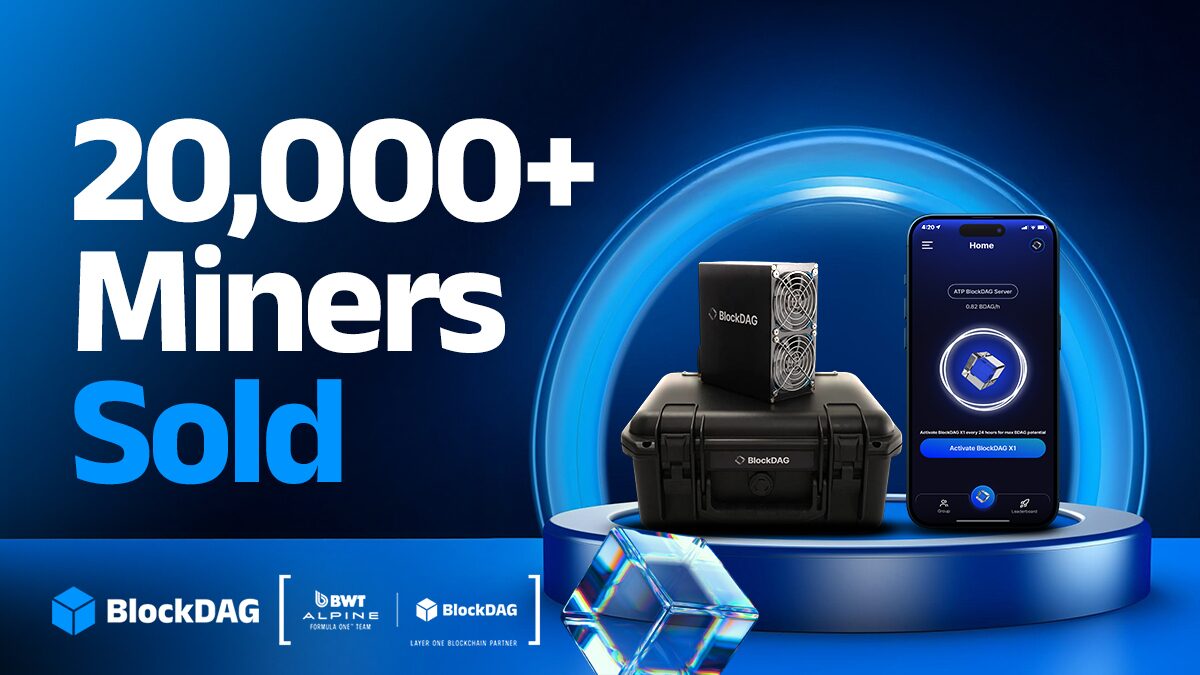
This isn’t a future promise; it’s happening right now. The proof is in the hardware. Over 20,000 X-series mining rigs have already been sold and are being shipped to community members across the globe. This physical infrastructure creates a powerful foundation, setting it apart from competitors that are only built on software.
From Whitepaper Promise to Physical Proof
In the crypto space, it’s common to see projects raise significant funds based on a detailed “whitepaper” alone. These documents outline grand ambitions, but they are ultimately just plans. Buyers are asked to fund a concept, hoping it will one day become a reality. BlockDAG has skipped this step of uncertainty.

By producing and delivering over 20,000 physical X-series miners (like the X10, X30, and X100 models) before the mainnet is even fully launched, the project has provided tangible proof of its commitment.
This isn’t just about selling hardware; it’s about building a distributed infrastructure. It shows a serious dedication to creating a long-term, functional ecosystem. Investors can see the foundation of the network, which is a rare thing in this industry. It’s a move from theoretical promise to physical reality.
The Power of True Decentralization
What does it mean to be decentralized? For many projects, their entire network runs on a handful of servers, often rented from a single provider. This creates a central point of failure. If those servers go down, the network stops. BlockDAG’s strategy is fundamentally different.
By selling 20,000+ miners and starting to ship them to individuals worldwide, the network’s processing power and security are distributed across thousands of different locations.
There is no single “off” switch. This hardware-backed foundation ensures that the mainnet, from its very first day, will be robust and secure. The network is operated by its community, not by a central team. This global spread of physical hardware is what true decentralization looks like, creating a resilient platform that is built to last.
The X-Series: Building the Foundation
The 20,000+ units already shipped are part of BlockDAG’s X-series mining rigs. These devices are the backbone of the hardware-backed network. They are not just for speculation; they are the processing hubs that will validate transactions and secure the entire blockchain. This fleet of hardware provides the decentralized power necessary for the mainnet to launch with full force. Each rig, whether it’s a compact home model or a more powerful unit, contributes to the network’s total strength.
- The X10 Miner: A small, efficient unit designed for easy home use, allowing more people to participate.
- The X30 Miner: A significant step up in power, offering a potent mix of performance and energy efficiency.
- The X100 Miner: A powerful machine built for serious mining, contributing substantial hash rate to the network.
Together, this army of miners forms the foundational layer of BlockDAG.
What Hardware Means for Investors
For anyone looking at a new project, one of the biggest questions is: “Is this real?” A physical network provides a clear answer. The sale of 20,000+ miners offers a level of confidence that software-only projects cannot.
It signals that the project is focused on fundamentals, not just marketing. This hardware base is crucial for the long-term health of the network. It provides the initial, foundational security and processing power needed to support a growing ecosystem of applications and users.
Rather than relying on a small group of internal validators, BlockDAG is empowering a global community to secure the network. This commitment to physical infrastructure demonstrates a clear vision for a platform that is secure, stable, and truly owned by its participants. It’s a strategy built on substance.
Summing up
BlockDAG is clearly building something different. The focus is not on abstract promises, but on delivering a real, physical, and tangible network. The ongoing shipment of over 20,000 mining rigs is a powerful statement. It proves this is a hardware-backed network, not a “ghost” project.
These miners are the foundation for a decentralized, secure, and resilient platform, ready to operate from day one. In a space filled with ideas that never leave the “whitepaper” stage, BlockDAG has built its foundation in the real world. This physical infrastructure is what separates a plan from a functioning ecosystem.