
Balancing Duties and Heritage: U.S.-South Korea Agreement Reinforces Partnership as Trade Dynamics Evolve
- South Korea and Trump secured a trade deal cutting auto tariffs to 15% and a $350B investment pact during APEC, resolving a dispute threatening Seoul's export-driven economy. - The agreement includes $200B annual cash infusions and $150B U.S. shipbuilding cooperation, addressing Seoul's foreign exchange concerns while linking U.S. energy/defense sector commitments. - Symbolic gifts like the Silla crown and Mugunghwa medal highlighted historical diplomacy, with Lee framing the deal as strengthening U.S.-S
South Korea’s diplomatic gestures toward President Donald Trump—including presenting a gold-plated replica of a Silla Dynasty crown and bestowing the country’s highest national honor—helped spark a breakthrough in previously stalled trade talks. During Trump’s official visit to Gyeongju for the APEC summit, both countries agreed to reduce auto tariffs from 25% to 15% and finalized a $350 billion investment deal, settling a dispute that had threatened South Korea’s export-reliant economy, according to a
The investment plan includes $200 billion in annual cash investments, limited to $20 billion per year, and $150 billion dedicated to collaboration in U.S. shipbuilding, addressing Seoul’s earlier worries about draining its foreign currency reserves, according to
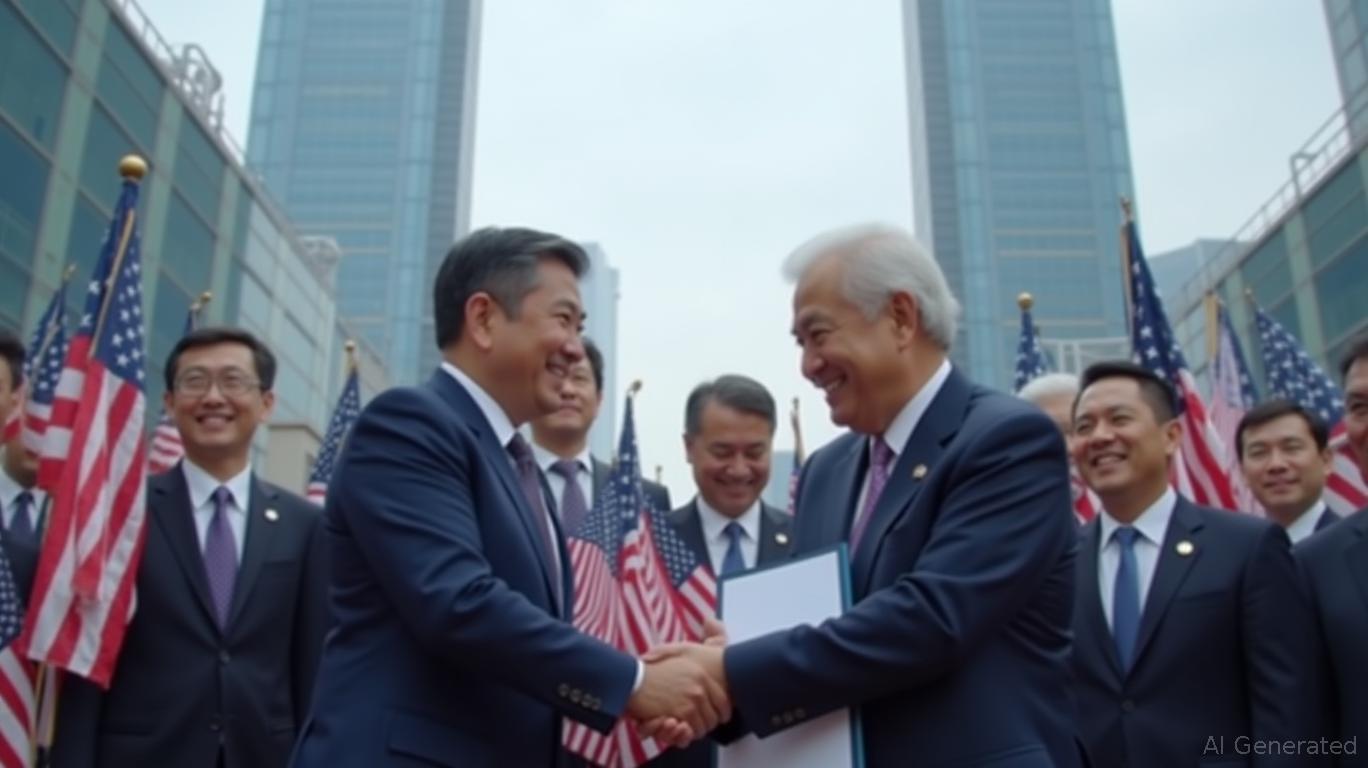
The symbolic acts during the negotiations—such as awarding the Grand Order of Mugunghwa and gifting the Cheonmachong crown—highlighted South Korea’s strategy of blending historical diplomacy with economic interests. Lee gave Trump the crown, a reproduction of a 9th-century Silla relic representing “peace and leadership,” during a museum tour in Gyeongju, presenting it as a gesture toward shared goals for regional peace, as a
This pact also relieves some of the competitive pressure South Korea faces from Japan and Europe, which had already secured lower U.S. tariffs. By matching the 15% auto tariff, South Korea gains time to update its automotive sector while keeping its status as the third-largest Asian trading partner of the U.S., a
Nonetheless, some critics argue that the deal’s reliance on non-cash elements—like shipbuilding—may limit immediate economic benefits. Shin Se-don, an economics professor at Sookmyung University, questioned whether the investment plan would be enough to counterbalance the higher tariffs on steel and aluminum, which remain at 50%, as Firstpost reported. Despite these concerns, both governments expressed satisfaction: Trump called the deal a victory for “American workers,” while Lee highlighted its importance in solidifying the U.S.-South Korea partnership amid shifting regional dynamics, according to the South China Morning Post.
Disclaimer: The content of this article solely reflects the author's opinion and does not represent the platform in any capacity. This article is not intended to serve as a reference for making investment decisions.
You may also like
The Rise of CFTC-Regulated Clean Energy Markets: Opening a New Chapter for Institutional Investors
- CFTC's 2025 approval of REsurety's CleanTrade as a SEF marks a landmark shift in clean energy markets by introducing standardized, transparent trading for VPPAs and RECs. - The platform attracted $16B in notional value within two months, enabling rapid institutional-grade transactions that previously took months to negotiate. - By addressing liquidity gaps and enabling precise risk modeling, CleanTrade is accelerating capital flows into decarbonization while bridging ESG investment gaps for institutional
The Increasing Overlap Between Health and Financial Wellbeing in Managing Personal Finances
- Global wellness economy to hit $9 trillion by 2028, driven by holistic well-being trends. - Millennials/Gen Z prioritize wellness as lifestyle, with 55% spending over $100/month on health. - Employers integrate financial wellness into health programs to reduce burnout and boost productivity. - Investors target wellness-driven SaaS, healthcare tech , and financial literacy platforms for holistic solutions.

Revealing the Value of Green Gold: The Transformative Impact of Institutional-Grade Platforms on Clean Energy Markets
- Clean energy markets hit $35.42B in 2025 but face VPPA/PPA liquidity gaps as U.S. policy rollbacks raise costs by 11.8% YoY. - REsurety's CleanTrade platform digitizes PPA trading, unlocking $16B in liquidity via CFTC-approved SEF infrastructure within two months. - Strategic S&P Global partnership standardizes PPA/REC valuations, addressing institutional investors' risk management gaps in green energy markets. - While global PPA markets grow at 14.6% CAGR to $9.5B by 2035, U.S. policy uncertainty remain

Paradex rolls out Privacy Perps with enhanced end-to-end data privacy

Trending news
MoreCrypto prices
More





