
Why is MUTM's DeFi approach drawing in $18.9 million and 18,000 investors in 2025
- Mutuum Finance (MUTM) has raised $18.9M from 18,200 investors via a 250% presale price surge to $0.035 in Phase 6. - Its dual-lending model combines peer-to-contract and peer-to-peer mechanisms to optimize liquidity and capital efficiency. - Phase 6 nearing 99% completion highlights demand for MUTM's automated, intermediary-free lending via Ethereum-based smart contracts. - The project plans Q4 2025 launch of its public lending protocol on Sepolia testnet, emphasizing transparent decentralized ownership.
Mutuum Finance (MUTM), a DeFi platform built on Ethereum, has quickly become a hotspot for those searching for strong growth prospects in 2025. Since its inception, the token price
The platform stands out for its dual lending system,

Disclaimer: The content of this article solely reflects the author's opinion and does not represent the platform in any capacity. This article is not intended to serve as a reference for making investment decisions.
You may also like
XRP Exchange Reserves Jump 10% Despite Price Rebound

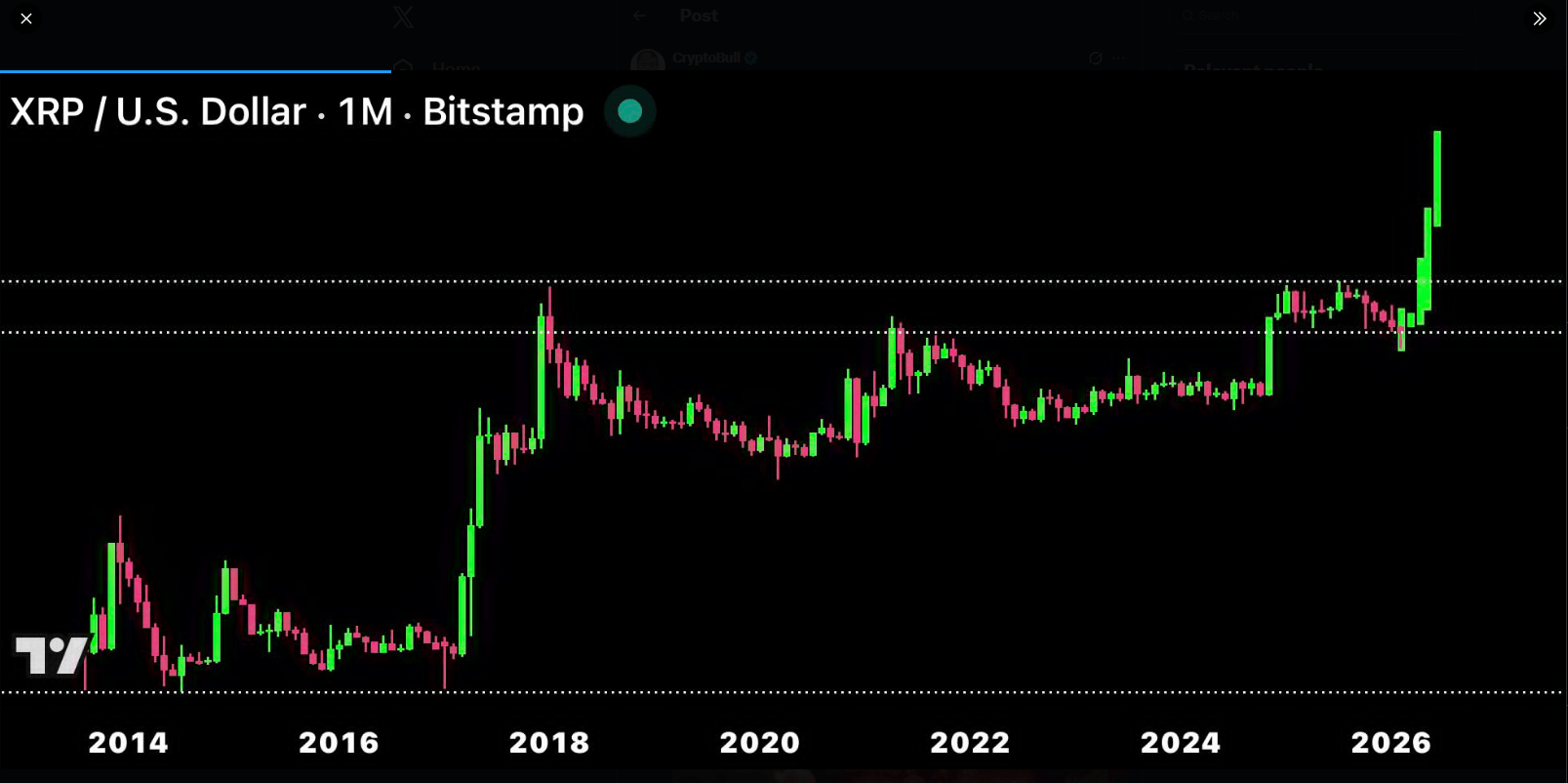
Say What You Want — XRP’s Chart Is Screaming $50 — Analyst
Trending news
MoreCrypto prices
More





