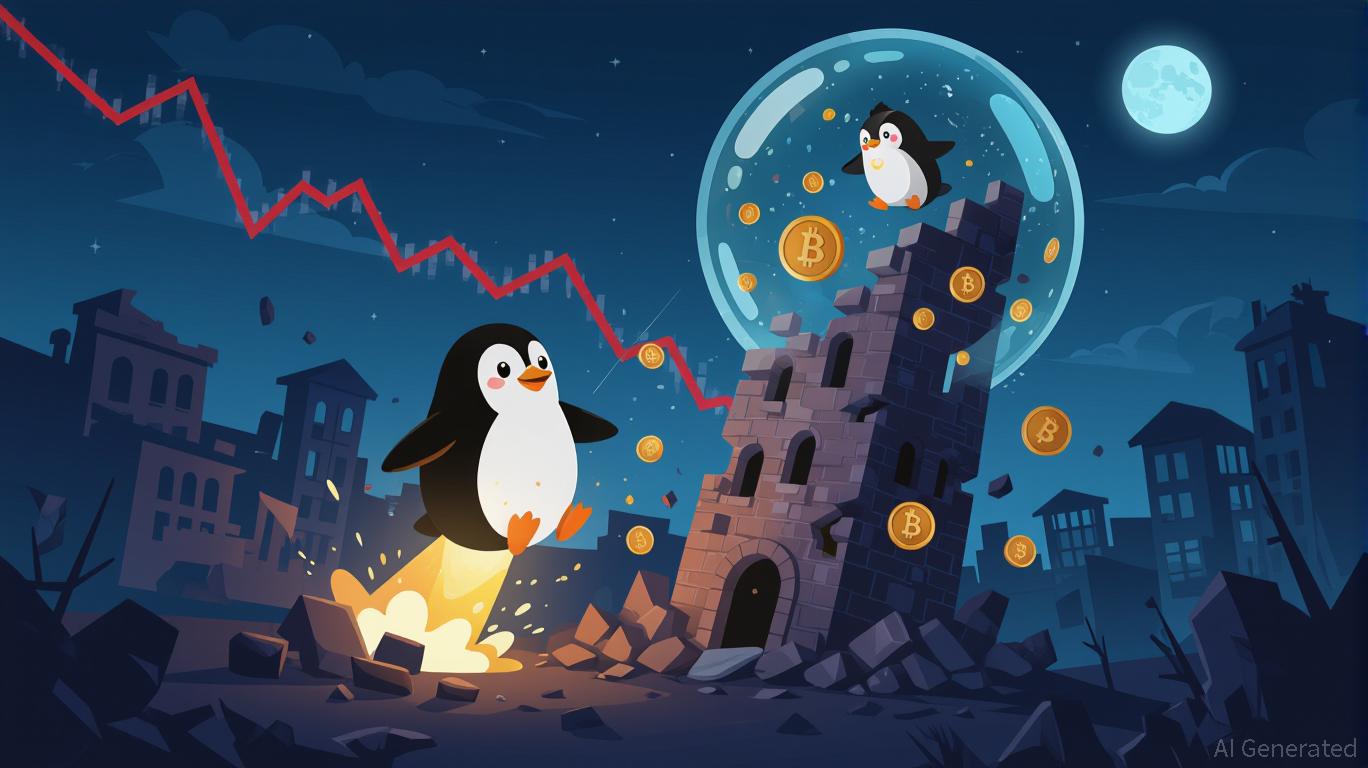
The abrupt downfall of
PENGU
, the cryptocurrency tied to the
Pudgy Penguins
NFT initiative, at the end of 2025 has highlighted the vulnerability of low-cap digital assets. By November 2025, PENGU had
dropped sharply to $0.02982
, signaling a wider crisis within the crypto industry. This article explores the initial indicators of PENGU’s downturn and provides practical portfolio adjustment strategies for investors facing the unpredictable 2025 landscape.
Early Indicators: Systemic Threats and Investor Sentiment
PENGU’s value crash was not a standalone incident but part of a chain reaction affecting small-cap cryptocurrencies. Research from Bitget
points out that the token’s fall
paralleled the declines of major coins such as
Bitcoin
and
Ethereum
, alongside a liquidity crunch that hit the market in October 2025. The $19 billion in liquidations during this period
hit small-cap tokens especially hard
, as they lack the deep liquidity and regulatory protections of larger cryptocurrencies.
Adding to these broad economic challenges was PENGU’s structural weakness. Unlike tokens with established utility, PENGU
does not have strong partnerships
, regulatory certainty, or a clear use case, leaving it highly exposed to shifts in market sentiment. This vulnerability was intensified by a 60% drop in the digital asset treasury (DAT) sector, which
accelerated the sell-off
as investors moved away from speculative coins in search of safer investments.
Blockchain data further highlights the instability within PENGU’s network.
As reported by Coindcx
, the token’s price movements were largely disconnected from project milestones, instead reflecting a broader “flight to safety” during economic uncertainty. This trend is consistent with the overall 2025 market, where
cryptocurrency prices increasingly track
traditional financial assets in response to macroeconomic developments.
Portfolio Adjustment: Diversification and Managing Liquidity
For those holding assets like PENGU, the events of 2025 highlight the importance of actively managing and diversifying portfolios. One growing tactic is to incorporate tokenized real-world assets (RWAs), such as gold and U.S. Treasuries, as a hedge against crypto market swings.
As noted by Hubbis
, platforms including
Ondo
Finance and Franklin Templeton now provide institutional-level access to tokenized RWAs, offering steady returns between 4.29% and 5.5% while limiting exposure to crypto volatility.
Stablecoins remain essential for managing liquidity. Although
tighter regulations on yield
for payment stablecoins have been implemented, they are still vital for settlements and accessing tokenized yield products. For instance, allocating PENGU alongside stablecoins in a 40-30-15-15 split (BTC/ETH, DeFi/RWAs, other altcoins, stablecoins)
helps investors achieve
a balance between growth opportunities and capital preservation.
Thematic investment strategies can further strengthen diversification. By focusing more on high-conviction areas like RWAs or DeFi, investors can reduce risks tied to specific sectors.
BlackRock’s 2025 Fall Investment Directions
stress the value of liquid alternatives and global equities for rebalancing portfolios as correlations between stocks and bonds evolve.
Institutional and Government Approaches: Insights from Singapore and the Bahamas
The turmoil of 2025 has also led to creative policy measures.
Singapore’s $5 billion EQDP
seeks to enhance liquidity in small- and mid-cap markets by encouraging quality listings and greater investor involvement. Likewise,
the Bahamas’ blue carbon investment fund
, with backing from ArtCap Strategies, illustrates how sovereign-supported, nature-based assets can provide stable income during economic uncertainty. These examples underscore the increasing importance of regulated, diversified approaches in maintaining crypto portfolio stability.
Conclusion: Adapting to a Changing Landscape
PENGU’s downfall is a clear warning about the dangers of investing in small-cap cryptocurrencies. Yet, the 2025 environment also presents new tools for risk management, from tokenized RWAs to government-backed sustainability projects. For investors, success will depend on agile portfolio rebalancing, targeting volatility, and
utilizing advanced risk analytics
to anticipate shocks like the October 2025 liquidation. As the industry continues to change, those who embrace these adaptive strategies will be better equipped to handle future market turbulence.