
Terra Founder Do Kwon Sentenced to 15 Years in Prison for Fraud

Terra founder Do Kwon has been sentenced to 15 years in prison after pleading guilty to fraud, closing a three-year battle over the 2022 collapse that reshaped the crypto industry.
A US court has sentenced Terra founder Do Kwon to 15 years in prison, concluding one of the most consequential fraud cases in crypto history.
The decision, delivered on December 11, 2025, follows Kwon’s guilty plea earlier this year.
End of the 2022 Crypto Winter Saga?
The sentencing ends a three-year and seven-month legal saga that began after the collapse of Terra’s algorithmic stablecoin ecosystem in May 2022, which erased tens of billions in market value and triggered a cascade of failures across the crypto sector.
Prosecutors argued that Kwon knowingly misled investors about the stability of TerraUSD and the backing of its broader ecosystem.
Kwon’s sentence is shorter than the 25 years received by FTX founder Sam Bankman-Fried, though both cases have reshaped global regulatory attitudes toward digital assets.
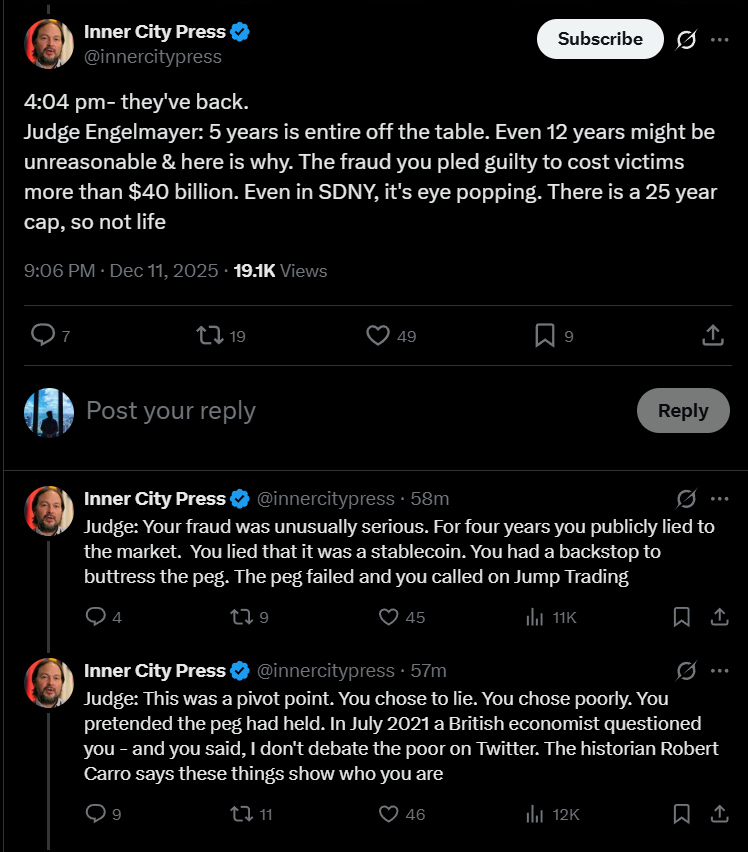 Judge’s Verdict During Do Kwon’s Trial. Source:
Judge’s Verdict During Do Kwon’s Trial.
Judge’s Verdict During Do Kwon’s Trial. Source:
Judge’s Verdict During Do Kwon’s Trial.
Prosecutors highlighted the scale of damage caused by Terra’s implosion, citing widespread retail losses and systemic fallout across lending platforms and hedge funds.
Kwon had faced charges in both the United States and South Korea before being extradited. His guilty plea consolidated proceedings under US jurisdiction, enabling today’s sentencing.
The court emphasised investor protection and accountability as central factors in determining the term.
The decision marks a turning point for the Terra community, which continues to trade legacy tokens LUNC and LUNA despite the network’s collapse. Market reaction remains volatile as traders digest the implications of Kwon’s conviction.
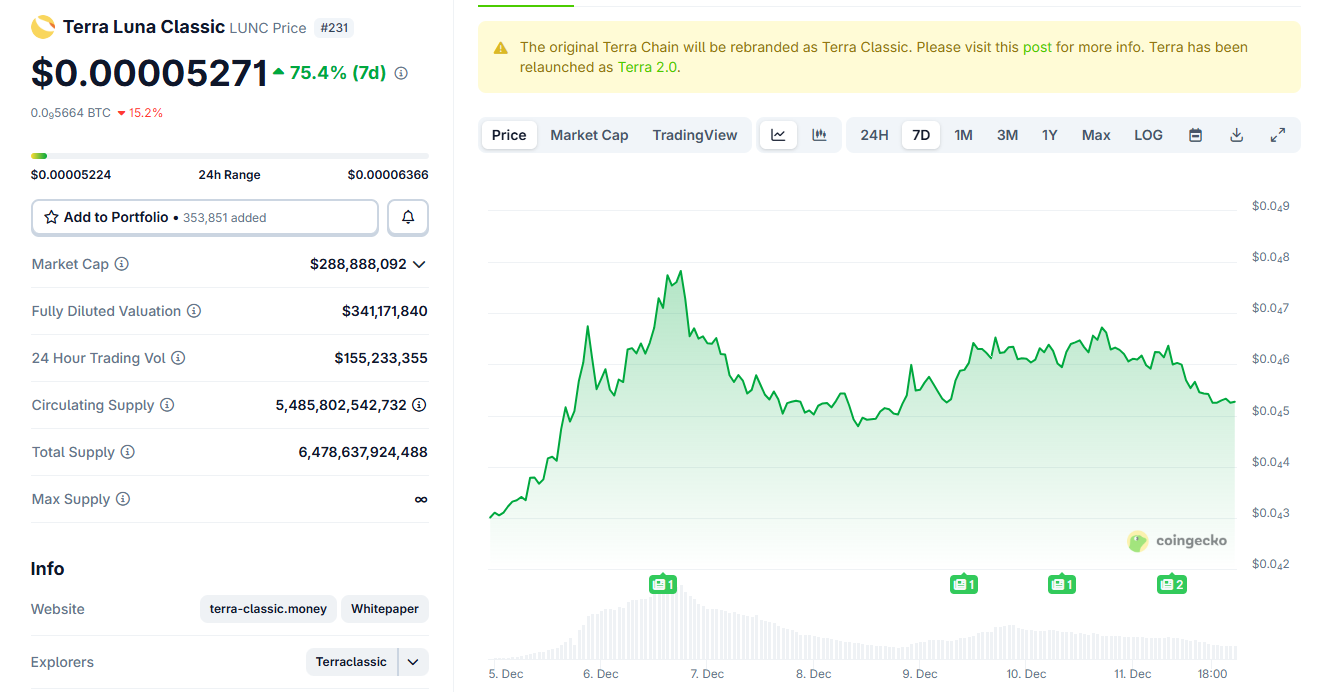 Terra Luna Classic (LUNC) Price Over the Past Week. Source:
Terra Luna Classic (LUNC) Price Over the Past Week.
Terra Luna Classic (LUNC) Price Over the Past Week. Source:
Terra Luna Classic (LUNC) Price Over the Past Week.
With the case now closed, regulators are expected to use the verdict as a reference point for future enforcement actions involving algorithmic stablecoins and high-risk financial engineering in crypto.
Disclaimer: The content of this article solely reflects the author's opinion and does not represent the platform in any capacity. This article is not intended to serve as a reference for making investment decisions.
You may also like
Fomoin Partners With DataForge.AI to Drive Decentralized Compute Power In the Web3 Launchpad Ecosystem
Italy's Fineco says will use AI to boost new client growth under plan to 2029
EUR/USD: Ongoing tensions continue to weigh on the euro – Commerzbank
Trending news
MoreCrypto prices
More





