
From handling invoices to gaining a competitive edge: How freight audit and payment have transformed over time

The Changing Role of Freight Invoice Auditing
For many years, freight invoice auditing was a routine task handled quietly within transportation or accounts payable departments. The process was simple: check the invoice for accuracy and pay the bill. Finance teams received basic post-payment checks and simple reports, while transportation departments relied mostly on information provided by carriers. This limited visibility and the need for precise payments sparked the initial demand for freight auditing, focusing on tracking freight costs by lane, mode, and cargo type.
However, as global supply chains expanded and the appetite for data grew, the straightforward approach to freight auditing began to fall short. Companies moving into new regions like Europe and Asia realized that the control and transparency they enjoyed in the U.S. did not extend overseas. Delayed cost bookings, inconsistent accruals, and varied reporting across regions made it difficult for finance and supply chain leaders to manage global transportation spending effectively. The lack of unified oversight hindered informed decision-making.
This gap led to a major shift in how organizations viewed freight auditing. What was once a basic transactional task evolved into a critical control point for both supply chain and finance operations. When executed well, freight auditing delivers faster insights into transportation costs, more accurate and timely accruals, quicker expense booking, and greater confidence in financial reports. It also empowers supply chain leaders to evaluate carrier performance consistently across different regions.
Challenges with Outdated Freight Audit Platforms
Many older freight audit systems were built to address problems of the past, focusing mainly on domestic invoices. As transportation networks became global and invoices more complex, these platforms struggled to keep up. Some providers still rely on manual processes, approve invoices they cannot automatically verify, and produce static reports that no longer meet modern needs.
Even companies that call themselves global often operate from a single country, with regional tasks handled by disconnected teams or outsourced partners. This setup can lead to frequent disruptions from weather, infrastructure issues, or workforce shortages. The result is fragmented transportation spend data, making it hard for customers to generate accurate accruals and financial reports across regions. Often, customers must hire extra staff to compensate for the shortcomings of their audit and payment providers.
Designing for Global Reach from the Start
nVision Global chose a different approach. Over 25 years ago, as the company expanded internationally, it recognized that traditional models would not scale. The company built a flexible global platform, strategically locating facilities in regions less prone to severe weather or infrastructure instability. They invested in multilingual teams, trained to support complex transportation networks across various countries, languages, tax systems, and invoice formats.
Luther Brown, nVision Global’s founder and CEO, describes the company’s “Global by Design” philosophy as a deliberate strategy to support customers and transportation networks worldwide.
“Achieving this required a single global platform—what is now the nVision Ecosystem—with standardized procedures and teams capable of operating around the clock, providing consistent visibility everywhere,” Brown explains.
This model allows customer and carrier support to happen in the same time zones and languages as the business activity, ensuring teams understand local requirements and realities. Work transitions smoothly across regions throughout the day, maintaining visibility and eliminating delays or handoffs. The outcome is a unified global perspective spanning the Americas, Europe, and Asia-Pacific.
The Ongoing Importance of Human Expertise
Automation has become vital in modern freight auditing, especially for tasks that were once manual and repetitive. For example, extracting data from freight bills used to require significant human effort, but intelligent automation now streamlines this process.
nVision Global’s nSure AI Data Capture solution exemplifies this advancement. Trained on millions of freight bills, the system continuously improves its accuracy, now achieving a success rate above 99.3 percent—verifiable against original documents.
This matters because capturing data directly from the invoice allows for true validation of payment requests. Traditional EDI-based methods rely on trusting the data submitted by carriers, with limited ability to cross-check against the actual invoice.
“True accuracy isn’t just about successful file transmission; it’s about validating data against the real freight bill,” Brown emphasizes.
Despite advanced automation, human judgment remains essential. The system presents its findings to experienced experts, who review, make decisions, and provide feedback that helps the technology learn and improve. This partnership ensures that automation enhances efficiency and accuracy, while human oversight delivers trust and accountability—a combination many companies still overlook.
Transforming Data into Strategic Insights
Detecting anomalies in freight billing is not a new practice. For years, nVision Global and other advanced providers have used technology to spot unusual patterns, such as unexpected billing behaviors, new carriers submitting invoices, or unsupported charges. While some call this fraud detection, the reality is more complex—not every irregularity is intentional, and mistakes do happen. The principle of “trust but verify” remains central to freight auditing.
What has changed is how this data is used. Today, freight audit and payment is about more than just verifying charges before payment—it’s about turning data into actionable insights. Consistent, accurate auditing helps customers improve accruals, identify trends, address billing practices, and optimize transportation spending, sometimes even transforming business strategies.
“Freight invoice audit and payment ensures invoices are correct, payments are justified, anomalies are detected early, and data drives better decisions,” Brown says.
This foundation—built on global operational discipline and the synergy of automation and human expertise—elevates freight auditing from a back-office function to a strategic business advantage.
Disclaimer: The content of this article solely reflects the author's opinion and does not represent the platform in any capacity. This article is not intended to serve as a reference for making investment decisions.
You may also like
Bitcoin Price Bounces, But Bears Are Still in Control: Analysis
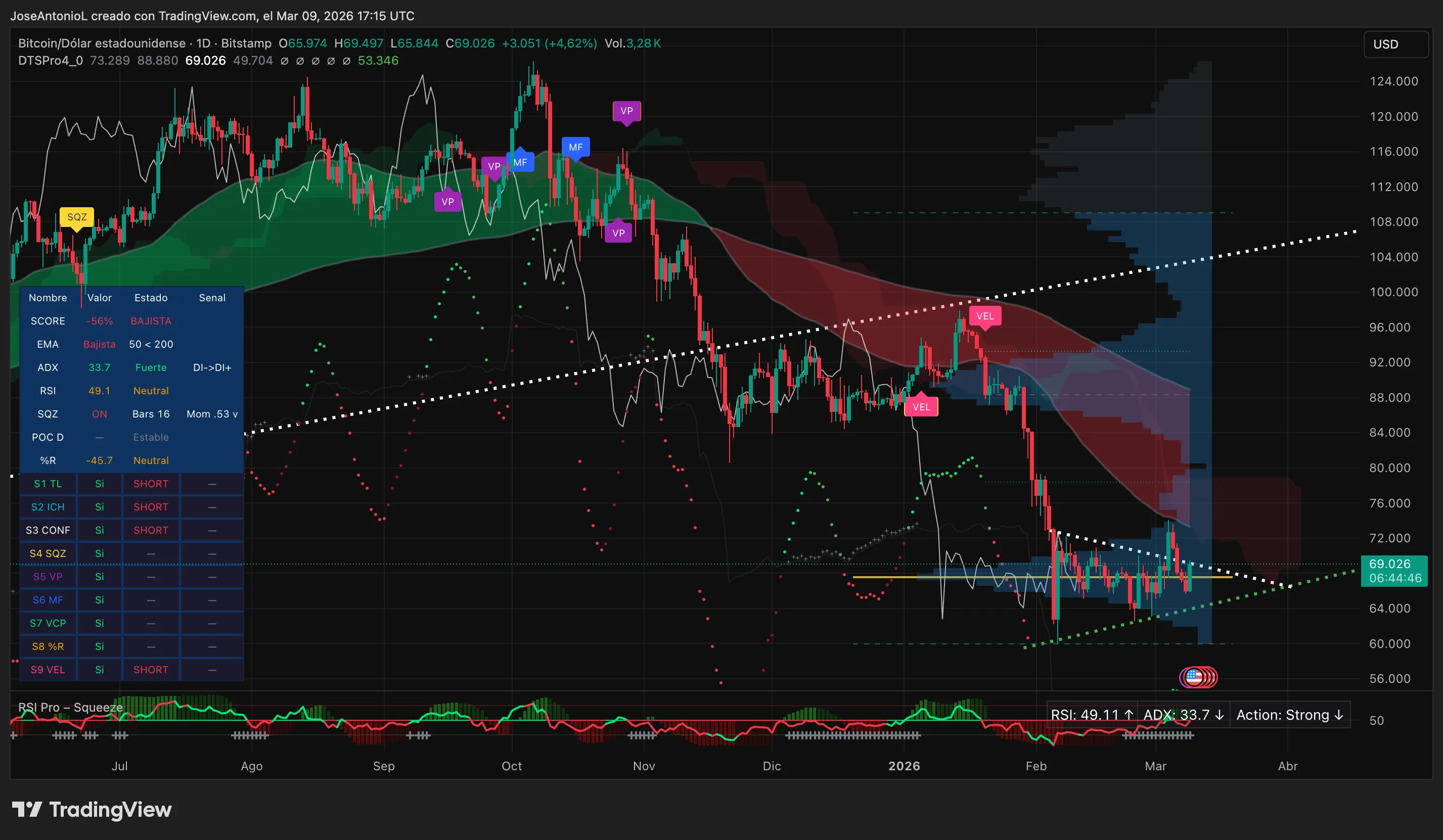
Bitcoin Price Rebounds, Yet Sellers Maintain Dominance: An Analysis
USD/JPY Price Forecast: Climbs on safe-haven US Dollar gains
Trending news
MoreCrypto prices
More





