
Wall Street’s top investment strategies unravel as the market downturn intensifies

Wall Street Shifts Away from Risk Amid Market Uncertainty
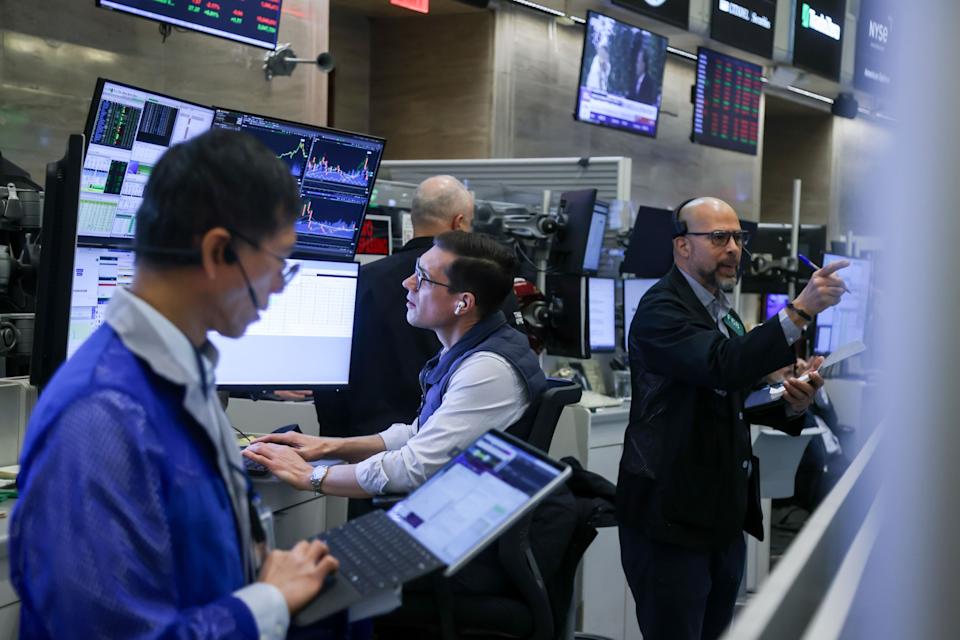
Photographer: Michael Nagle/Bloomberg
Across Wall Street, the recent enthusiasm for high-flying assets such as technology shares, gold, and digital currencies has quickly faded, replaced by a widespread move toward caution.
Unlike the sharp downturn triggered by President Donald Trump’s trade policies last April, this pullback has been driven by a steady stream of developments fueling concerns that asset prices had climbed too high. As a result, investors have started to exit riskier positions en masse.
Top Stories from Bloomberg
This trend was evident on Thursday, as the S&P 500 dropped 1.2% for its third consecutive loss, while the Nasdaq 100 experienced its steepest decline since April. Software companies continued to fall, especially after Anthropic, an AI firm, introduced a new model aimed at financial research, highlighting the disruptive potential of emerging technologies.
Silver, which had previously mirrored gold’s rally to record levels, plunged by 17%. Bitcoin tumbled 10%, erasing all gains made since Trump’s election 15 months ago, as leveraged positions were unwound. Meanwhile, U.S. Treasury bonds surged, reaffirming their status as a safe haven. After markets closed, Amazon.com Inc. shares fell over 8% following the announcement of a $200 billion investment in data centers, chips, and other infrastructure, raising doubts among investors about the company’s AI strategy.
“Investors are clearly becoming more defensive,” noted Brian Frank, president and portfolio manager at Frank Funds. “It’s a climate where people act first and ask questions later.”
Changing Market Sentiment
At the start of the year, optimism was high on Wall Street, with many analysts forecasting the longest winning streak for stocks in nearly 20 years. These predictions were based on expectations of continued AI-driven growth, a surprisingly strong economy supporting corporate earnings, and anticipated interest rate cuts from the Federal Reserve.
While much of this positive outlook remains, recent weeks have brought renewed attention to several looming threats: the risk of companies being left behind by the AI revolution, uncertainty over the Fed’s direction if Kevin Warsh replaces Jerome Powell as chair, and concerns that valuations for assets like gold, Bitcoin, and major tech firms such as Alphabet Inc. may be unsustainable.
Cryptocurrency Faces Steep Declines
Bitcoin’s reversal has been particularly striking. After surging throughout last year amid a wave of speculative buying following Trump’s victory, the cryptocurrency market has seen sharp losses this month as investors pulled out funds.
On Thursday, Bitcoin’s selloff intensified, dragging down other digital coins, ETFs, and companies like Strategy Inc. that hold significant crypto assets. By late afternoon in New York, Bitcoin had dropped 13% to just above $63,000, cutting its value in half from its record high four months ago.
“Market-wide fear and uncertainty are unmistakable,” said Chris Newhouse, head of business development at Ergonia.
Stock Market Sees Broad Retreat
While the decline in equities was less dramatic than in cryptocurrencies, it was widespread, with nine out of eleven major sectors in the S&P 500 posting losses. Alongside concerns about which firms might lose out in the AI race, investors are questioning whether the massive spending on new technology will ultimately deliver returns. This was reflected in Alphabet’s share price drop, despite the company reporting better-than-expected revenue while unveiling ambitious investment plans.
Kim Forrest, chief investment officer at Bokeh Capital Partners, believes the recent pullback signals that the most popular stocks and assets like gold had become overextended and were due for a correction. “It’s a reset,” she explained. “Momentum may have simply run its course.”
Reporting contributed by Matt Turner.
Most Popular from Bloomberg Businessweek
©2026 Bloomberg L.P.
Disclaimer: The content of this article solely reflects the author's opinion and does not represent the platform in any capacity. This article is not intended to serve as a reference for making investment decisions.
You may also like


Trending news
MoreCrypto prices
More





