
The White House states its support for a robust US dollar, yet investors remain hesitant to engage.

The US Dollar Faces Its Steepest Decline in Years
In 2025, the US dollar experienced its most significant annual decline since 2017. Despite ongoing claims from some Trump administration officials that the White House supports a robust dollar policy, investor sentiment suggests otherwise.
Although the dollar index has seen a modest rebound recently, it remains roughly 1% lower than at the start of the year, compounding the 9% drop recorded throughout 2025.
Policy Uncertainty Clouds Dollar Outlook
Goldman Sachs currency analysts recently noted that ongoing policy unpredictability is likely to prevent the dollar from regaining its previous strength. At the beginning of the year, many investors anticipated stronger support for economic growth, but a wave of new tariff threats has undermined those expectations.
Impact of Tariffs and Shifting Sentiment
After President Trump introduced "Liberation Day" tariffs in April last year, the dollar—long considered the backbone of the global economy—plunged over 5%. Nearly twelve months later, the currency has yet to recover from those losses.
For decades, the dollar has held the status of the world’s reserve currency, often described as an "exorbitant privilege" for the US. This role has made dollar-denominated assets a safe haven during times of market stress.
Thierry Wizman, a global strategist at Macquarie Bank, observed that if the dollar’s reserve status relies on the US’s global leadership and commitment to a rules-based order, recent events could prompt a gradual shift away from the dollar and encourage the search for alternatives.
Monetary Policy and Leadership Changes
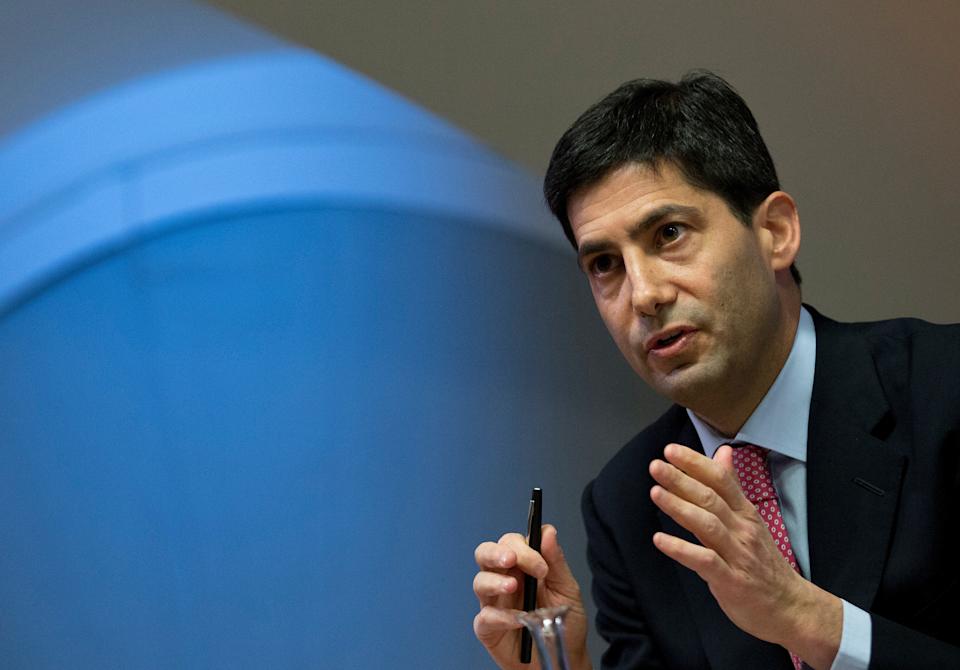
Markets are also watching for potential changes in US monetary policy following President Trump’s nomination of former Fed governor Kevin Warsh to succeed Jerome Powell as Federal Reserve Chair. Warsh, known for his hawkish stance, served during the 2008 financial crisis. News of his nomination briefly lifted the dollar as investors anticipated possible aggressive rate cuts under his leadership.
President Trump told NBC News he would not have chosen Warsh if he had shown any inclination to raise interest rates, emphasizing that the Fed is likely to lower rates due to currently high levels.
Despite these developments, the dollar continues to underpin the global financial system. However, as geopolitical tensions and policy unpredictability increase—often originating from US government actions—investors are increasingly seeking alternatives such as the euro, Swiss franc, and gold.
Long-Term Shifts and the Rise of Hard Assets
Macquarie’s Wizman believes that the trend of diversifying away from the dollar is far from over, especially as periods of dollar weakness, often triggered by major geopolitical and policy shifts, can persist for many years. He also cautioned that the US may not be able to maintain its reserve currency status indefinitely if current policy directions continue.
Gold soared by more than 60% in 2025, marking one of its strongest rallies ever, and remains up over 70% year-over-year despite a recent pullback. Other metals, including silver and platinum, as well as industrial commodities like copper and steel, have also surged alongside gold into early 2026.
Global Currency Movements and the Dollar’s Future
Ole Sloth Hansen, head of commodities at Saxo Bank, attributed the renewed appetite for hard assets to concerns about the dollar’s stability and increasing capital outflows from the US, which have contributed to a fragile outlook for the currency.
Major currencies such as the euro, pound, and Swiss franc have all gained ground against the dollar in recent weeks. Emerging market currencies, including the Brazilian real, Mexican peso, and South African rand, have also rallied, despite typically trading at a discount to the dollar.
Bank of America economists caution that it is premature to interpret these currency moves as definitive evidence of dollar debasement. They argue that a true debasement would involve a sustained decline in the dollar alongside falling values for other US financial assets.
Nevertheless, recent trends suggest that investor preferences may be shifting in a more structural way, and the dollar could face further weakness as key factors—such as a dovish Federal Reserve and the lingering effects of trade disputes—continue to unfold.
Is the Dollar’s Dominance at Risk?
Steven Kamin, former head of international finance at the Federal Reserve, recently wrote in the Financial Times that, for now, there are no viable alternatives to the dollar as a global currency—not even the euro or renminbi. The US still boasts the world’s largest and most liquid capital markets. However, he noted that while it was once difficult to imagine a world without dollar supremacy, such a scenario is now conceivable in the decades ahead.
Disclaimer: The content of this article solely reflects the author's opinion and does not represent the platform in any capacity. This article is not intended to serve as a reference for making investment decisions.
You may also like
Progressive's 219th Volume Rank Marks Institutional Buys Amid Analyst Divergence
AJG Shares Surge 1.82% as Trading Volume Plummets 33.38% to 230th Rank in Active Equities
VRTX Tumbles Amid Profit-Taking Despite Breakthrough IgAN Trial Data, Ranks 226th in Market Turnover
Trending news
MoreCrypto prices
More





