
Coal Will Require More Than Military Support for a Comeback in the US

Trump Unveils New Measures to Support US Coal Industry
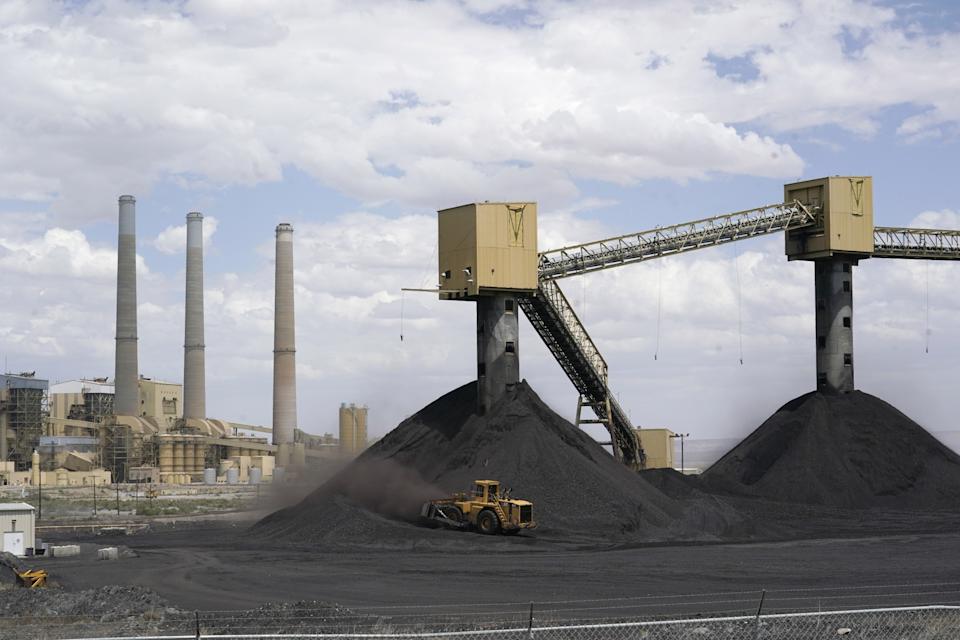
Photographer: George Frey/Bloomberg
President Donald Trump has announced a significant initiative aimed at revitalizing the declining US coal sector. The plan includes allocating $175 million in federal funding to modernize six coal-fired power plants, as well as directing the Department of Defense to purchase electricity from additional coal facilities.
Although these steps are expected to keep several aging generators operational for a longer period, they do not address the primary challenge facing the industry: persuading private investors to commit to new coal projects despite the considerable financial and political uncertainties involved.
Top Stories from Bloomberg
“When political shifts can halt investment in new plants and mines, it discourages significant development,” commented Kevin Book, managing director at ClearView Energy Partners. “This initiative may bring incremental changes, but it’s unlikely to transform the industry.”
This effort is part of Trump’s broader strategy to reshape the nation’s energy policy, favoring fossil fuels and rolling back environmental regulations to increase coal consumption. Despite these aggressive actions, experts remain doubtful that such measures will secure coal’s future in the long run.
James Lucier, managing director at Capital Alpha Partners, remarked, “I don’t believe the Trump administration can revive the coal industry. The push for ‘big beautiful coal’ is more show than substance; there’s little demand for it, and the economics simply don’t add up.”
Trump introduced the plan at a White House event attended by coal executives, miners, and energy leaders. While he has consistently advocated for coal since his first term, previous attempts have not reversed the industry’s decline, largely due to its association with climate change.
The announcement led to a surge in coal company stocks on Thursday. Peabody Energy Corp., the country’s largest coal producer, saw its shares rise over 6% before the New York market opened, while Ramaco Resources Inc. gained 3%.
Trump is now emphasizing coal’s role as a vital energy source amid increasing electricity demand. The administration’s next objective is to attract private investment to expand coal capacity.
Officials have indicated they are exploring ways to combine federal resources with private funding to facilitate the construction of new coal plants.
Challenges and Future Prospects for Coal
Energy Secretary Chris Wright noted during a February 6 briefing that certain regions in the US are considering new coal plant projects. He acknowledged that federal funding alone is insufficient to finance even a single plant, emphasizing the need for private sector co-investment.
Although Trump’s policies may extend the operation of some coal plants, industry analysts question whether these efforts will yield lasting benefits. Utilities are increasingly favoring renewable energy and natural gas, and coal’s share of US electricity generation is projected to fall to about 16% this year, down from over half in previous decades.
According to Andrew Blumenfeld, director of data analytics at McCloskey by OPIS, federal incentives might prompt some investment, but most activity will likely focus on upgrading existing plants or reopening closed facilities rather than building new ones.
Interior Secretary Doug Burgum envisions a strategy of “triple co-location,” where power plants and data centers are built near coal mines, reducing the need for costly infrastructure to transport coal and electricity over long distances. “Some will see the advantage of having a mine, a coal plant, and a data center all in one place, eliminating the need for transmission lines and providing ample power,” Burgum explained.
However, even with strong federal backing, there is no certainty that future administrations will maintain the same level of support for coal projects.
Blumenfeld added, “I doubt many utilities are planning to construct new coal power plants. The political risks remain significant.”
More from Bloomberg Businessweek
©2026 Bloomberg L.P.
Disclaimer: The content of this article solely reflects the author's opinion and does not represent the platform in any capacity. This article is not intended to serve as a reference for making investment decisions.
You may also like
INPLAY OIL CP (IPOOF) Tops Q4 Earnings Estimates

BoC: Growth, energy and cut risks – TD Securities
Revolut seeks de novo banking charter with OCC
Trending news
MoreCrypto prices
More





