
Labour’s promise to improve living conditions is now in ruins

Labour Faces Mounting Challenges as UK Living Standards Stagnate
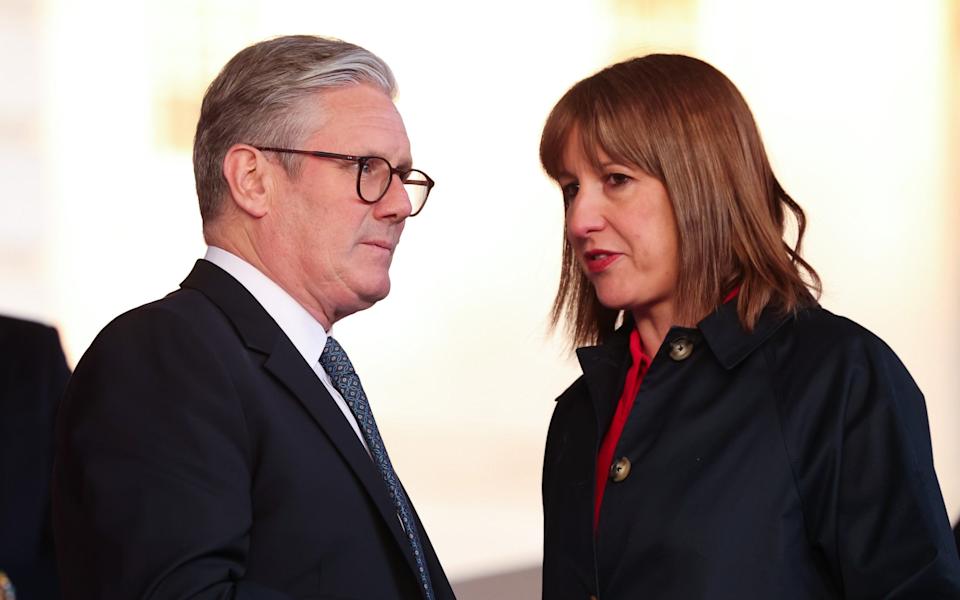
Sir Keir Starmer and Rachel Reeves have made addressing the cost of living crisis a central focus of Labour’s platform. However, British households are facing a bleak economic outlook.
Although Labour has promised to improve living standards and make people feel more prosperous, recent trends suggest the opposite is happening.
Data from the Office for National Statistics (ONS) reveals that GDP per capita declined during the last half of 2025, hindered by higher taxes, inflation, and sluggish wage increases.
While the UK’s GDP per capita did rise by 1% over the year, this growth was significantly lower than the long-term average of 1.9%, with two consecutive quarters of decline between June and December 2025.
The situation has become even more concerning since Sir Keir Starmer assumed office. Since July 2024, quarterly GDP per capita growth has averaged just 0.6%, falling short of the 0.9% average seen each quarter from June 2010 to June 2024, when Labour was not in power.
This trend poses a serious challenge for Labour, whose leadership has prioritized resolving the cost of living crisis.
Expert Warnings and Grim Forecasts
Many economists caution that as long as economic growth remains weak, living standards are unlikely to improve. The International Monetary Fund (IMF) recently projected that the UK would see the slowest growth in living standards among G7 nations, echoing a broader sense of pessimism.
The Resolution Foundation, a progressive think tank, described the stagnation in disposable income as “alarming.” Their analysis suggests that the UK’s poorest families may have to wait 137 years for their living standards to double.
Ruth Curtice, chief executive of the Resolution Foundation, highlighted the far-reaching effects of this squeeze, noting that many families have lost hope of owning a home and that employment no longer guarantees an escape from poverty.
The think tank has also warned that government policies risk further undermining living standards, as measured by GDP per capita.
Income Growth Slows Amid Tax Hikes
Projections from the Resolution Foundation indicate that real household disposable income—an important measure of living standards—is set to grow more slowly during this parliamentary term than in any previous period, except for the 2019–2024 term.
Figures from the Office for Budget Responsibility (OBR) released in November estimate that real household disposable income will increase by only 0.6% this year, even before the latest round of tax increases introduced by Rachel Reeves takes effect.
The OBR has warned that stagnant wage growth and the ongoing freeze on income tax thresholds will further strain household finances.
Long-Term Outlook Remains Bleak
According to the OBR, forecasts for disposable income growth over the next five years are “well below the last decade’s average growth of 1% per year,” which followed the austerity period.
Last year’s Budget saw Ms Reeves raise taxes by an additional £30 billion, and the extension of the income tax threshold freeze is expected to push millions into higher tax brackets by the decade’s end.
Economists caution that these tax hikes will erode disposable incomes nationwide, making significant improvements in living standards unlikely.
OECD data shows that in the third quarter of 2025, the UK experienced a 0.8% drop in real household income per capita—the largest decline among G7 countries. The OECD attributes this to increased taxes on income and wealth.
As a result, many households are being forced to cut back on spending, whether by skipping meals or foregoing non-essential purchases, to cope with the squeeze on living standards.
Political Implications and a Glimmer of Hope
Labour’s commitment to supporting the most vulnerable while driving economic growth could be undermined by these trends, potentially impacting their electoral prospects.
Lord Frost, director general of the Institute of Economic Affairs, a conservative think tank, remarked, “Whatever the Government’s growth strategy may be, it isn’t working. The economy has virtually stalled since the spring and GDP per head is falling again: if you feel poorer, it’s because you are.”
Despite the gloomy outlook, some see signs of hope. Lord O’Neill of Gatley, an economist and former Conservative minister, noted that underlying productivity may be starting to improve, with January data coming in stronger than anticipated. He suggested that this could encourage employers to invest more in technology and consider hiring more cautiously.
For many households, these early signs of productivity growth offer a small measure of optimism that economic conditions may improve in the coming year.
Disclaimer: The content of this article solely reflects the author's opinion and does not represent the platform in any capacity. This article is not intended to serve as a reference for making investment decisions.
You may also like
Nvidia-backed startup Scintil Photonics starts testing laser chips with customers
Dollar Tree (DLTR) Q4 Earnings Preview: Key Insights to Consider Beyond the Main Estimates
Dollar Tree (DLTR) Q4 Earnings Preview: Key Insights Beyond the Main Estimates
Uncovering Semtech (SMTC) Fourth Quarter Forecast: Analyst Predictions for Essential Figures
Trending news
MoreCrypto prices
More





