
AI enthusiasts believe that this UK-based firm is significantly underappreciated in value

Raspberry Pi's Unexpected Rise Amid Meme Stock Mania
Eben Upton, CEO of Raspberry Pi, was among the last at his company to notice that their stock had become the center of a meme trading craze. While vacationing in California during the school break, Upton was unaware that Raspberry Pi shares had soared over 40%, fueled by speculation that the company would benefit from the surge in artificial intelligence.
Reflecting on the situation from his hotel room in the mountains, Upton shared, “I slept through the first several hours, so it was quite a surprise to wake up to a flood of WhatsApp messages asking what was happening.” He joked, “I definitely picked the wrong week to travel.”
Based in Cambridge, Raspberry Pi is known for producing compact, affordable computers that appeal to both hobbyists and industrial users, with prices starting at just £3.70.
Raspberry Pi is one of the few tech firms to have gone public in the UK in recent years. Its 2024 debut on the London Stock Exchange was seen as a positive sign for British markets.
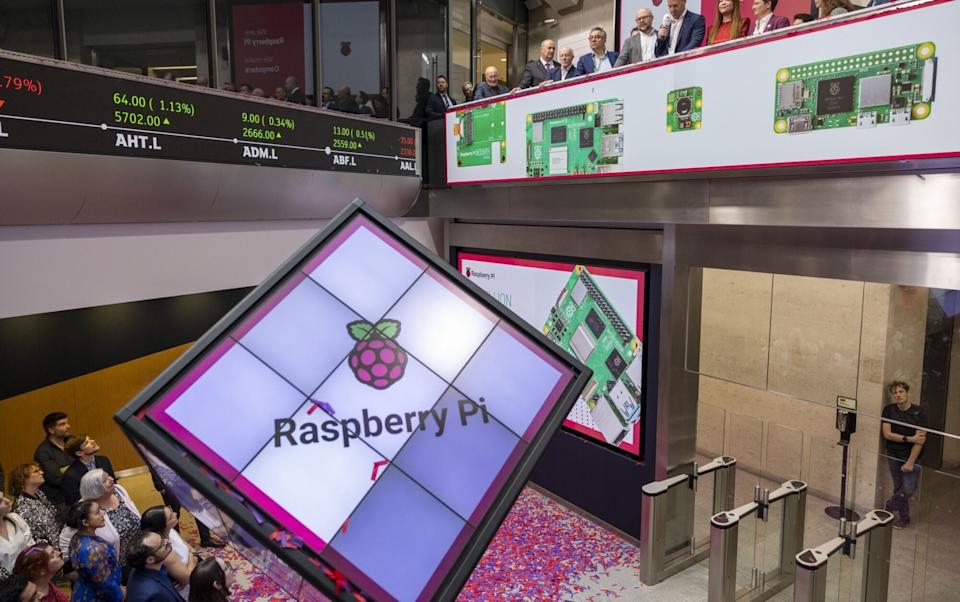
Despite its promising start, the company faced challenges. Rising global memory chip costs forced Raspberry Pi to increase prices, and last month, its stock dipped below its initial offering price for the first time.
The Raspberry Pi Foundation, the charitable organization behind the company, has also faced questions about its mission. Originally established to teach children programming skills, the foundation now contends with concerns that AI advancements could automate much of coding.
Social Media Hype Drives Stock Surge
This week, those worries faded into the background as Raspberry Pi’s share price jumped by as much as 94%, pushing its valuation past £1 billion. The rally was sparked by online traders who saw the company as a potential beneficiary of the AI boom.
The momentum began when a user named Serenity, active on the WallStreetBets forum, described Raspberry Pi as an interesting trading opportunity.
While most Raspberry Pi computers are used for DIY projects like smart home setups or retro gaming, recent weeks have seen enthusiasts buying the devices to run OpenClaw, a popular AI assistant. Traders speculated that this trend could significantly boost sales.
This sudden interest echoed the meme stock phenomenon of 2020 and 2021, when companies gained cult status on social media, attracting investors motivated by community enthusiasm rather than financial fundamentals. GameStop, the American video game retailer, became the poster child of this movement, with its shares skyrocketing from $4 to $483 in a matter of weeks, thanks to Reddit and trading apps like Robinhood.
Inside the Meme Stock Label
Upton is cautious about embracing the “meme stock” label. “I’m not sure if ‘meme stock’ is meant as an insult,” he admits. He also believes that the retail investors supporting Raspberry Pi may be more knowledgeable than many assume, perhaps even outpacing institutional investors in understanding the company’s potential.
“Events like this make people realize what our platforms are capable of,” Upton explains. “There are many individuals with a deep understanding of our technology, and they might be better at recognizing the value of our most advanced features.”
The Role of OpenClaw and AI
OpenClaw, previously known as Clawdbot, has recently captured the attention of the AI community. This personal AI assistant, accessible via WhatsApp, can manage emails and finances, and has developed a devoted following in Silicon Valley. Because it requires advanced computing resources, experts recommend running it on a dedicated device—like a Raspberry Pi.
Earlier this week, OpenAI, the company behind ChatGPT, hired Peter Steinberger, the creator of OpenClaw. Meanwhile, developers in China have adapted the software to run even on Raspberry Pi’s most affordable models.
Raspberry Pi’s Origins and Mission
Upton, a trained computer scientist, founded Raspberry Pi while working at the University of Cambridge’s computer lab, motivated by a decline in students enrolling in programming courses. Before going public, the company was majority-owned by the Raspberry Pi Foundation, which still holds a 47% stake and is dedicated to teaching children how to code.
The company is still largely run by engineers. Upton notes that many employees have been experimenting with OpenClaw at the company’s headquarters, though he personally has been focused on securing memory chips, which are in high demand due to the growth of data centers.
“It’s a bit ironic,” Upton says. “My team and I have created one of the most exciting devices out there, but I rarely get to use it myself.”
Employee Ownership and Future Prospects
Many staff members will benefit from the recent stock rally, as about 80% of employees own shares. Upton himself made several share purchases before the surge, and his stake is now valued at around £10 million.
The increase in share price will provide the Raspberry Pi Foundation with additional resources to support coding clubs and offer grants to nurture future computer scientists.
AI’s Impact on Raspberry Pi’s Mission
While a surge in hobbyists buying Raspberry Pi devices aligns with the company’s goal of encouraging hands-on computing, the rapid advancement of AI has raised concerns that teaching coding could become obsolete. Modern AI systems have become adept at generating code, sparking fears that programming jobs could disappear as automation takes over.
Upton firmly disagrees with this outlook. He believes that AI will make software developers 20–30% more efficient, potentially even doubling productivity, but insists that human expertise will remain essential. “Writing code is actually a small part of what software engineers do,” he explains.
However, he worries that pessimistic narratives from Silicon Valley might discourage people from pursuing careers in programming. “If people start believing that coding is no longer important, it could undo years of progress made by the foundation in promoting computer science education,” he warns. “Even if it’s not true, such beliefs can be very damaging.”
AI may have turned Raspberry Pi into one of Britain’s most talked-about stocks, but Upton hopes the technology won’t render the company’s core mission obsolete.
Disclaimer: The content of this article solely reflects the author's opinion and does not represent the platform in any capacity. This article is not intended to serve as a reference for making investment decisions.
You may also like
XRP Price Prediction: What Will Be the XRP Price at the End of February?
Large Bitcoin Holders Rebuild Reserves After Heavy Selling

If OpenAI is valued at $830 billion, how much should Google be worth?
XRP Price Prediction: XRP Holds $1.4306 As Deutsche Bank Expands Ripple Tech
Trending news
MoreCrypto prices
More





