
BOJ may raise rates in March if yen resumes slide, says ex-policymaker

By Leika Kihara
TOKYO, Feb 23 (Reuters) - The Bank of Japan may raise interest rates as soon as March if the yen renews its slide ahead of a U.S.-Japan summit expected to be held during the month, former central bank board member Makoto Sakurai told Reuters.
Prime Minister Sanae Takaichi is expected to visit Washington for a meeting with U.S. President Donald Trump around the time the BOJ holds its next policy meeting on March 18-19.
Takaichi may seek the BOJ's help in keeping yen falls in check, as the fact Washington conducted rate checks to prop up the yen last month signals its preference for the currency to strengthen against the dollar, Sakurai said in an interview on Friday.
"Currency intervention has only a temporary effect in combating yen-selling pressure. The best way to counter a weak yen is for the BOJ to raise interest rates," said Sakurai, who retains close contact with incumbent policymakers.
A renewed yen slide would push up inflation through higher import costs and offset some of the downward pressure from government fuel subsidies, Sakurai said.
If the need to combat sharp yen falls emerges, the BOJ can justify raising rates as soon as in March by pointing to prospects of strong wage growth in annual spring wage talks between companies and unions, he added.
"It would make better sense to wait until April but depending on yen moves, there's a chance the BOJ could raise rates in March," Sakurai said.
Sakurai served as BOJ board member from 2016 to 2021, around the time the central bank began shifting its policy focus away from huge asset purchases towards controlling long-term interest rates through the introduction of bond yield control.
He said the BOJ may need to hike twice each in 2026 and 2027 to push its policy rate - now at 0.75% - to 1.75%, which is likely the level that neither cools nor overheats the economy.
Hiking rates at a faster pace could hurt Japan's banking system by increasing bankruptcies among small firms and hurting the balance sheet of regional lenders, Sakurai said.
The BOJ ended a decade-long, massive stimulus programme in 2024 and raised rates several times including in December, when it took its short-term policy rate to a 30-year high of 0.75%.
With inflation exceeding the BOJ's 2% target for nearly four years, Governor Kazuo Ueda has signaled the BOJ's readiness to keep raising rates if its economic projections materialise.
A majority of economists polled by Reuters expect the BOJ to raise rates to 1% by end-June, while markets have priced in a roughly 70% chance of a hike by April.
Disclaimer: The content of this article solely reflects the author's opinion and does not represent the platform in any capacity. This article is not intended to serve as a reference for making investment decisions.
You may also like
Quiet Phase Deepens as Bitcoin Network Activity Slows
New Strong Buy Stocks for February 23rd
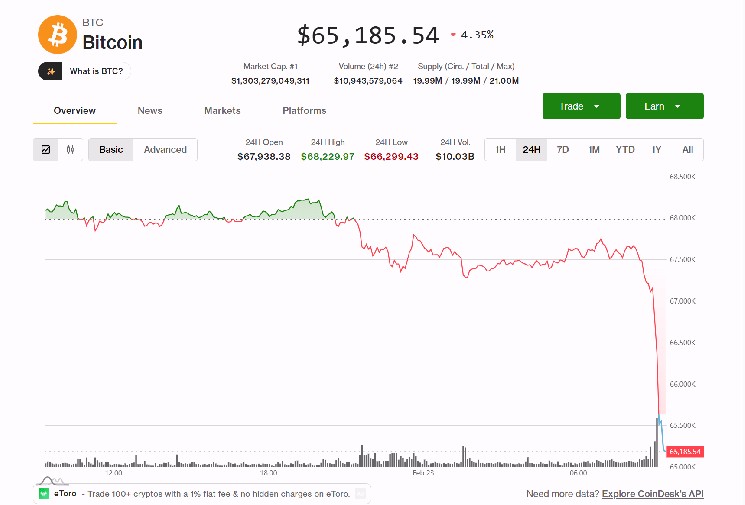
Bitcoin slides 5%, tumbling below $65,000 as whale selling grows and recent buyers lock in losses
Circle Internet, crypto miners report earnings: Crypto Week Ahead

Trending news
MoreCrypto prices
More





