
Tariff Disputes and AI Panic Trigger Black Monday for U.S. Stocks: All Three Major Indexes Drop Over 1%, Dow Plunges More Than 800 Points

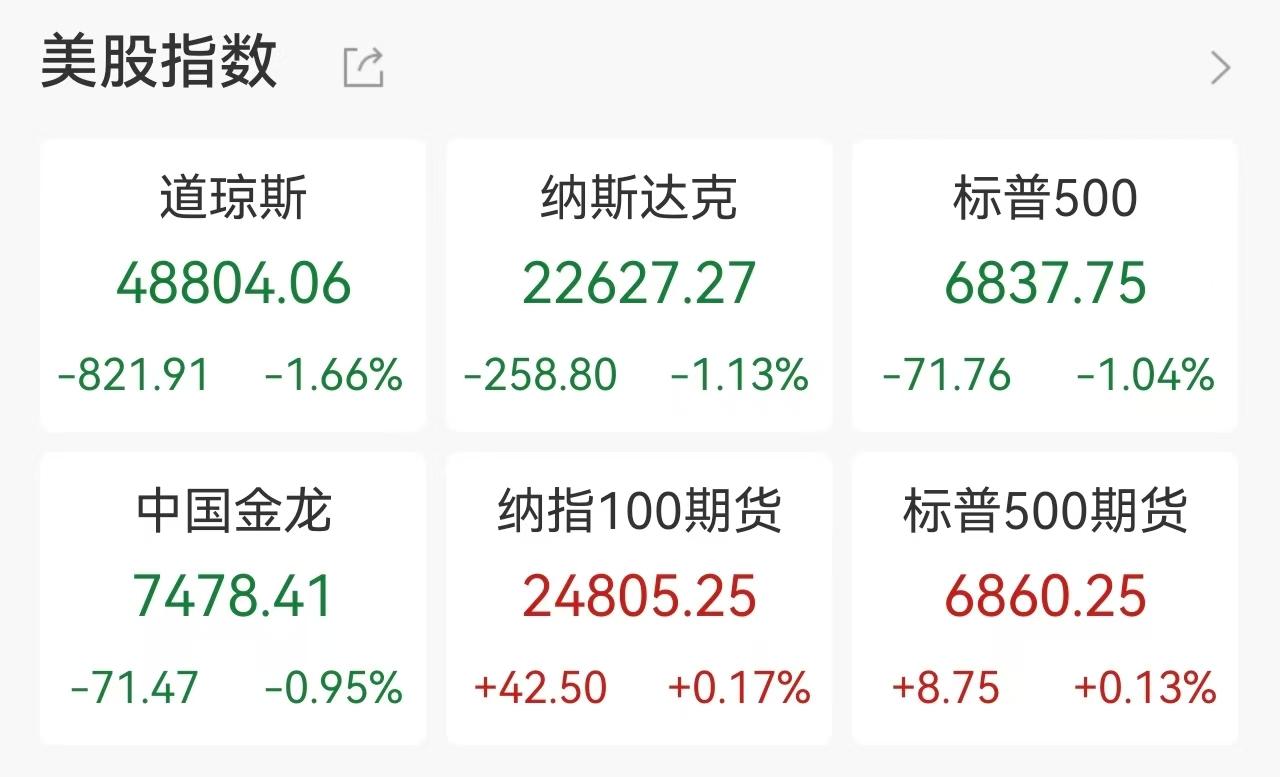
On February 23 local time, the US stock market experienced a "Black Monday," with all three major indices plunging. The Dow Jones Industrial Average tumbled 821.91 points, a drop of 1.66%, the S&P 500 fell by 1.04%, and the Nasdaq declined by 1.13%. Market panic reached a recent high.
This sudden plunge was not only triggered by a sharp shift in US tariff policy, but was also amplified by a fictitious AI "ghost story" that caused market panic, plunging investors into unprecedented anxiety.
Tariff Policy U-Turn Sparks Market Panic
After the US Supreme Court ruled last Friday that the Trump administration’s blanket tariffs on imported goods were unconstitutional, the White House swiftly responded with a new 15% global tariff. This sudden policy change threw the market into great uncertainty. According to calculations by Yale University’s Budget Laboratory, after Trump re-announced the tariff hike, the overall average effective tariff rate in the US will drop to 13.7%; prior to the Supreme Court ruling, the rate was 16%, the highest since 1936. The institution also stated that, according to the Trade Act of 1974, the 15% tariff is expected to expire in 150 days, at which point the average rate will drop to 9.1%.
"In my 40-year career, the market’s aversion to uncertainty is almost as strong as its aversion to bad news," said Eric Deaton, President of Wealth Alliance. "What worries the market most is that the rest of the world will be extremely disappointed with the US and its policies, leading to aversion to US assets."
On Monday, Trump launched a new round of attacks against the Supreme Court on social media, calling the ruling "absurd and clumsy" and stating, "As President, I don’t need to go back to Congress for tariff approval." This statement quickly triggered a market sell-off, with all three major indices falling in response.
The AI "Ghost Story" Triggers Tech Stock Sell-Off
Equally unsettling for the market as the tariff policy was a fictitious AI "ghost story" that went viral among investors. Over the weekend, an article titled "The 2028 Intelligence Crisis" authored by Citrini Research sparked market fear. The article imagined a "negative feedback loop" in which AI technological advances erode corporate profits, sharply reduce workers’ incomes, and cause a collapse in consumption.
What made the market even more anxious was the announcement by US AI startup Anthropic that its Claude Code tool could help modernize the outdated programming language COBOL, whose mainframes are mostly produced by IBM. This news directly led to IBM’s stock price plunging by more than 13% on Monday, the largest single-day drop since 2000.
"This is a shocking market reaction. In the face of real negative news, I’ve seen this market show incredible resilience; but now, a completely fictitious piece has sent the market into a tailspin," lamented Michael O’Rourke, Chief Market Strategist at JonesTrading.
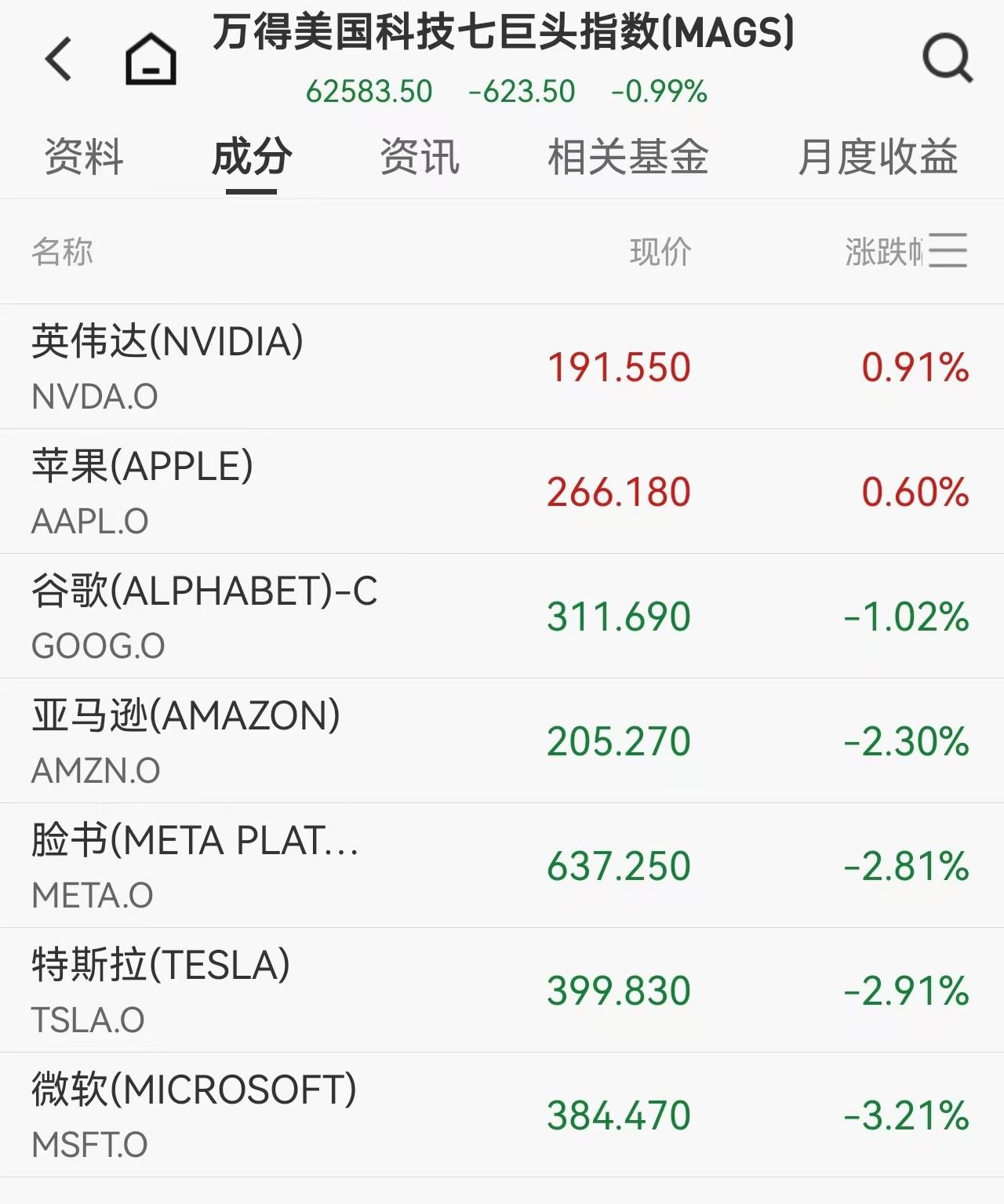
Tech stocks generally came under pressure: Microsoft fell over 3%, Tesla and META dropped nearly 3%, Amazon fell over 2%, and Google-C lost more than 1%. Financial software stocks tumbled 4.0%, DoorDash and Salesforce dropped over 5%, and Oracle fell 4.59%. Cybersecurity stocks were weak, with CrowdStrike, Datadog, and Zscaler all falling by double digits.
Safe-Haven Assets Surge
As market risk sentiment deteriorated sharply, investors flocked to safe-haven assets. Spot gold broke through $5,220 per ounce, up 2.4%; COMEX gold futures rose 3.39%. Spot silver rose nearly 4%, COMEX silver futures surged over 7%, approaching $90 per ounce.
"If you don’t want to hold dollars, there are hardly any better alternatives," Deaton said. "On Monday, gold served both as a hedge against dollar assets and as a safe-haven asset."
The cryptocurrency market was hit hard as well—bitcoin fell below $65,000 per coin, and major coins like ethereum, SOL, and HYPE all dropped more than 4%. More than 164,000 positions were liquidated globally in the crypto market.
Middle East Situation Intensifies Market Concerns
Market turmoil was also catalyzed by tensions in the Middle East. According to Xinhua News Agency, US Chairman of the Joint Chiefs of Staff Dan Kane has been advising President Trump and senior officials that military action against Iran could bring significant risks. Trump, for his part, denied the reports on social media.
Meanwhile, US military refueling and transport planes have arrived at Ben Gurion Airport near Tel Aviv, Israel, as part of a large-scale US troop deployment in the Middle East. According to media reports, since mid-February, more than 85 US refueling planes and over 170 transport planes have flown to the Middle East. Oman’s Foreign Minister Badr confirmed that a new round of talks between the US and Iran is scheduled to take place on the 26th in Geneva, Switzerland.
Market Outlook: Uncertainty to Persist
Market analysts generally believe that uncertainty will persist. Baird investment strategy analyst Ross Mayfield said: "Judging from the leading decliners and pressured sectors, this looks more like another wave of sell-offs triggered by AI disruption." Meanwhile, Macquarie Group’s global forex and rates strategist Thierry Wizman pointed out that Trump’s State of the Union address scheduled for Tuesday may fully showcase the disintegration of America’s 'orderly freedom.'
"The current market logic is: sell first, ask questions later," Deaton added. With continued uncertainty over US tariff policy, AI technology’s disruptive impact on traditional industries, and the overlay of geopolitical risks, the market is unlikely to see a significant rebound in the short term. Investors need to closely monitor Trump’s State of the Union address on Tuesday, the progress of US-Iran negotiations, and the upcoming Nvidia financial report, as these may become new turning points for the market.
As the market falls into panic under the double impact of tariffs and AI, investors are forced to reconsider: in the dual waves of technological revolution and geopolitics, which assets can truly withstand risk? This may be the most severe challenge facing the global market at present.
Disclaimer: The content of this article solely reflects the author's opinion and does not represent the platform in any capacity. This article is not intended to serve as a reference for making investment decisions.
You may also like
Senator Ditches Goldman Sachs Stock After 55% Gain In 2025: What Investors Should Know
Sui AI and Hyper Sui Forge Strategic Alliance to Boost DeFi Innovation on Sui Network
Don’t hold us responsible for the AI-driven stock market downturn, states Anthropic executive
ARK Unplugged: How Cathie Wood Crushed the S&P 500 in 2025
Trending news
MoreCrypto prices
More





