
Self-driving technology company Wayve secures $1.2 billion in funding from Nvidia, Uber, and a trio of automotive manufacturers

Wayve Secures $1.2 Billion in Funding from Major Investors
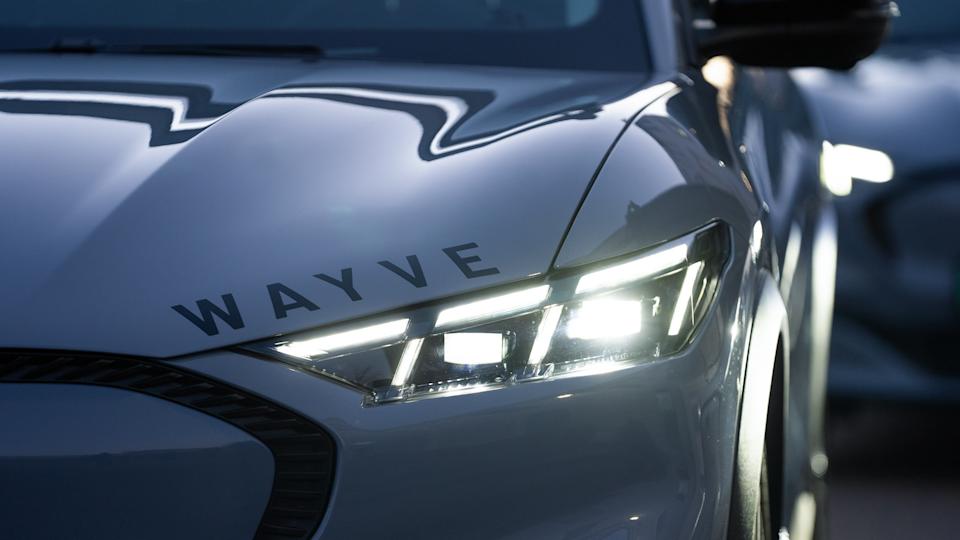
Image Credits: Wayve
Wayve, a UK-based autonomous driving startup, has raised $1.2 billion in its latest funding round, drawing support from a wide range of investors. The round includes participation from three leading automakers, prominent venture capital and institutional firms, as well as returning backers such as Microsoft, Nvidia, and Uber.
The company’s new valuation has soared to $8.6 billion, reflecting the intense interest from technology giants, traditional car manufacturers, and investors eager to capitalize on the rapidly growing self-driving vehicle sector.
A Distinctive Approach to Autonomous Driving
According to founder and CEO Alex Kendall, Wayve stands out by offering a unique alternative to existing autonomous driving solutions. He describes the company’s strategy as “contrarian,” not only in terms of technology but also in its business model.
Kendall explained, “The technological landscape has been shaped by where companies have invested in their strategies, and now the commercial landscape is taking form. We chose a very unconventional path, being the first to implement end-to-end deep learning for self-driving vehicles. As we move into commercialization, we’re also adopting a non-traditional business approach.”
Innovative Self-Learning Software
Founded in 2017, Wayve has developed a self-learning software platform powered by an end-to-end neural network. Unlike many competitors, Wayve’s system does not rely on high-definition maps; instead, it uses data to teach vehicles how to drive.
This data-centric method supports two main products: an “eyes on” driver-assistance system and an “eyes off” fully autonomous system, suitable for robotaxis or consumer vehicles capable of handling all driving tasks in specific environments.
Flexible and Hardware-Agnostic Technology
Wayve’s technology is designed to be adaptable, functioning independently of specific sensors or mapping requirements. The software processes data from any sensors installed in the vehicle and makes driving decisions accordingly. Additionally, it can operate on the existing chips used by automotive partners, making integration seamless.
It’s worth noting that Nvidia, a long-standing collaborator and investor, has worked closely with Wayve since 2018. The company’s third-generation platform, introduced last autumn, utilizes Nvidia’s Drive AGX Thor development kit. This platform will enable Wayve to deliver advanced “eyes off” driver-assistance features and Level 4 autonomy for both urban and highway driving.
While Wayve’s approach shares some similarities with Tesla’s automated driving technology, there are significant differences in their respective business strategies.
Business Model: Selling AI, Not Operating Fleets
Unlike some competitors, Wayve does not intend to operate its own hands-off driving systems or fully autonomous vehicles. For example, while Waymo manages its own robotaxi fleet, and Tesla integrates its software into its own cars, Wayve’s strategy is to license its “embodied AI” technology to automakers and tech companies like Uber.
Kendall believes this approach opens up the largest possible market, made possible by Wayve’s generalizable AI. He notes, “If your autonomy stack is tied to specific sensors or hardware, or depends on mapping, you can’t pursue this third option.”
Key Partnerships and Future Plans
Nissan and Uber are among Wayve’s customers. Nissan plans to enhance its advanced driver-assistance systems with Wayve’s technology starting in 2027. Meanwhile, Uber is set to begin commercial trials using Wayve’s software in its vehicles this year.
Uber’s partnership with Wayve is expected to expand significantly. Uber CEO Dara Khosrowshahi recently stated, “We are excited to deepen our collaboration with Wayve, aiming to deploy together in over 10 markets worldwide. Wayve’s comprehensive approach is designed for scalability, safety, and efficiency, and we look forward to working with them across multiple manufacturers and regions.”
Investors and Industry Support
The funding round was led by Eclipse, Balderton, and SoftBank Vision Fund 2. New investors include the Ontario Teachers’ Pension Plan, Baillie Gifford, British Business Bank, Icehouse Ventures, Schroders Capital, and several other global institutional investors.
Major automakers such as Mercedes-Benz, Nissan, and Stellantis—each planning to implement Wayve’s technology—also participated in the round. Nvidia, which previously joined Wayve’s $1.05 billion Series C round, had considered a $500 million strategic investment, though the exact amount invested in this round was not disclosed.
Disclaimer: The content of this article solely reflects the author's opinion and does not represent the platform in any capacity. This article is not intended to serve as a reference for making investment decisions.
You may also like

5 Insightful Analyst Inquiries from Bausch + Lomb’s Fourth Quarter Earnings Call
AUD/USD: Rally continues following unexpected CPI data – Societe Generale
Trending news
MoreCrypto prices
More





