
DAVE vs. SOFI: Which Fintech Company Is the Better Investment Choice Right Now?

Comparing DAVE and SoFi Technologies: Which Fintech Stock Stands Out?
DAVE and SoFi Technologies are both key players in the fintech industry, offering digital banking and financial solutions via mobile apps. Their primary audience consists of tech-forward users seeking alternatives to conventional banking services.
This analysis explores which of these two fintech stocks presents a stronger growth opportunity for investors.
Why Consider DAVE?
DAVE has demonstrated impressive revenue growth, thanks to a solid pricing strategy that has driven up average revenue per user and ExtraCash loan volumes. In the third quarter of 2025, DAVE’s revenue jumped 15% quarter-over-quarter and soared 63% compared to the previous year. Even more notably, adjusted net income surged by 193% year-over-year, underscoring the company’s operational efficiency.
While DAVE faces significant credit risk, it has developed effective risk management practices over time. In Q3 2025, the company’s average 28-day delinquency rate dropped by 7 basis points to 2.33%. By September 2025, with the help of its CashAI v5.5 platform, this figure improved further to 2.19%. The introduction of the “28 days past due” metric saw an 11-basis-point decline, highlighting the strength of DAVE’s credit management system.
DAVE’s straightforward fee structure—a flat 5% charge on all ExtraCash transactions, with a minimum of $5 and a cap at $15—has been especially appealing to underserved customers. This transparent and affordable model has helped DAVE attract and retain users more effectively than traditional banks.
By keeping customer acquisition costs stable and streamlining the user onboarding process, DAVE has built a robust foundation for profitability and sustained financial performance.
What Sets SOFI Apart?
SoFi Technologies achieved record growth in the fourth quarter of 2025, adding 1.02 million new members for a total of 13.7 million—a 35% increase year-over-year. The company also expanded its product offerings by 1.6 million, reaching 20.2 million products, up 37% from the prior year. This growth reflects the effectiveness of SoFi’s customer-focused approach. As a result, SoFi’s revenue climbed 40% year-over-year, and adjusted net income surged 184%.
SoFi’s all-in-one platform has encouraged cross-selling, with 40% of new products adopted by existing members—a 7-point increase from the previous year. Strategic investments in brand building have pushed unaided brand awareness to a record 9.6%. These efforts position SoFi for long-term sustainability and competitive advantage.
Collaborations, such as the partnership with NFL MVP Josh Allen to promote SoFi Plus, have enhanced the company’s appeal among younger consumers. The acquisition of Galileo Financial Technologies in 2020 has further strengthened SoFi’s infrastructure, supporting payment processing, buy-now-pay-later services, and AI-driven engagement tools.
Despite these strengths, SoFi faces intense competition from both digital and traditional banks. This crowded market increases the need for ongoing investment, which could make it challenging to balance growth and profitability.
Analyst Forecasts: DAVE vs. SOFI
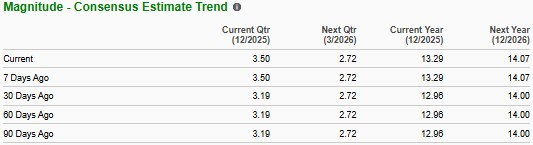
According to Zacks, DAVE’s 2026 sales are projected to rise by 19.4%, with earnings per share (EPS) expected to grow 5.9% year-over-year. Over the past two months, one analyst has raised their EPS estimate for 2026, with no downward revisions. The consensus EPS estimate stands at $14.07, showing a slight increase.
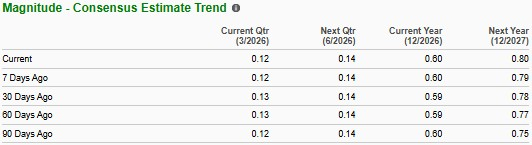
For SoFi, the 2026 sales forecast calls for a 26.7% increase, while EPS is expected to jump 53.9%. In the last 60 days, five analysts have raised their 2026 EPS estimates, while two have lowered theirs. The consensus EPS estimate has edged up to 60 cents.
Valuation: Is DAVE the Better Bargain?
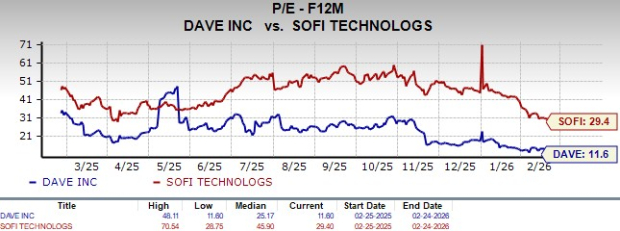
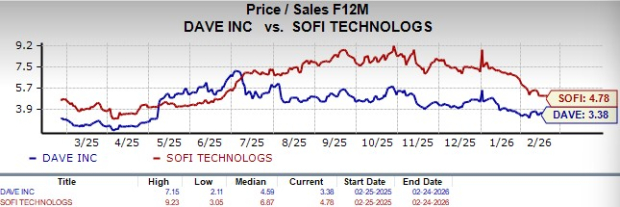
DAVE currently trades at a forward 12-month price-to-earnings (P/E) ratio of 11.6, which is below its 12-month median of 25.17. In contrast, SoFi’s forward P/E is 29.4, also lower than its 12-month median of 45.9. When comparing price-to-sales (P/S) ratios, DAVE stands at 3.38, while SoFi is at 4.78, making DAVE the more attractively valued stock.
Conclusion: DAVE Is the Preferred Choice
Given DAVE’s operational strength, advanced credit risk management with CashAI v5.5, and attractive valuation, we recommend investors consider adding DAVE to their portfolios. The company’s fundamentals and growth potential make it a compelling pick as the market recognizes its value.
On the other hand, while SoFi’s growth and comprehensive platform are impressive, the stock’s higher valuation and fierce competition suggest holding existing positions rather than increasing exposure. SoFi’s profitability outlook is less robust compared to DAVE’s strong performance.
Currently, DAVE holds a Zacks Rank #1 (Strong Buy), while SoFi is rated Zacks Rank #3 (Hold).
Disclaimer: The content of this article solely reflects the author's opinion and does not represent the platform in any capacity. This article is not intended to serve as a reference for making investment decisions.
You may also like
Cardano retraces – Profit-taking threat looms once again
Can US lawmakers pass crypto market structure before the midterms?
Opendoor's Technical Breakdown: A 7% Drop Tests Key Support
Trending news
MoreCrypto prices
More





