
Steven Madden's earnings per share surpassed estimates, but concerns over tariffs have led to a shift in market expectations.

Steven Madden's Q4: Earnings Beat Overshadowed by Outlook Reset
Steven Madden's latest quarterly results revealed a classic case of mismatched expectations. The company reported adjusted earnings per share of $0.48, slightly surpassing the Zacks Consensus Estimate of $0.46. Despite this, shares tumbled 6.56% to close at $34.91. The market's reaction made it clear: a modest profit beat was not enough to offset concerns about revenue and future growth projections.
The underlying issue was apparent. Although earnings per share exceeded expectations, quarterly revenue came in at $753.7 million, just below the anticipated $753.9 million. More critically, management revised its full-year outlook, now forecasting revenue growth of only 9% to 11% for fiscal 2026—a sharp slowdown from the 29.4% year-over-year jump seen this quarter and likely less than what investors had hoped for.
The real headline was the shift in guidance. Company leaders pointed to uncertainty around U.S. tariff policy as the main reason for withholding earnings guidance, introducing new volatility into forecasts. This, combined with expected challenges in the private-label segment and rising operating expenses, widened the gap between market expectations and company reality. Investors may have been hoping for a “beat and raise” scenario, but instead, the positive earnings surprise was met with a more cautious outlook, triggering a sell-off.
Tariff Uncertainty Forces a Strategic Reset
The main factor behind Steven Madden’s revised outlook is a broader economic risk that is now coming into focus. Management specifically cited uncertainty over U.S. tariffs as the reason for not issuing full-year earnings guidance. This was not a vague concern; it was a direct acknowledgment that fluctuating costs make reliable forecasting impossible.
This challenge is not unique to Steven Madden (SHOO -6.40%). The entire fashion industry is feeling the strain. According to the BoF-McKinsey State of Fashion 2026 survey, 76% of fashion executives believe trade disruptions and higher tariffs will shape the industry in 2026. Additionally, 46% expect conditions to deteriorate further. This has transformed tariff risk from a hypothetical to a tangible concern for the market.
The spike in tariffs has been significant. The average tariff on apparel and footwear imports to the U.S. surged from 13% to 54% in spring 2025, and although it has since moderated, it remains high at 36%. This volatility creates a highly unpredictable cost environment. For Steven Madden, which relies heavily on imports, this means input costs can swing dramatically, threatening profit margins. The company’s revised guidance is a direct response to this new landscape.
From an investor’s perspective, the earnings beat was the “buy the rumor” moment, while the tariff uncertainty became the “sell the news” trigger. The market had likely anticipated continued strong growth, but with tariffs in flux and no clear path forward, expectations have been reset. The stock’s decline reflects a loss of confidence in the company’s previous growth trajectory, as the risk of rising costs and supply chain instability now outweighs the quarterly profit beat.
Financial Health: Margin Pressures and Segment Divergence
Beneath the surface, the earnings beat masks a more complicated operational picture. While net profit met expectations, it came at a cost. Adjusted operating income fell to $50.9 million from $52.6 million a year earlier, highlighting margin compression. This occurred even as adjusted gross profit jumped 40.1%. The reason: operating expenses soared 52.5% year-over-year to $278.9 million, erasing gains from improved gross margins. The result was flat operating income and squeezed margins.
Looking at individual segments, the core Steve Madden brand remains robust, with wholesale footwear revenue rising 11%. This strength underpins management’s confidence. However, the private-label business—a significant part of the wholesale mix—saw revenue drop 15% in 2025. This divergence means that while the flagship brand is performing well, other areas are under pressure, and these challenges are expected to persist into 2026.
Financially, Steven Madden has some cushion, ending the quarter with $112.4 million in cash and $234.2 million in debt, resulting in net debt of $121.7 million. In stable times, this balance sheet would be sufficient. However, with tariffs adding direct cost pressure, this buffer could be tested if expenses rise further. The company’s decision to reset guidance in light of tariff risk signals that management is preparing for potential margin challenges ahead.
Looking forward, the company faces opposing forces. On one hand, a strong core brand and healthy gross margins provide a base for growth. On the other, ongoing weakness in private-label, high operating costs, and tariff uncertainty threaten to limit expansion. The market’s response to the “beat and reset” dynamic shows a shift in focus from growth rates to margin sustainability. While the company’s financial position is currently stable, the road ahead is filled with risks that were not fully reflected in earlier optimism.
Key Catalysts and What Investors Should Monitor
Current skepticism toward Steven Madden is driven by uncertainty. Several upcoming events will determine whether this caution is justified or an overreaction. Three main factors will shape the company’s trajectory and test the validity of its revised outlook:
- Supreme Court Tariff Decision: The court’s upcoming ruling on tariffs could resolve the main source of uncertainty. As of mid-October, the average tariff on apparel and footwear was 36%, a level that led management to withhold guidance. Legal experts anticipate the court may reduce or eliminate these tariffs. A favorable outcome would remove a major cost headwind, validating management’s caution. Conversely, if tariffs are upheld or increased, the worst-case scenario would be realized, deepening the expectation gap.
- Q1 Performance: The company’s first-quarter results will be the initial test of the new 9–11% revenue growth target. Investors will be watching to see if Steven Madden can maintain momentum in its core brand while managing the outlined pressures. In particular, stabilization of operating margins will be key. Last quarter, operating income declined despite higher gross profit, indicating that elevated operating costs remain a concern. If the company can control these expenses and private-label performance improves, it would suggest the guidance reset was prudent. Missing even the lowered growth target would reinforce market fears.
- Cost Management and Pricing Power: The company’s ability to manage costs and pass on tariff-related increases is crucial. Industry data shows that 55% of executives expect further price hikes in 2026. Steven Madden’s success in raising prices without hurting demand will be critical, as will its flexibility in sourcing and brand strength. The market will also look for evidence that suppliers are absorbing some of the cost burden, a trend seen across the industry. If the company can navigate these challenges without further margin erosion, it will demonstrate resilience. If not, thin margins could come under even greater pressure.
Together, these factors will test whether the market’s current pessimism is warranted. The Supreme Court’s decision will address the macro risk, Q1 results will show if the new growth path is achievable, and cost management will reveal whether the guidance reset was wise or overly cautious. For now, the stock’s decline reflects a market bracing for the worst. The coming weeks will determine if these fears are justified or if the outlook is more optimistic than it appears.
Disclaimer: The content of this article solely reflects the author's opinion and does not represent the platform in any capacity. This article is not intended to serve as a reference for making investment decisions.
You may also like
Evaluating Strategic Alternatives for Oaktree-Utmost: Insights from a Portfolio Allocation Perspective
Private Equity's Illiquidity Premium: When the Market's Payoff Fails
Netflix's White House Visit: A Tactical Response to a $31 Per Share Bid
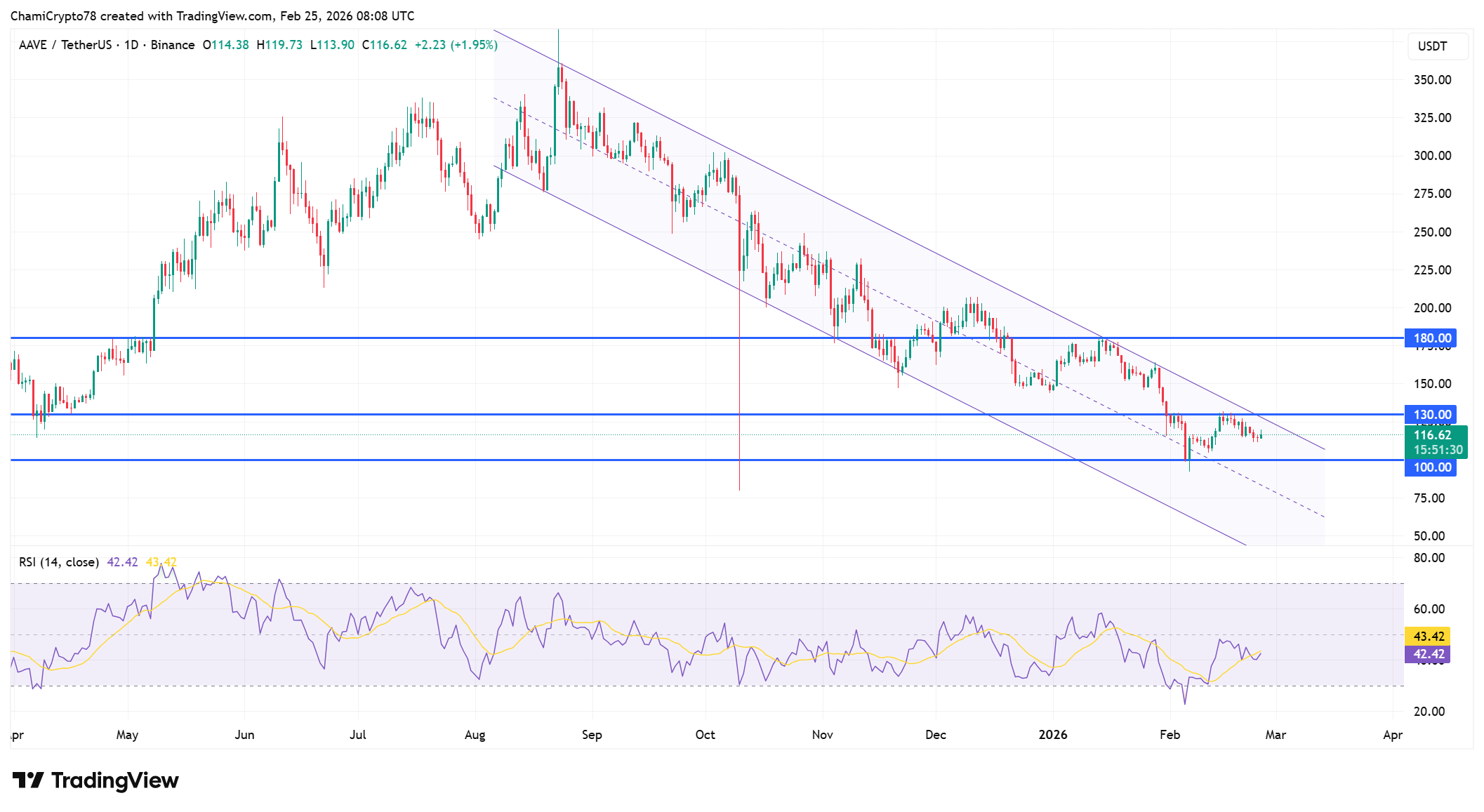
AAVE nears $130 resistance as THIS flips – But rally survives IF…
Trending news
MoreCrypto prices
More





