Bitcoin’s value soared past $69,500 after testing the $62,000 threshold, fueling a rally that sparked double-digit gains across major altcoins. This positive momentum found support in growing risk appetite ahead of the post-market release of NVIDIA’s closely watched earnings report. While market sentiment turned bullish, analysts warned that upcoming geopolitical discussions with Iran and important economic data due later in the week could dampen the mood, urging caution among traders in the days ahead.
What’s Next for Crypto Prices?
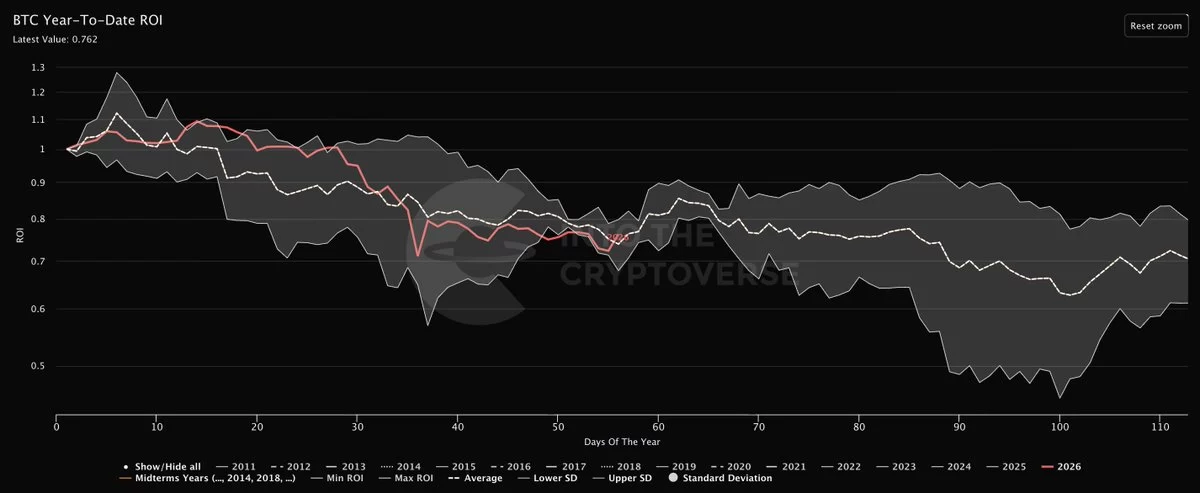
Crypto strategist Benjamin Cowen analyzed price swings for Bitcoin in his update today, drawing on historical data to offer projections for February, March, and April. According to Cowen, Bitcoin has a tendency to weaken in February before regaining traction at the beginning of March, only to trend downward again by April. He highlighted several risk factors on the horizon: continued tensions over tariffs, potential hostilities involving Iran, and the prospect of delayed interest rate cuts—all of which could paint a grimmer picture for cryptocurrency markets in the short term.
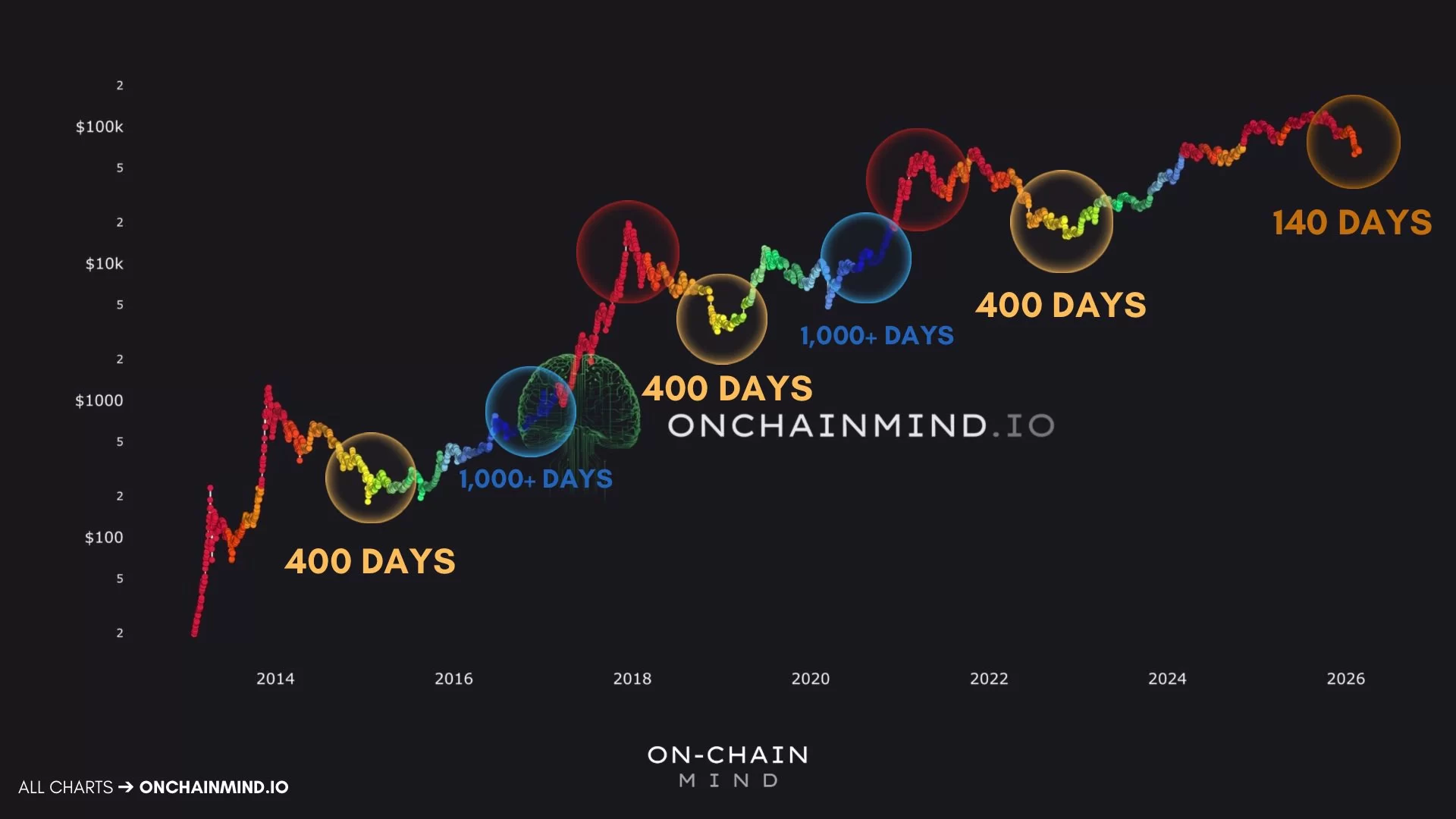
During market surges, few want to accept the prospect of a downward reversal, and despite pockets of weakness among altcoins, most traders had set their sights on $150,000 after Bitcoin breached $120,000. However, the anticipated rally failed to materialize. Now, prevailing sentiment expects a much deeper dip, possibly near $50,000. The pseudonymous analyst On-Chain Mind points out that the relentless cycle of optimism and fear is inherent to crypto’s DNA. Yet, the focus has recently shifted to the significance of the number 140—what does this time marker mean for Bitcoin’s trajectory?
“It has been about 140 days since Bitcoin’s last all-time high. It may feel endless, but it’s hardly exceptional. Historically, major cyclical bottoms tend to form around 400 days after previous peaks. In some cycles, it has taken over 1,000 days to reclaim former highs. So, 140 days in is not a deep bear market—history suggests we’re only in the early stages.”
Although it may feel like an eternity to investors, the period since Bitcoin’s last record high is relatively short. Looking ahead, there is a greater likelihood of further declines before a sustained recovery emerges. Recent short-term rallies have often turned into prime opportunities for short sellers, a pattern that could spell further pain if repeated. At the same time, it’s crucial to remember that while history helps set expectations, it does not offer guarantees, and market cycles don’t always play out the same way.