
Farmers face challenges as tariffs negatively impact the soybean industry

Tariffs Leave Lasting Impact on U.S. Farmers
Many American farmers, particularly those growing soybeans, continue to feel the effects of tariffs and the resulting trade tensions as they make crucial decisions about what to plant this season.
Nick Levendofsky, who leads the Kansas Farmers Union, explained, "The most significant issue for those of us in agriculture has been the tariffs imposed on our trading partners in Canada, Mexico, and especially China. The consequences of those policies are still very much with us."
Levendofsky spoke with The Capital-Journal just days before the U.S. Supreme Court overturned much of former President Donald Trump's tariff program on February 20. The ruling focused on the President's use of the International Emergency Economic Powers Act to levy tariffs.
Chief Justice John Roberts wrote in the 6-3 decision, "The President claims the authority to set tariffs on any product from any country, at any rate, for any duration."
However, Roberts clarified that the Constitution assigns the power to impose taxes, including tariffs, to Congress—not the executive branch. The court concluded that the IEEPA does not grant the President the authority to impose tariffs.
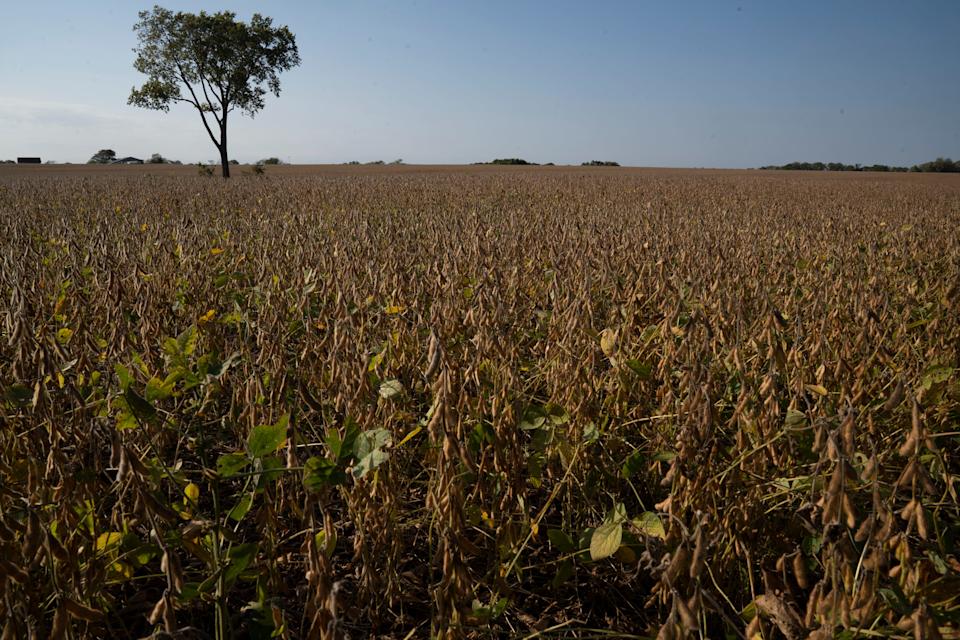
China, once a major buyer of American soybeans, has largely stopped purchasing from the U.S. Pictured above, soybeans dry in a Shawnee County, Kansas field in October 2025.
The Trade War's Toll on Soybean Producers
Among all crops, soybeans have suffered the most from the trade conflict initiated by the Trump administration.
"Soybeans are a key crop in Kansas, and China used to be our biggest customer," Levendofsky noted. "Now, they've shifted their focus to South America, investing heavily in Brazil and Argentina. While China still buys some U.S. soybeans, it's nowhere near previous levels, and no other market matches China's demand."
According to USDA Foreign Agricultural Service data, U.S. soybean exports to China dropped by 76%, falling from $12.6 billion in 2024 to just $3.1 billion in 2025.
"Farmers are facing tough choices," Levendofsky said. "Many are questioning whether it's even worth planting soybeans this spring. Weather and other factors also play a role in their decisions."
As the sun sets over a soybean field in Shawnee County, Kansas, the uncertainty for growers continues.
Domestic Demand Falls Short
Last year, Trump encouraged American farmers to focus on selling their crops within the U.S., suggesting that domestic markets could replace lost exports.
On March 3, Trump posted on Truth Social: "To the Great Farmers of the United States: Get ready to start making a lot of agricultural product to be sold INSIDE of the United States. Tariffs will go on external product on April 2nd. Have fun!"
However, this strategy has not worked for soybeans.
Related: Are you owed a tariff refund? What consumers need to know.
"The reality is, American farmers are extremely efficient—we produce more than we can use," Levendofsky explained. "Soybeans are mainly used for animal feed and biofuels, and domestic demand simply isn't high enough to absorb the surplus."
He added, "China has a massive livestock industry that requires a lot of protein, but they've turned to Brazil and Argentina for their soybean needs. We're no longer the only major player, so we have to look for new markets and alternative uses for our crops."
Challenges from Beef Imports and Equipment Tariffs
Farm groups have also voiced concerns about the Trump administration's agreement to import beef from Argentina.
"The U.S. imports lean beef from around the world because our domestic production favors fattier cuts," Levendofsky said. "South America, especially Argentina, produces much leaner beef."
He argued that the large shipments of lean beef from Argentina have hurt American producers. "Announcing these deals publicly and posting about them on social media impacts the market, whether intended or not, and farmers bear the consequences."
Levendofsky also discussed the impact of tariffs on equipment imported from Canada and Mexico. "We rely heavily on equipment from those countries, so tariffs on steel and aluminum just add to farmers' costs. Unlike other businesses, farmers can't simply raise their prices to offset these expenses."
He described the past year as particularly difficult, especially after the "Liberation Day" tariffs were introduced on April 2.
"I hope we can move forward and rebuild our trading relationships," Levendofsky said. "We need to restore trust, seek new partners, and explore opportunities for other crops in global markets."
Temporary Aid Offers Limited Relief
In December, the Trump administration announced $12 billion in one-time payments to help farmers cope with trade disruptions and rising costs. The American Farm Bureau Federation estimates Kansas farmers will receive $888 million, the third-highest amount among states.
Levendofsky said the payments were expected to begin the week of February 23. "I don't see this as a bailout," he said. "It's more about quieting criticism than truly helping farmers."
"Frankly, it's just a temporary fix—a Band-Aid on a much deeper wound. It won't come close to covering the losses farmers have experienced since the trade war began."
Estimates from North Dakota State University suggest farm losses in 2025 could reach $44 billion, and Levendofsky believes the real figure may be closer to $50 billion.
"The aid package doesn't address the full extent of the damage," he said. "It might help some farmers pay bills or reduce debt, but it won't provide enough to sustain their operations or fund next season's planting."
"Ultimately, it won't make up for the losses, but it may keep some from speaking out."
Disclaimer: The content of this article solely reflects the author's opinion and does not represent the platform in any capacity. This article is not intended to serve as a reference for making investment decisions.
You may also like
RE/MAX (RMAX) Upgraded to Buy: Reasons for the Rating Change
Super Group (SGHC) (SGHC) Raised to Strong Buy: Key Information You Need
Boot
Western Digital (WDC) Shows Strong Upward Trend: Is It a Good Time to Invest?
Trending news
MoreCrypto prices
More





