
Whirlpool's 12-Month Stock Plunge Hits 2020 Lows Amid Activist Battle 144th-Ranked $860M Trading Volume Reflects Turbulent Capital War

Market Snapshot
Whirlpool Corporation (WHR) closed on February 25, 2026, with a 1.27% decline in its stock price, marking a continuation of its 12-month downward trend. Despite a 4% pre-market surge following activist investor David Tepper’s public letter, the shares ended the day in negative territory. Trading volume surged by 52.1% to $0.86 billion, ranking 144th in market activity, reflecting heightened investor interest amid the unfolding corporate drama. The stock’s performance underscores a broader crisis of confidence, with its price now at levels not seen since the early 2020s.
Key Drivers
David Tepper’s Appaloosa Management has ignited a high-stakes battle with Whirlpool’s board, accusing management of a “striking lack of judgment” in executing a $963 million equity raise at a cost of capital exceeding 10%. The activist investor criticized the move as unnecessary dilution, particularly given the company’s debt trading at a tax-adjusted cost below 5%. Tepper’s letter, which called for a strategic review and potential breakup of the company, has intensified scrutiny on Whirlpool’s capital allocation decisions. The equity issuance, coupled with a 48% dividend cut in July 2025 and a recent “junk” credit rating downgrade, has eroded shareholder value, with the stock losing nearly 32% of its value over the past year.
Compounding these challenges is Whirlpool’s struggle to adapt to industry shifts. Competitors like LG and Samsung have capitalized on the appliance sector’s pivot to smart home ecosystems and energy-efficient technologies, while Whirlpool’s traditional hardware-centric model has become increasingly obsolete. The company’s failure to integrate recurring revenue streams—such as AI-driven maintenance services or subscription models—has left it vulnerable to housing market cyclicality. Despite high tariffs on imported goods, WhirlpoolWHR-1.27% has not leveraged these protections effectively, with Tepper accusing management of avoiding mergers or partnerships that could have improved its competitive position.
The activist campaign has also exposed internal governance flaws. Tepper dismissed recent leadership changes—such as the appointment of Roxanne Warner as CFO—as “deck-chair rearranging,” arguing that operational inefficiencies persist. Credit agencies have cited a debt-to-equity ratio of 2.7 and weakening cash flows as key risks, with Moody’s and S&P Global downgrading Whirlpool’s debt to non-investment grade in early 2026. These ratings have raised borrowing costs and limited the company’s flexibility to pursue growth initiatives, further straining its balance sheet.
Speculation about potential bidders or strategic buyers has intensified, with Tepper urging the board to invite “domestic or foreign corporations” to submit offers. German industrial giant Robert Bosch and private equity firms like Bain Capital and KKR are reportedly circling high-margin units such as KitchenAid. A “sum-of-the-parts” liquidation strategy, where premium brands are sold off separately, is seen as a path to unlocking value. However, such a carve-out would leave a core business with limited growth prospects and heightened exposure to raw material volatility. The market will closely watch Whirlpool’s next quarterly earnings and the board’s response to Tepper’s demands, with a proxy contest looming if management resists strategic changes.
Whirlpool’s predicament reflects a broader trend in legacy manufacturing, where traditional moats are being challenged by digital innovation and shifting consumer preferences. The company’s inability to pivot toward recurring revenue models or capitalize on domestic manufacturing advantages has left it trailing rivals. As the appliance industry transitions from a replacement-cycle business to a platform-based model, Whirlpool’s failure to adapt has rendered it a prime target for activist intervention. The outcome of this crisis will likely set a precedent for how industrial stalwarts navigate the tension between operational conservatism and disruptive innovation.
Disclaimer: The content of this article solely reflects the author's opinion and does not represent the platform in any capacity. This article is not intended to serve as a reference for making investment decisions.
You may also like
SocialGrowAI Joins AGNT Hub to Offer AI-Driven Web3 Execution on X Social Feed

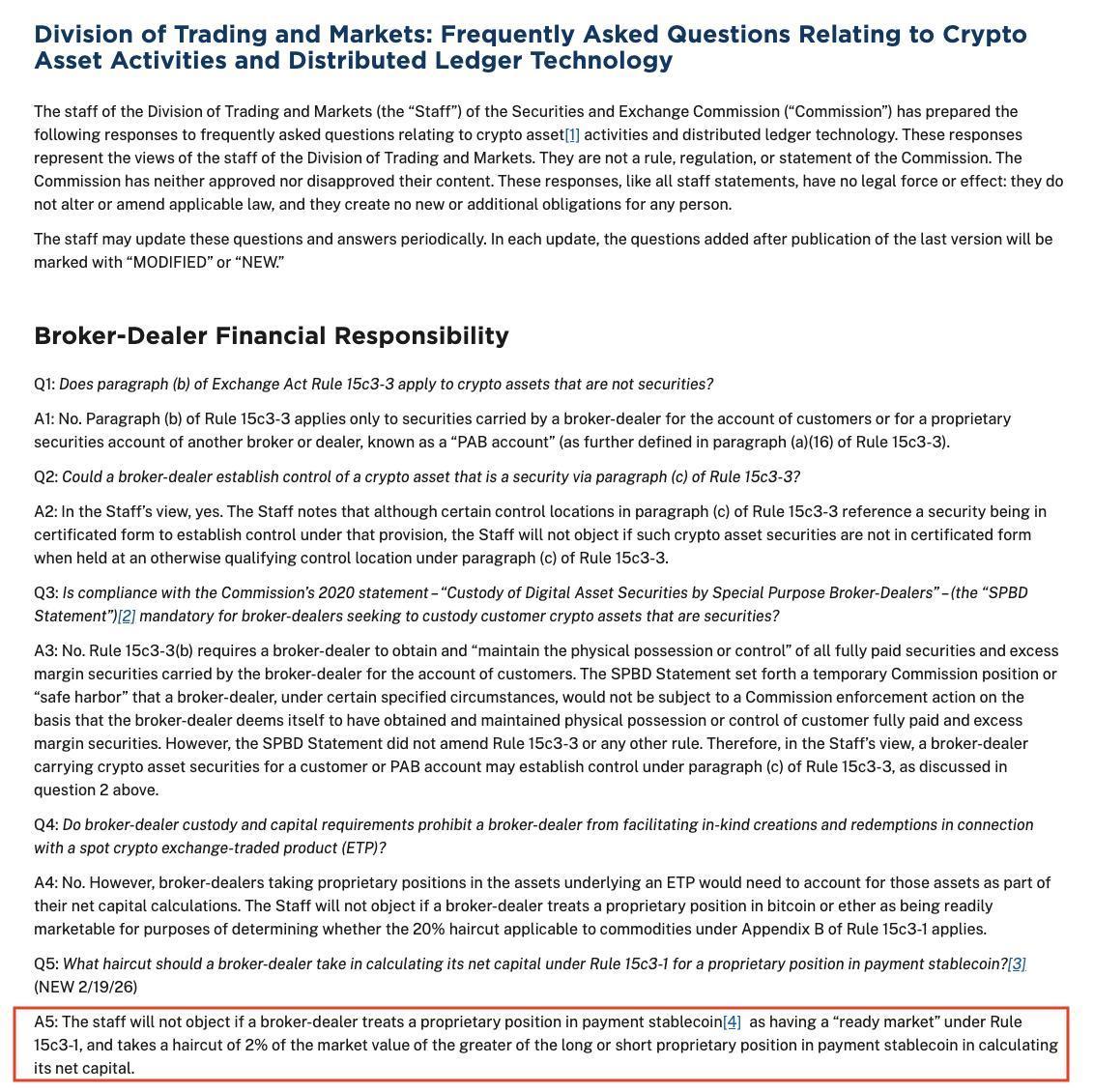
SEC allows broker-dealers to take 2% 'haircut' on stablecoins
Trending news
MoreCrypto prices
More





