
Tokenized Stocks Reach $1 Billion: An Indicator of Liquidity, Not a Fundamental Market Change

Tokenized Stock Market Surges to New Heights
By January 2026, the market for tokenized stocks had reached an estimated $963 million in total value, marking an extraordinary year-over-year increase of nearly 2,900%. This remarkable expansion is reflected in trading activity as well, with spot trading volume on Bitget alone exceeding $1 billion.
Most of this trading volume was concentrated in December 2025, accounting for roughly 95% of the total, which points to a dramatic uptick in user engagement. This trend has continued into early 2026, as Bitget’s daily TradFi trading volume doubled from $2 billion to $4 billion within just two weeks, underscoring the rapid embrace of these innovative financial products.
Despite these impressive figures, the $1 billion in trading volume remains a small fraction compared to the daily turnover in global equity markets. The significance lies in the ability to provide seamless, round-the-clock access and capital movement within the crypto ecosystem, rather than a wholesale shift of traditional market capital into tokenized assets.
Centralized Exchanges and Regulatory Foundations
Centralized exchanges are at the heart of this transformation. Platforms such as Bitget are bridging traditional finance and crypto, offering tokenized assets and experiencing rapid growth in trading activity. Their hybrid approach—where crypto remains the core business but traditional finance products now make up 11-12% of trading volume—enables users to manage both asset types from a single account. This convenience is a key driver, allowing investors to hedge and rebalance without switching platforms.
Regulatory clarity is crucial for further development. On January 28, 2026, the SEC released its most detailed guidance yet, confirming that tokenized securities fall under existing federal securities laws. This guidance, while not legally binding, provides clear definitions and removes significant uncertainty, paving the way for the market to expand within established legal frameworks.
Strategy Spotlight: ATR Volatility Breakout (Long-only)
This long-only breakout strategy for SPY initiates a position when the 14-day ATR surpasses the 60-day ATR average and the closing price is above the 20-day high. Positions are closed if the price drops below the 20-day low, after 20 trading days, or if a take-profit of +8% or a stop-loss of −4% is triggered.
- Entry Criteria: 14-day ATR > 60-day ATR average and close > 20-day high
- Exit Criteria: Close < 20-day low, or after 20 days, or +8% take-profit, or −4% stop-loss
- Asset: SPY
- Risk Controls: Take-profit at 8%, stop-loss at 4%, maximum holding period of 20 days
Backtest Performance
- Total Return: 6.16%
- Annualized Return: 3.2%
- Maximum Drawdown: 7.86%
- Profit-Loss Ratio: 1.01
Trade Statistics
| Total Trades | 9 |
| Winning Trades | 6 |
| Losing Trades | 3 |
| Win Rate | 66.67% |
| Average Holding Period (days) | 19.67 |
| Max Consecutive Losses | 2 |
| Profit-Loss Ratio | 1.01 |
| Average Win Return | 1.96% |
| Average Loss Return | 1.86% |
| Max Single Trade Return | 3.52% |
| Max Single Loss | 3.3% |
Institutional Adoption and Market Evolution
Traditional financial infrastructure is quickly adapting. The NYSE’s recent decision to launch a 24/7 platform for tokenized securities demonstrates that established exchanges are laying the groundwork for this emerging market. The combination of centralized exchange liquidity and regulated exchange infrastructure is propelling tokenized stocks from a niche innovation to a mainstream financial instrument.
Market Context, Expansion, and Future Outlook
While the $1 billion trading milestone is notable, tokenized stocks still account for less than 0.0004% of the $147.6 trillion global equity market. Although growth rates are impressive, the overall market share remains tiny in the context of the broader financial system.
Product diversification is set to drive the next wave of growth. The market is expanding beyond tokenized equities to include bonds, commodities, and private credit on regulated platforms. This shift is already underway, with examples such as JPMorgan tokenizing a private equity fund and Siemens issuing a €300 million corporate bond on-chain. Citigroup estimates that tokenized securities could reach $4–5 trillion by 2030, provided tokenization addresses real-world inefficiencies like the 7% reduction in global output caused by capital and currency restrictions that hinder cross-border equity ownership.
However, several challenges persist. Regulatory inconsistencies across different regions could increase compliance costs and restrict international flows. The current market also faces issues with liquidity and standardization. A key question is whether 24/7 trading on crypto platforms can maintain high volumes without a corresponding increase in new asset issuance. At present, trading is based on existing shares; achieving true scale may require the creation of new assets to match the pace of on-chain trading.
The trajectory points toward gradual integration with traditional finance. The future will likely involve regulated venues like the NYSE’s new platform, a broader range of tokenized assets, and solutions for custody and settlement challenges. For now, the $1 billion trading figure highlights the readiness of crypto infrastructure and the appetite for these products. The coming years will reveal whether this momentum can extend into larger, less liquid markets that tokenization aims to transform.
Disclaimer: The content of this article solely reflects the author's opinion and does not represent the platform in any capacity. This article is not intended to serve as a reference for making investment decisions.
You may also like
1亿美元回购计划+回应做空报告!ZETA盘前涨超20%,此前两日大跌超50%
Mt. Gox’s Lost Bitcoin Could Be Reclaimed, Former CEO Proposes Rare Hard Fork

Strait of Hormuz closed, inflation at 5%: Will Bitcoin explode or collapse?
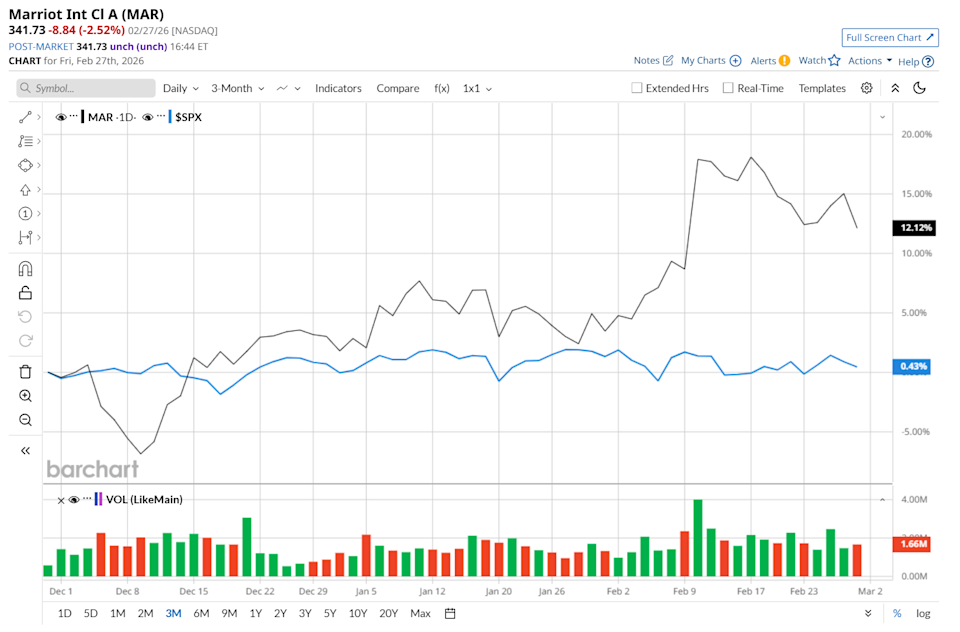
Is Marriott International Shares Beating the S&P 500 Index?
Trending news
MoreCrypto prices
More





