
Tesla challenges California authorities

Tesla Challenges California DMV Over Advertising Claims
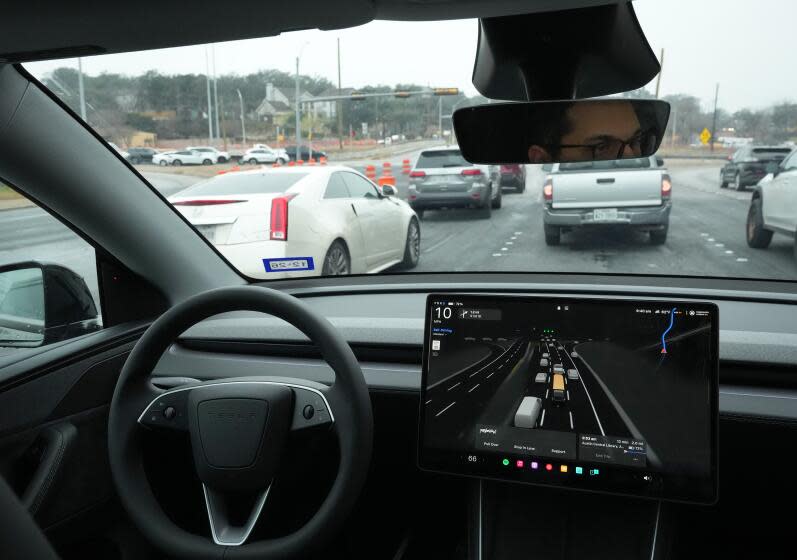
A safety monitor sits in the front seat as a Tesla Robotaxi operates in Austin, January. Last year, a judge determined Tesla misrepresented its vehicles as self-driving.
(Jay Janner / Austin American-Statesman via Getty Images)
Tesla has filed a lawsuit against California’s Department of Motor Vehicles, contesting allegations that the company misled the public through its advertising.
State officials claim Tesla’s descriptions of “Autopilot” and “Full Self-Driving” features have given consumers the false impression that the vehicles can operate independently, when in fact a human driver is still required. An administrative judge ruled last year that Tesla’s marketing was deceptive for implying its cars could drive themselves.
The DMV warned Tesla that it would halt the company’s sales in California for a month unless the misleading advertising was corrected within 90 days. In response, Tesla removed the term “Autopilot” from its promotional materials and began referring to Full Self-Driving as “supervised.”
Earlier this month, Tesla responded in court, arguing that the previous decision was both “factually wrong” and “legally flawed.” The company is seeking to overturn the DMV’s order and restore its ability to use the terms “Autopilot” and “Full Self-Driving capability.”
Debate Over Tesla’s Marketing
Tesla’s promotional materials for Autopilot and Full Self-Driving claim the system is intended to handle both short and long journeys without driver intervention.
Regulators argue that this messaging encourages drivers to place too much trust in the technology, potentially leading to unsafe situations. Tesla maintains that customers are clearly informed about the system’s limitations.
“No one could purchase a Tesla with Autopilot or Full Self-Driving Capability, or use any related features, without being repeatedly told that these do not make the car autonomous,” Tesla stated in a February 13 court document.
Context: Tesla’s Future and Competition
This legal dispute unfolds as Elon Musk places significant emphasis on autonomous driving and artificial intelligence for Tesla’s future. The company’s electric vehicle sales have faced challenges, including reputational issues and reduced federal incentives.
Tesla’s robotaxi service launched in Austin, Texas, last summer, but witnesses reported technical glitches and risky driving behavior. Musk’s company is competing with Waymo, which operates fully driverless taxis in multiple cities, and Zoox, Amazon’s autonomous vehicle initiative.
Additional Information
Tesla did not provide a comment when asked.
The company’s stock closed at $417.33 on Wednesday, marking a nearly 2% increase for the day and a 37% rise over the past year.
Disclaimer: The content of this article solely reflects the author's opinion and does not represent the platform in any capacity. This article is not intended to serve as a reference for making investment decisions.
You may also like
Analyst: I Am Not Convinced the Bottom Is In On XRP. Here’s Why
Analyst: I Am Not Convinced the Bottom Is In On XRP. Here’s Why
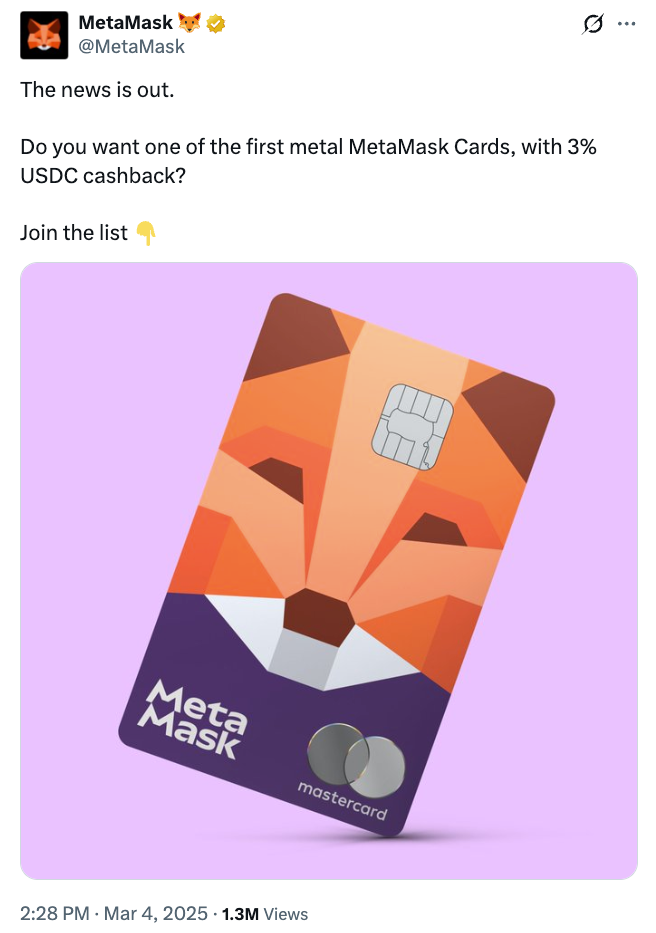
Mastercard, MetaMask launch US crypto card, debuting in New York
Cardano Whales Stack 819M ADA Amid Market Weakness
Trending news
MoreCrypto prices
More





