
Intuit (NASDAQ:INTU) surpasses sales expectations in Q4 of fiscal year 2025

Intuit Surpasses Expectations in Q4 CY2025
Intuit (NASDAQ:INTU), a leader in financial technology, posted fourth-quarter revenue that exceeded analyst forecasts, reaching $4.65 billion—a 17.4% increase compared to the same period last year. The company anticipates next quarter's revenue to be approximately $8.54 billion, closely matching market predictions. Adjusted earnings per share came in at $4.15, beating consensus estimates by 12.7%.
Should You Invest in Intuit?
Curious if Intuit is a smart investment right now?
Q4 CY2025 Highlights for Intuit
- Revenue: $4.65 billion, surpassing analyst projections of $4.54 billion (up 17.4% year-over-year, 2.5% above estimates)
- Adjusted EPS: $4.15, compared to analyst expectations of $3.68 (12.7% higher)
- Adjusted Operating Income: $1.55 billion, beating estimates of $1.39 billion (33.3% margin, 11.1% above forecast)
- Full-Year Revenue Guidance: Reaffirmed at $21.09 billion (midpoint)
- Full-Year Adjusted EPS Guidance: Maintained at $23.08 (midpoint)
- Operating Margin: 18.4%, up from 15% in the prior year’s quarter
- Free Cash Flow Margin: 32.8%, a significant increase from 15.4% last quarter
- Billings: $4.75 billion at quarter’s end, marking a 15.8% year-over-year rise
- Market Cap: $106.1 billion
About Intuit
Intuit, originally named for its flagship product "Intuitive for the first-time user," delivers financial management solutions such as TurboTax, QuickBooks, Credit Karma, and Mailchimp. These tools empower individuals and small businesses to handle their finances efficiently.
Intuit’s Revenue Performance
Consistent sales growth is a hallmark of a strong company. While any business can have a standout quarter, sustained expansion over years is more telling. Intuit has achieved a compound annual growth rate of 21.1% over the past five years, outpacing the average software company and demonstrating strong customer demand for its products.
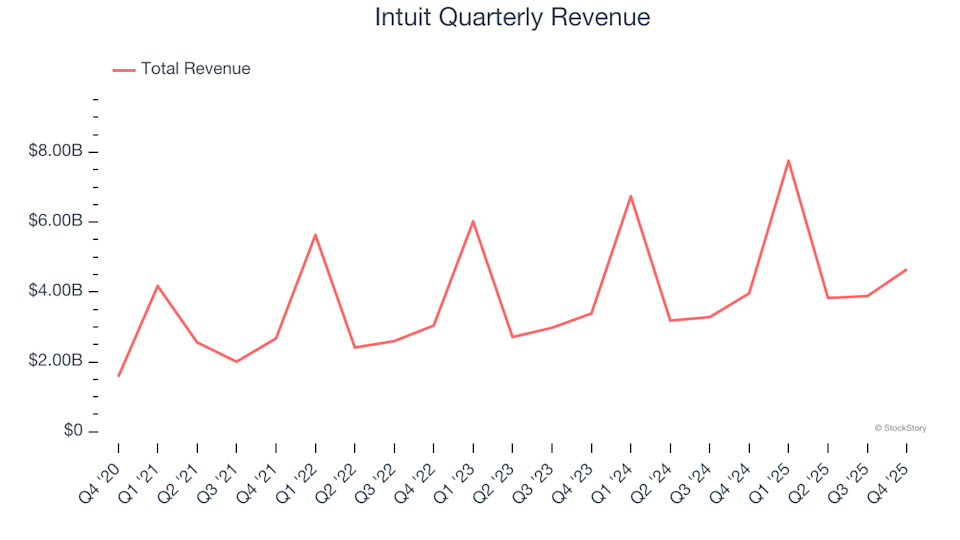
Although Intuit’s two-year annualized revenue growth rate of 15.5% is lower than its five-year average, the company’s performance remains solid. This quarter, Intuit reported a 17.4% year-over-year revenue increase, with sales topping Wall Street’s expectations by 2.5%. Management projects a 10.1% year-over-year sales rise for the upcoming quarter.
Looking ahead, analysts forecast an 11.1% revenue growth over the next year—a slowdown compared to recent years. While this outlook suggests some challenges in demand, Intuit continues to demonstrate strength in other financial metrics.
Billings Overview
Billings, often referred to as "cash revenue," reflect the total amount collected from customers during a period, differing from revenue, which is recognized over the duration of contracts.
Intuit recorded $4.75 billion in billings for Q4, with an average year-over-year growth of 17.6% across the past four quarters. This aligns with overall sales growth and signals robust customer engagement. The cash influx also strengthens liquidity, supporting future investments and expansion.
Customer Acquisition Efficiency
The customer acquisition cost (CAC) payback period measures how quickly a company recoups its investment in acquiring new customers. A shorter payback period indicates more efficient sales and marketing spending and greater scalability.
Intuit’s CAC payback period was 23.4 months this quarter, reflecting its ability to quickly recover acquisition costs. This efficiency is attributed to Intuit’s distinctive product offerings and strong brand reputation, enabling the company to invest in new products and scale its sales and marketing efforts.
Summary of Intuit’s Q4 Results
Intuit narrowly exceeded analyst expectations for billings and revenue this quarter. However, its guidance for next quarter’s EPS and full-year revenue fell slightly short of Wall Street forecasts. Overall, the results were mixed, with the stock price remaining steady at $381.54 following the report.
While this quarter’s performance was not outstanding, a single earnings report doesn’t determine a company’s long-term value. If you’re considering investing in Intuit, it’s important to weigh both recent results and broader business fundamentals.
Disclaimer: The content of this article solely reflects the author's opinion and does not represent the platform in any capacity. This article is not intended to serve as a reference for making investment decisions.
You may also like
Subscribe to BTC Earn products for dual rewards exclusive for VIPs— Enjoy up to 2.5% APR and trade to unlock an additional pool of 188,888 BSB
Limited-time promotion: Post on X to win rewards and share the 10,000 USDT promotion pool
Bitget Retail Price Improvement (RPI) Orders Application Guide
OPNUSDT now launched for futures trading and trading bots
Trending news
MoreCrypto prices
More





