
Nvidia Plunges Overnight: Institutions Sell Off, Retail Investors Rush to Buy?

Overnight, Nvidia's stock price plummeted, triggering violent swings in the technology sector. However, the main force behind this round of selling was not retail investors—in fact, retail investors are bucking the trend with the largest buying activity ever seen, while the real sellers are institutional investors.
During Thursday's US trading session, Nvidia's stock price experienced a dramatic reversal, plunging from a 5% gain to a 5% loss. This sharp volatility directly dragged down the performance of large-cap tech stocks as a whole.
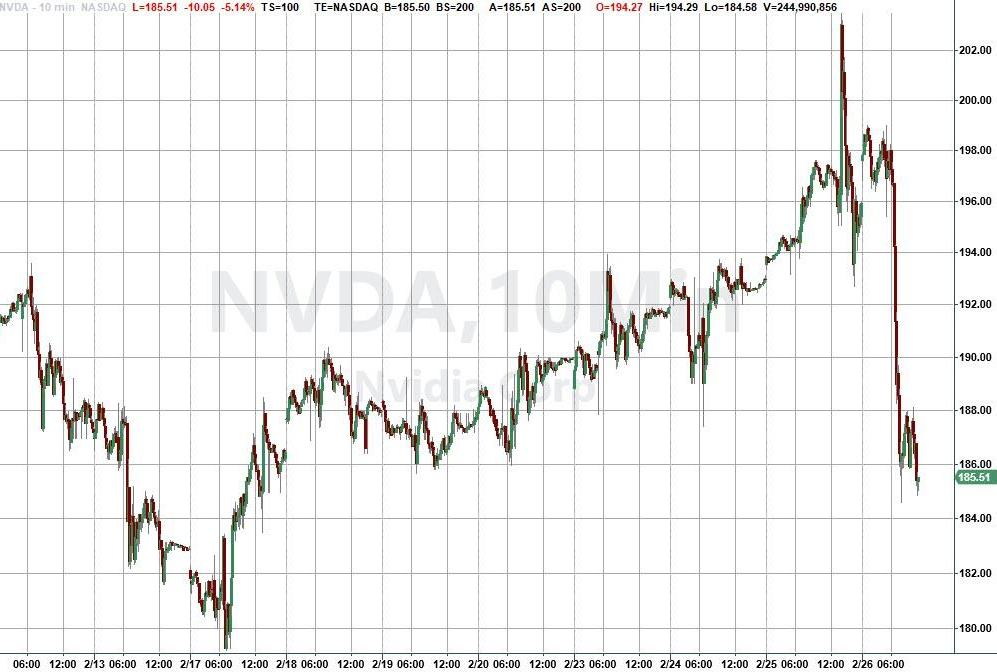
However, robust retail buying is providing potential support for the market. Within the first 80 minutes after the market opened, net retail inflows into individual stocks—including Nvidia—reached as much as $360 million, already exceeding the previous day's total inflows of $336 million, indicating extremely strong risk appetite.
In stark contrast to retail investors' contrarian buying, Wall Street institutions dominated the sell side during the intense volatility. As the market had previously built extremely crowded long positions in Nvidia, concentrated institutional selling further exacerbated the downward pressure on the stock price.
Retail Dip Buying Hits Historic Highs
According to Vanda Research, during Nvidia's price drop, the market witnessed the largest scale of retail buying since 2012. In the first 80 minutes after the opening, retail buying activity hit a record high, and capital flows were not one-sided, which partially explains the wild price swings.
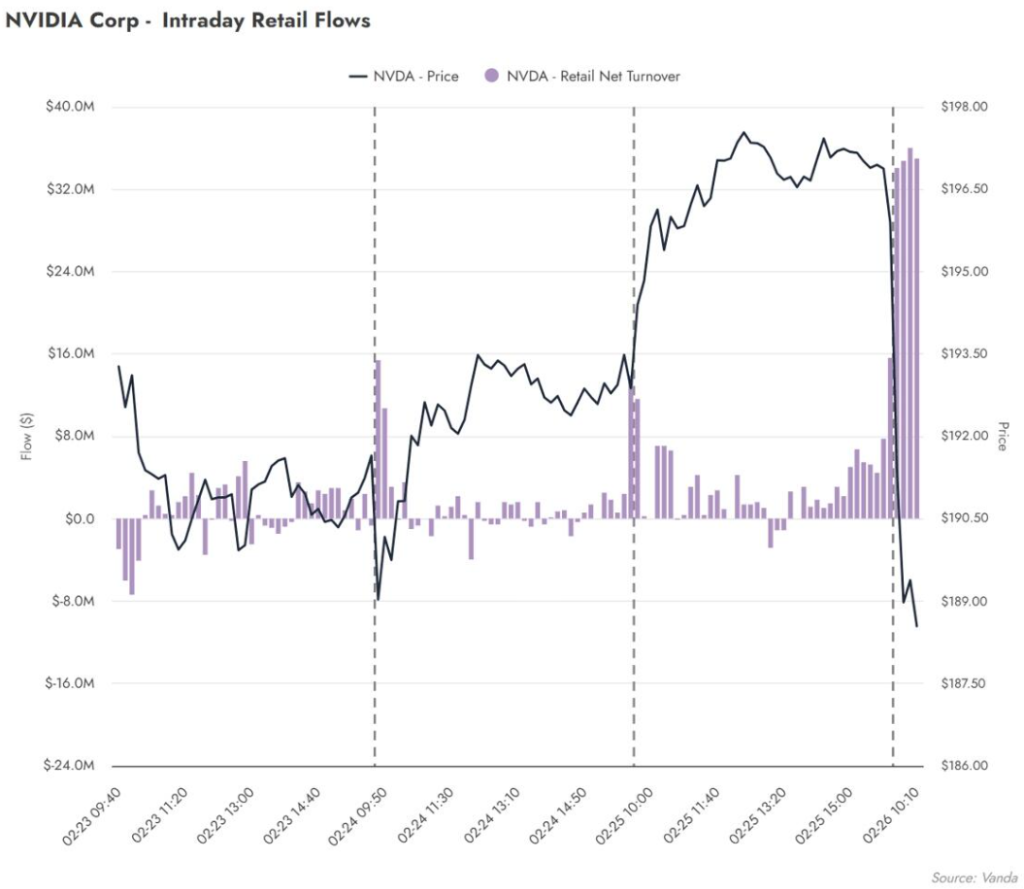
Vanda Research pointed out that despite initial weakness in price action, retail investors, on the whole, did not participate in the sell-off. On the contrary, as the stock price fell, retail investors maintained a sustained net buying position throughout the trading session.
It is noteworthy that retail buying enthusiasm was not limited to Nvidia. Vanda Research observed that, during Thursday's session, retail activity spilled over to other targets, with assets such as AVGO, IGV, and SOXX also seeing spillover buying. If this momentum continues, the day could become the largest single-stock retail buying day in months.
Institutional Capital Drives Market Sell-off
Behind the retail buying frenzy, the true driving force of the sell-off was institutional investors. According to data from Goldman Sachs' trading desk, overall trading activity that day was moderate (5/10), but capital flows skewed about 5% towards the sell side.
In terms of specific institution types, traditional long-only funds (LOs) tended to sell, with most supply focused on macro products, information technology, consumer discretionary, and healthcare, while there was buying demand in materials and communication services. Meanwhile, hedge funds (HFs) showed an even stronger selling tendency, with most sell-offs concentrated in macro products, followed by industrials and financials; their buying demand was mainly in information technology (primarily short covering in the software sector), consumer discretionary, and healthcare.
Moreover, the market's extreme positioning further amplified the impact of this drop. According to Goldman's capital flow experts, prior to this sell-off, market positioning in Nvidia was at an extreme level (reaching 8/10). Such highly crowded positions mean that when trends reverse, market participants face widespread losses.
Disclaimer: The content of this article solely reflects the author's opinion and does not represent the platform in any capacity. This article is not intended to serve as a reference for making investment decisions.
You may also like
Dominion Energy's $890M Volume Surges to Rank 189 as Analysts Adjust Ratings and Capital Plan Expands
XRP’s Measured Move Target Above $15 Remains Unchanged: Analyst
Trending news
MoreCrypto prices
More





