
Nasdaq and S&P are on track for their biggest monthly decline since March. Here’s what you can do to manage the changes

Market Leaders Shift as Tech Stocks Lose Momentum
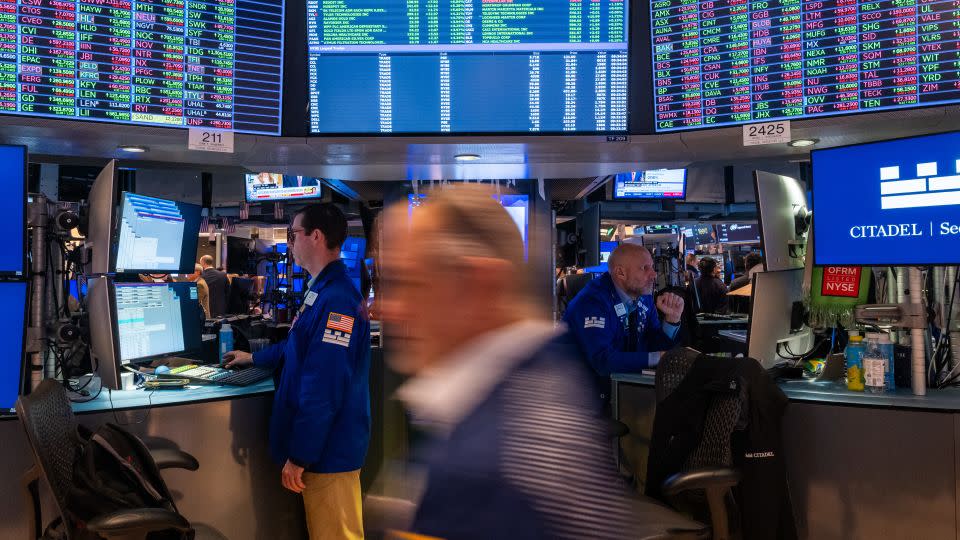
This year, sectors such as energy, materials, and consumer staples have outperformed in the S&P 500, while technology shares have lagged behind.
Tech Sector No Longer Driving Market Growth
Technology stocks, once the primary force behind market gains, are no longer leading the way. Investors now face increased volatility, but there are ways to safeguard portfolios during these uncertain times.
After several years of tech and AI companies fueling optimism about productivity improvements, these stocks have entered a period of stagnation. The Nasdaq Composite, which is heavily weighted toward tech, has not reached a new high in four months. Meanwhile, the S&P 500 has remained relatively unchanged this year and is on track for its weakest month since March.
Other Sectors Gain Ground
Stocks with minimal ties to artificial intelligence are seeing better performance. The Dow Jones Industrial Average, which has less exposure to technology compared to the Nasdaq and S&P 500, has risen 3% this year.
This trend reflects a broader transformation on Wall Street as investors navigate the complexities of AI. For example, Nvidia, a prominent AI company, recently experienced its steepest decline since April, despite reporting impressive quarterly results.
Concerns about AI’s potential to disrupt existing business models continue to impact software companies. Additionally, there is ongoing uncertainty about whether the massive investments by major tech firms in data centers will yield sufficient returns.
However, market experts suggest that investors should not panic. Instead, they point to evolving market dynamics that may present fresh opportunities.
Historically, the broader market tends to deliver positive returns over time, with the S&P 500 averaging strong annual gains. This suggests that long-term investors in broad indexes can often ride out short-term market swings.
Seeking Stability in a Changing Market
Currently, nearly 40% of the S&P 500’s total value is concentrated in large technology companies such as Nvidia, Microsoft, and Alphabet. Investors who are uneasy about this concentration may consider diversifying into sectors less influenced by AI.
“It’s easy for investors to become overly concentrated in technology without realizing it,” explained Jon Ulin, managing principal at Ulin & Co Wealth Management.
Apprehension about technology stocks has kept the S&P 500 moving sideways. The index reached a record high in late January, but has since lost momentum and remains flat since late October.
Ulin advises investors not to overreact to market noise, but to review their portfolios during turbulent periods. He has reduced his reliance on major tech stocks, reallocating funds toward sectors like materials, energy, infrastructure, industrials, healthcare, and consumer staples.
Craig Johnson, chief market technician at Piper Sandler, recently downgraded his outlook on the technology sector from “overweight” to “neutral,” signaling a shift away from tech in his portfolio.
Rotation Toward Defensive Sectors
Johnson sees potential in sectors such as energy and expects investors to continue moving away from tech in search of stability. So far this year, energy, materials, and consumer staples have been the top-performing sectors in the S&P 500, while technology and financials have lagged. For instance, a leading energy sector ETF has climbed 23%, whereas a tech-focused ETF has dropped by 2%.
How to Protect Your Portfolio
Analysts remain uncertain whether the worst of the AI-driven volatility has passed. The best approach for investors depends on their individual goals and risk tolerance, but several strategies can help manage risk during turbulent times.
“Many investors are nervous about the impact of AI,” said Jed Ellerbroek, portfolio manager at Argent Capital Management. “With the market’s current volatility and shifting focus, maintaining a diversified portfolio is a prudent move.”
- Diversification: Spreading investments across various sectors can reduce risk.
- Rebalancing: Investing in an equal-weighted S&P 500 index, where each stock has the same influence, can help cushion against steep declines in tech. This index has gained nearly 7% this year, outperforming the main S&P 500’s less than 1% rise.
- International Exposure: Allocating funds to overseas markets can enhance returns, as European and Asian markets have outperformed the U.S. this year after strong results in 2025.
- Staying the Course: Sticking to a long-term investment plan and ignoring short-term market noise can also be effective, according to analysts.
“We always recommend diversification and caution against focusing on a single investment theme,” said Johan Strand, wealth manager and research analyst at Badgley Phelps.
Strand added, “It’s difficult to predict short-term market movements, but we remain optimistic about the stock market’s prospects for 2026.”
Disclaimer: The content of this article solely reflects the author's opinion and does not represent the platform in any capacity. This article is not intended to serve as a reference for making investment decisions.
You may also like
US Treasury yields move up as oil prices climb and concerns about inflation increase
Hyperliquid's Token Rises as Weekend Iran Shock Finds Few Open Markets
72 Hours of Life and Death! Decisive Factors That Will Determine the Market's Next Move
AUD/JPY trades above 111.00 after paring recent losses
Trending news
MoreCrypto prices
More





