
Mid-cap ETFs Showing Strong Momentum: The Reasons Behind It

Why Consider Mid-Cap Investments?
For those looking to balance stability with growth potential, mid-cap stocks present an appealing option. While these companies are generally more robust and less volatile than small-cap stocks, they do carry more risk than large-cap counterparts. Despite this, mid-cap ETFs have recently reached their highest levels in a month, suggesting renewed investor interest in this segment.
Challenges Facing Large-Cap Stocks
Although global markets have stabilized following several trade agreements involving the United States, ongoing tariff disputes initiated by President Trump continue to create uncertainty. The U.S. has implemented new tariffs at a 10% rate, with the possibility of further increases, as reported by the BBC.
According to the IMF, global economic growth is forecasted at 3.3% for 2026 and 3.2% for 2027, mirroring the rates seen in 2024 and 2025. With little improvement in the growth outlook, investors may become wary of large-cap stocks, which tend to have significant international exposure and could be more vulnerable to global slowdowns.
What’s Supporting Smaller-Cap Stocks?
The Federal Reserve implemented three rate cuts in 2025, totaling 0.75 percentage points. While the Fed’s stance for 2026 appears more measured, the benchmark interest rate remains between 3.5% and 3.75% as of January. The likelihood of another rate cut in March is low (3.9%), but J.P. Morgan anticipates one cut in 2026.
The Fed now expects real GDP growth to reach 2.3% in 2026 (up from 1.8%), 2% in 2027 (up from 1.9%), and 1.9% in 2028 (up from 1.8%). Since small-cap stocks are more focused on the domestic market, these projections could spark a rally among smaller companies.
Unemployment is projected to remain at 4.4% in 2026, then decrease to 4.2% in 2027. Inflation, as measured by PCE, is expected to be 2.5%, slightly lower than previous estimates. These conditions could benefit companies with a domestic focus, such as small and mid-cap stocks.
However, ongoing concerns about inflation driven by tariffs and a labor market that has yet to fully recover may lead to increased volatility for small-cap stocks. As a result, investors may prefer more stable companies over the smallest firms.
Why Mid-Caps Stand Out
Given the current environment, neither small nor large caps offer a clear advantage. A balanced approach that includes mid-cap stocks may provide the best combination of growth and stability. Several mid-cap ETFs have outperformed the SPDR S&P 500 ETF Trust (SPY), which declined by 0.9% over the past month.
Highlighted Mid-Cap ETFs
- WisdomTree US MidCap Quality Growth Fund (QMID): Gained 2% in the last month
- State Street SPDR S&P 400 Mid Cap Value ETF (BBMC): Up 3% over the past month
- Janus Henderson Mid Cap Growth Alpha ETF (JMID): Rose 1.7% in the last month
- Invesco S&P MidCap Low Volatility ETF (XMLV): Increased by 1.5% over the past month
Enhance Your Portfolio with Expert ETF Guidance
Subscribe to Zacks' exclusive Fund Newsletter for timely insights, market news, and analysis, including top-performing ETFs delivered directly to your inbox each week.
This valuable resource is available at no cost—don’t miss out!
Get it now >>
Looking for the latest stock picks from Zacks Investment Research? Download the 7 Best Stocks for the Next 30 Days for free. Click here to access the report.
Disclaimer: The content of this article solely reflects the author's opinion and does not represent the platform in any capacity. This article is not intended to serve as a reference for making investment decisions.
You may also like
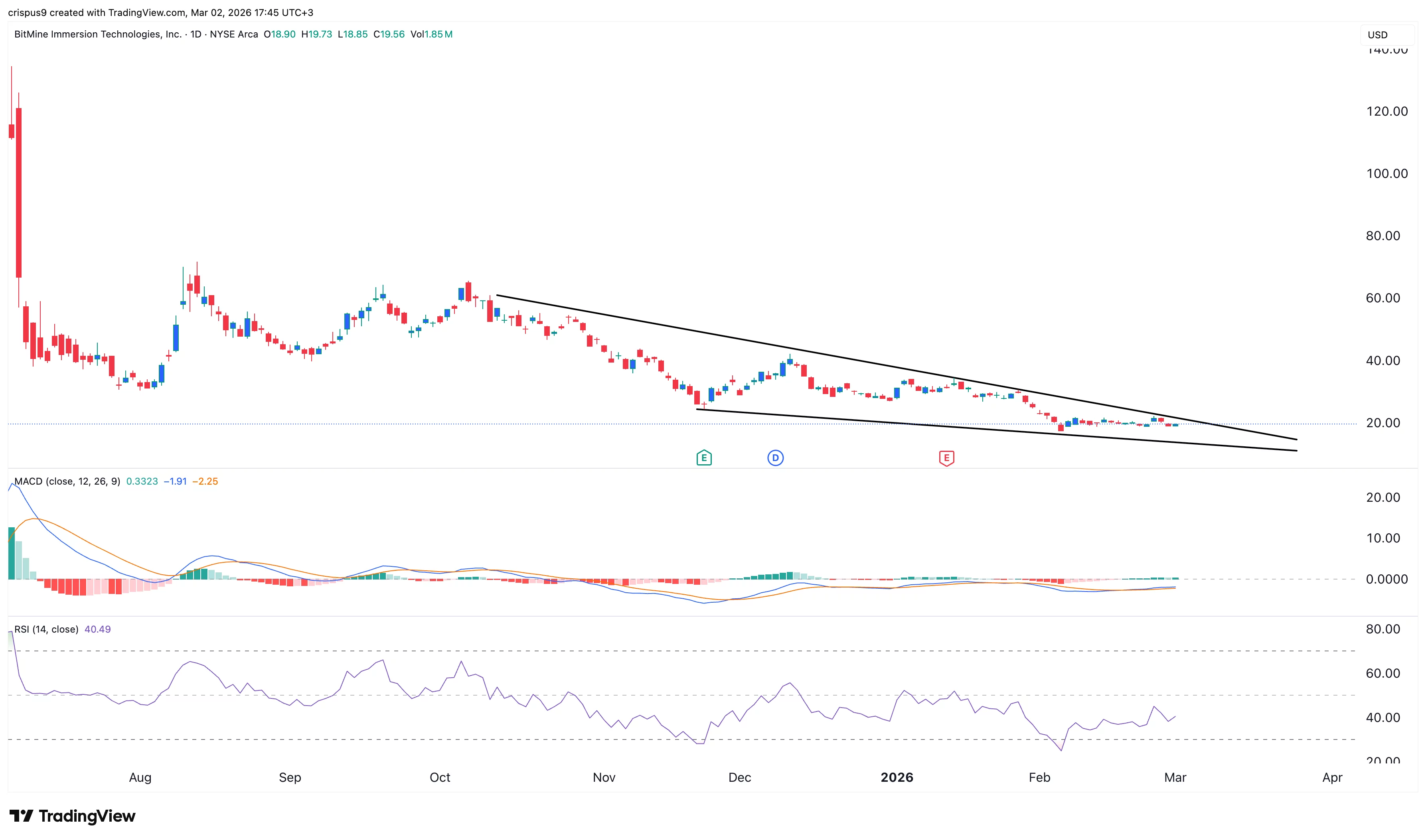
BitMine stock slumped for five straight months: will it rebound in March?
Realty Income’s Decade-Long Dividend Performance: A Technical Review of Its Income Generation Mechanism
B. Riley Cuts Target Price on Go Daddy (GDDY) to $215

Trending news
MoreCrypto prices
More





