
Record-Breaking Earnings Exceed Expectations: Why Is Nvidia's Stock Still Falling?

Source: Global Market Broadcast
After Nvidia announced fourth-quarter results that exceeded expectations, its stock price plummeted sharply for two consecutive trading days. The stock fell 6.65% this week, down 7.29% in February, and is down 4.99% so far this year.
Nvidia earned $43 billion in a single quarter. Although Joseph Moore of Morgan Stanley called this a historic performance and guidance beat for a chip company—with revenue about $3 billion higher than expected and guidance roughly $5 billion above analysts’ previous models.
This level of outperformance may have been foreseeable, as Nvidia’s hyperscale customers recently raised their capital expenditure forecasts, indicating continued investment in chips.
Moore noted that although the stock’s muted reaction is surprising, the controversy surrounding Nvidia stock is “essentially long-term in nature.”
Despite the upward revision in capital expenditure forecasts, investors have long been concerned about the sustainability of AI spending. Moore stated that, based on all current investments, the free cash flow generation for hyperscale enterprises appears to be “under significant pressure.”
He is not so worried. He said hyperscale enterprises are demanding more computing power. While costs are a challenge, the demand comes from the shift to inference (i.e., running AI models), which will ultimately translate into revenue.
Moore stated in Thursday’s report that the long-term outlook “looks quite good.”
Moore believes an even greater catalyst for Nvidia’s stock price may be its CEO Jensen Huang’s upcoming keynote speech at the Morgan Stanley Technology Conference, as well as the annual GTC conference hosted by the chipmaker in March. Investors will seek more details about the company’s product roadmap, including its Vera Rubin chip platform and updates on the subsequent Feynman architecture.
Bernstein analyst Stacy Rasgon said he is “not sure what investors still want to hear at this point,” but buy-side expectations for Nvidia into 2027 “seem very reasonable,” as there are “no signs of slowing demand” for its products. Specifically, he pointed out that buy-side opinions see Nvidia’s earnings per share for the next calendar year potentially reaching $12 or more. FactSet’s consensus estimate is about $10.
Meanwhile, Nvidia has also been affected by concerns over rising memory prices due to supply shortages. Nvidia’s chips require a large amount of memory, and the massive demand for memory is also fueling price increases in the industry amid tight supply.
TD Cowen analyst Joshua Buchalter stated in a Wednesday report that Nvidia’s “confident yet conservative messaging” about its 75% gross margin should be good news for investors. He added that the company likely secured memory supply and pricing before the shortage hit.
As software stocks declined, Buchalter expressed some confusion about Nvidia’s recent stock price weakness.
He wrote: “Just pointing out a strange phenomenon—software stocks seem to be pricing in an existential crisis, while the hardware infrastructure that could enable such an outcome is pricing in a rapid decline in demand, which strikes us as odd.”
Disclaimer: The content of this article solely reflects the author's opinion and does not represent the platform in any capacity. This article is not intended to serve as a reference for making investment decisions.
You may also like
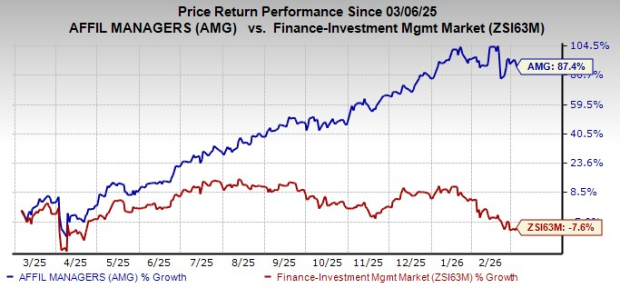
AMG Shifts Focus to Alternative Strategies: What Impact Does This Have on Growth?
Here’s Where XRP Stands Apart In Quantum Computing Risk
Dormant Bitcoin whales move $56 mln: Can BTC withstand the sudden selling?
USD/CAD: Downward pressure remains within range – Scotiabank
Trending news
MoreCrypto prices
More





