
Hovnanian's Q1 2026: A High-Risk, High-Reward Play in a Consolidating Sector

The institutional case for HovnanianHOV-0.54% hinges on a clear tension: a tactical margin improvement from a strategic pivot, set against a structural market that offers no growth. The company returned to profitability in the first quarter, reporting net income of $20.9 million. This marks a decisive turnaround from the prior quarter's loss, driven by a deliberate shift toward higher-margin move-up and active-adult communities. Yet, this pivot came at a cost, compressing the homebuilding gross margin to 10.1% for the period.
This compression is the core of the investment thesis. The strategic move to higher-margin homes is a quality factor play, aiming to improve the fundamental economics of the business. However, the execution required heightened incentives to maintain sales pace, a necessary lever in a softening market. This trade-off-favoring margin mix over absolute price-reflects a builder adapting to a new reality. For institutional capital, this is a high-risk, high-reward setup: the company is betting its future profitability on a product mix shift, but it is doing so while relying on aggressive pricing to clear inventory.
The broader market environment provides the critical constraint. The housing sector is not accelerating; it is stabilizing. According to market forecasts, 2026 is expected to be "more of the same" year, with starts and sales tracking closely with 2025 levels. This creates a low-growth, high-competition battleground where builders must fight for every sale. In this context, Hovnanian's strategy is a response to a lack of demand, not a driver of it. The company's reliance on incentives to maintain a sales pace, even as it shifts product mix, underscores the persistent pressure. The margin compression is not an anomaly but a symptom of a market where volume is hard to come by.
For portfolio allocation, this sets up a classic conviction buy with a clear catalyst. The return to profitability is a tangible floor, supported by a solid $471 million of total liquidity. The strategic pivot, while currently pressuring margins, is the mechanism for future improvement. The institutional view must weigh the immediate pressure against the long-term quality upgrade. The thesis is that Hovnanian is positioning itself for a better cycle, but it must navigate a stagnant one. The risk premium is high, but the potential reward is a company that emerges from the consolidation with a stronger, more profitable model.
Competitive Positioning and Financial Quality: A Leverage-Intensive Model
| Total Trade | 10 |
| Winning Trades | 4 |
| Losing Trades | 6 |
| Win Rate | 40% |
| Average Hold Days | 2.1 |
| Max Consecutive Losses | 3 |
| Profit Loss Ratio | 0.66 |
| Avg Win Return | 4.5% |
| Avg Loss Return | 6.37% |
| Max Single Return | 9.98% |
| Max Single Loss Return | 22.05% |
This leverage-intensive model is reflected in its cash flow profile. Despite high earnings relative to its depressed share price, the company's free-cash-flow is poor, evidenced by a P/FCF ratio near 90. This extreme multiple indicates that nearly all earnings are consumed by debt service, leaving little room for reinvestment or shareholder returns. In a scenario where interest rates remain elevated, this creates a significant growth constraint. The market appears to have priced in this risk, but it remains the single largest friction to the company's strategic pivot.
The competitive backdrop intensifies this financial pressure. D.R. Horton's scale is not just a benchmark; it is a persistent competitive and pricing risk. The company now builds one in every seven new single-family homes sold in the U.S. This dominance, built through relentless market expansion and operational leverage, allows Horton to deploy incentives and absorb cost pressures in a way that smaller players cannot. Its operating margins of 16.58% far exceed Hovnanian's 9.81%, a gap that reflects superior supplier negotiations and fixed-cost contract management. For Hovnanian, competing in this landscape means executing its higher-margin product shift while fighting for every sale against a giant with a vastly superior cost base.
From a portfolio construction standpoint, this sets up a clear divergence. Horton represents a quality, low-leverage play with durable cash flows and a structural moat. Hovnanian is a high-beta, high-risk alternative, where the potential for a better cycle is balanced against a fragile balance sheet. The institutional flow into this name is a conviction bet on a specific set of catalysts-namely, a sharp decline in rates and a successful product mix transition-against a backdrop of formidable competitive headwinds. It is a model that demands a high risk premium and is unsuitable for a core holding in a diversified portfolio.
Portfolio Implications and Risk-Adjusted Return Profile
The institutional view on Hovnanian must reconcile a powerful secular tailwind with severe near-term constraints. On one side, the persistent housing shortage is a long-term structural driver. Analysts estimate three to four more million homes are needed to address the U.S. shortfall, creating a fundamental growth runway for builders. This secular trend is a key reason why the stock remains a candidate for a portfolio allocation. On the other side, the near-term path is constrained. The market is not recovering to pandemic-era ease; it is stabilizing. As noted, mortgage rates will likely hold steady above 6% and affordability remains a hurdle, with a soft labor market adding to the headwinds. This creates a low-growth, high-competition environment where volume is hard to come by.
Within this context, the company's recent operational data offers a potential catalyst for margin stabilization. Evidence suggests incentives offered by Hovnanian appear to be levelling off. This is a critical development. For a builder relying on aggressive pricing to maintain sales, a plateau in incentives could support gross margin stabilization if demand holds. It signals a potential inflection point in the cost of sales, which would directly improve the quality factor of the strategic pivot. However, this stabilization is contingent on demand not deteriorating further, a risk given the affordability constraints.
For portfolio construction, this analysis leads to a clear verdict. Hovnanian's high-risk, high-leverage profile makes it unsuitable as a core holding. Its extreme financial engineering-a Debt/Equity ratio of 1.5-creates a severe vulnerability to rising rates and stagnant demand, a scenario that would pressure its already poor free cash flow. The institutional flow into this name is a conviction bet, not a strategic allocation. It should be considered only as a small, concentrated position within a broader homebuilding allocation, where it serves as a leveraged play on the secular shortage and a successful product mix transition.
The risk-adjusted return profile is defined by this tension. The potential reward is a company that emerges from the consolidation with a stronger, more profitable model. The risk premium is high, priced in by the stock's depressed valuation and extreme leverage. For institutional portfolios, the decision is about sizing and conviction. This is a high-beta satellite holding, where the potential for a sharp recovery in rates and a successful execution of the margin shift could generate outsized returns. But it is a holding that demands a high tolerance for volatility and a clear understanding that its financial model is a direct bet on a specific set of favorable macro and operational catalysts.
Catalysts and Watchpoints: The Path to Conviction
For institutional capital, the path to conviction on Hovnanian is defined by a narrow set of forward-looking catalysts and risks. The primary driver for a re-rating is a sustained improvement in mortgage rates toward 6%. As noted in the market outlook, mortgage rates will likely hold steady above 6%, but any meaningful decline from current levels would directly enhance affordability for move-up homes-the very segment Hovnanian is targeting. This would alleviate a key consumer headwind, potentially boosting demand for its higher-margin product mix and reducing the need for aggressive incentives.
The most immediate risk to the current thesis is continued margin compression. Evidence shows incentives remained a key lever to maintain sales pace, contributing to a declining homebuilding gross margin. If demand softens further, the company may be forced to deepen these discounts, pressuring the strategic pivot's profitability. Investors must monitor the stabilization of these incentives, as a plateau is a necessary condition for margin recovery. A further decline in backlog conversion cycles would compound this pressure, as it would extend the capital tied up in unsold inventory and increase carrying costs.
A critical, structural watchpoint is the competitive landscape. D.R. Horton's relentless expansion continues to consolidate market share, building one in every seven new single-family homes sold in the U.S. This scale creates a persistent competitive and pricing risk for Hovnanian. Any shift in the competitive dynamics-such as Horton aggressively expanding into Hovnanian's core markets or securing better land deals-could force a defensive pricing response, undermining the margin improvement from the strategic pivot. Institutional monitoring should track community count growth and absorption rates at the sector leader as a leading indicator of competitive intensity.
The bottom line is that Hovnanian's setup is a binary bet on a specific set of catalysts. The path to a better risk-reward profile hinges on rates, margin stabilization, and competitive resilience. Until these factors align, the high-risk, high-leverage model remains exposed to the sector's low-growth, high-competition reality. For portfolio deployment, this means the position is a tactical satellite, not a core holding, where capital is allocated based on the resolution of these forward-looking watchpoints.
Disclaimer: The content of this article solely reflects the author's opinion and does not represent the platform in any capacity. This article is not intended to serve as a reference for making investment decisions.
You may also like
Netflix chief: I feel uneasy about the result and our final position

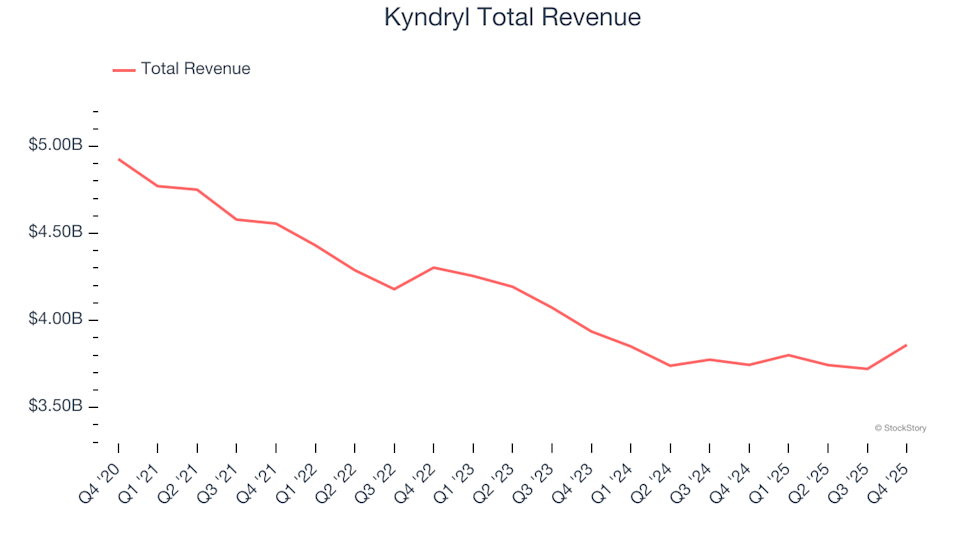
Q4 Earnings Overview: Comparing Kyndryl (NYSE:KD) With Other IT Services & Consulting Companies
CHAT vs. SOXX: Evaluating the AI ETF Opportunity Following Recent Gains
Trending news
MoreCrypto prices
More





