
Iran Attacks Reveal the Grim Downside of the Prediction Market Age

Prediction Markets Face Scrutiny Amid Iran Conflict
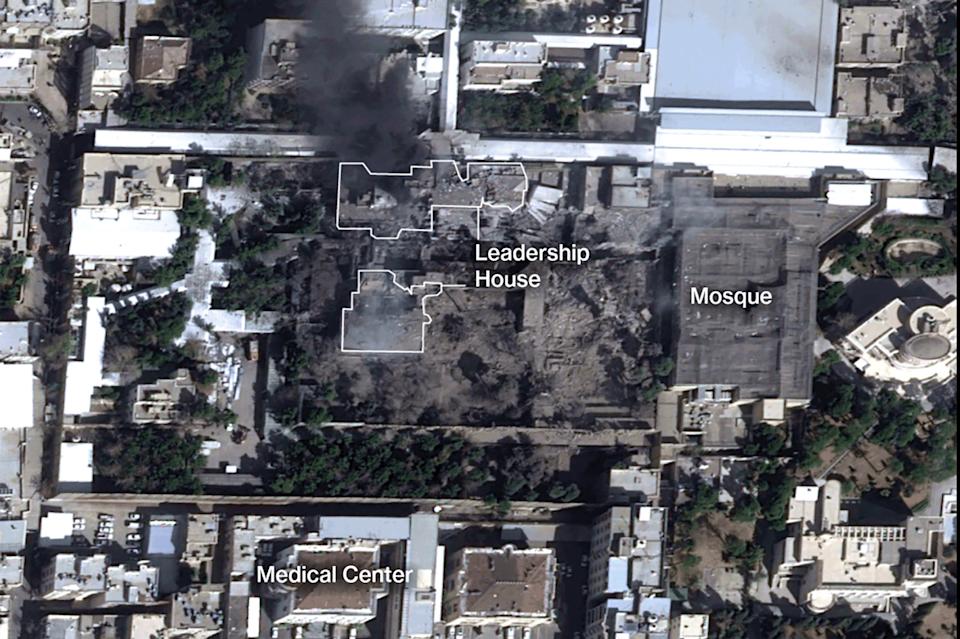
Prediction markets have recently sought both financial backing from Wall Street and regulatory acceptance in Washington, promoting the idea that allowing people to wager on real-world events can yield more timely and accurate insights than traditional methods.
However, the recent escalation of violence involving US and Israeli airstrikes on Iran put these platforms under intense ethical and legal examination, as traders rushed to profit from the unfolding crisis.
Top Stories from Bloomberg
The sector has drawn significant investment and support. Polymarket, which counts Intercontinental Exchange Inc.—the owner of the New York Stock Exchange—among its backers, is valued at $9 billion and operates primarily offshore, outside the reach of US regulators. Kalshi Inc., regulated by the Commodity Futures Trading Commission, is valued at $11 billion and has partnered with Tradeweb Markets Inc. Together, these platforms processed tens of billions in trades last year.
Both Polymarket and Kalshi allowed users to speculate on developments in Iran. When Ayatollah Ali Khamenei was killed in the recent strikes, both platforms faced criticism. On Polymarket, contracts related to the timing of US military action saw over $529 million in trading, and blockchain analysts noticed unusual activity from new accounts. The market on whether Khamenei would remain Iran’s supreme leader ultimately resolved in the affirmative.
Kalshi attempted to navigate the controversy by structuring its Khamenei contract—which attracted over $50 million in trades—so that if he died, payouts would be based on the last price before his death, rather than a simple win/lose outcome. The company maintains that it does not offer markets that directly settle on death, and US-regulated exchanges generally prohibit contracts linked to war, terrorism, or assassination.
Polymarket’s War Wagers Spark Political and Legal Pushback
Kalshi’s approach was quickly tested. As news of Khamenei’s death spread, trading surged. Kalshi promoted the contract on social media, clarified its rules, and eventually suspended trading. By Saturday evening, the CEO announced on social media that all fees from this market would be refunded. Ultimately, Kalshi reimbursed users for their net losses, a move that reportedly cost the company about $2.2 million.
Regulatory and Ethical Dilemmas Remain
This incident highlighted a persistent challenge: how to allow speculation on global events without triggering the very ethical concerns that regulations aim to address.
“Our rules were clear from the outset, and we settled according to those rules,” a Kalshi spokesperson stated. “We refunded all fees and net losses because we believed the user experience could have been clearer.”
Polymarket did not immediately respond to requests for comment.
The controversy has brought to light a debate the industry would rather manage privately. Supporters argue that prediction markets offer valuable information—suggesting that markets where participants risk real money can provide faster and more accurate signals than intelligence agencies or journalists. They also highlight the risk management benefits, such as allowing shipping companies or oil traders to hedge against geopolitical uncertainty in ways that traditional insurance cannot match for speed or flexibility.
Expert Opinions and Industry Response
Mansour, Kalshi’s CEO, has defended the Khamenei market, noting that leadership changes in Iran have significant implications for global oil prices, security, and international stability. He also pointed out that authoritarian leaders can lose power without dying, as seen with Venezuela’s Nicolás Maduro.
“We do not list markets that directly depend on death,” Mansour wrote on X. “For markets where death could be an outcome, we design rules to prevent profiting from such events.”
Critics argue that markets tied to war or violence create perverse incentives, unlike those based on elections or economic data. In February, Israeli authorities reportedly filed the world’s first criminal charges linking prediction market bets to classified military intelligence.
Dennis Kelleher, CEO of Better Markets, commented via email: “These private, profit-driven financial firms want to maximize trading on anything, while narrowly interpreting laws that clearly prohibit betting on assassination and war.”
Political Pressure Intensifies
The debate comes at a critical juncture. New business models are emerging around the belief that anything quantifiable should be tradable, from the duration of a press conference to the outcome of armed conflict. Prediction markets epitomize this philosophy: eliminate intermediaries, let the market set the price, and treat the result as fact. The Iran situation tested whether this approach has boundaries.
Just days before the strikes, Democratic senators led by Adam Schiff of California sent a letter to CFTC Chairman Michael Selig, urging the agency to crack down on contracts related to war and assassination, with a response deadline of March 9—now coinciding with actual conflict.
Senator Chris Murphy of Connecticut went further, announcing plans to introduce legislation banning what he described as “corrupt and destabilizing prediction markets, where insiders—especially in government—can manipulate outcomes to favor certain bets.”
The Coalition for Prediction Markets, which includes Kalshi, responded on X, stating that “contracts involving death have no place on American exchanges.” Yet, within days, a member had to suspend a contract due to the death of its subject.
Amanda Fischer, former chief of staff at the Securities and Exchange Commission, remarked, “The confusion and uproar over how these bets would be settled shows that such markets should not exist in the first place.”
Reporting assistance by Emily Nicolle.
Most Popular from Bloomberg Businessweek
©2026 Bloomberg L.P.
Disclaimer: The content of this article solely reflects the author's opinion and does not represent the platform in any capacity. This article is not intended to serve as a reference for making investment decisions.
You may also like
Sanctioned entities moved $104B through crypto in 2025: Report
Ether’s path to $2.5K may be trickier than expected: Here’s why
Marvell: Overview of Fourth Quarter Financial Results
Trending news
MoreCrypto prices
More





