
Market Rebound: Is This a Temporary Technical Rally or a Shift in Risk Valuation?

Market Response: A Technical Rebound, Not a Shift in Fundamentals
Recent market movements in response to Middle East tensions were driven more by technical factors than by a change in underlying fundamentals. The session began with a steep decline, with the Nasdaq Composite dropping up to 1.6%. However, the subsequent recovery was limited in scope, fueled primarily by a shift into large-cap technology stocks. While the Nasdaq managed to close up 0.36%, the S&P 500 was nearly unchanged, and the Dow ended lower. This divergence highlights that the rebound was concentrated in a few tech giants rather than being market-wide.
This pattern followed a familiar technical setup known as a "failed breakdown." For several days, the S&P 500 futures (ES) traded within a tight range between approximately 6850 and 6925. On Monday, the index briefly broke below this range, reaching a low near 6828, which triggered a wave of short selling. However, the market quickly reversed, recapturing those losses and rallying sharply. This move caught bearish traders off guard, as the rapid rebound was propelled by heavy buying in leading AI stocks such as NVIDIA (NVDA +3.37%) and Microsoft (MSFT +2.13%). The rally was largely algorithm-driven and reflected a rotation into perceived safe havens within the tech sector, rather than a broad-based appetite for risk. In essence, the technical setup dictated the price action, with geopolitical developments acting as the spark. This rebound reset the immediate trading range but does not yet indicate a new fundamental trend.
Valuations: High Expectations and Limited Room for Error
This technical recovery is unfolding against a backdrop of stretched valuations, leaving the market vulnerable to disappointment. The S&P 500’s price-to-earnings ratio stands at 28.03, well above its five-year average of 22.74 and near the upper end of historical levels. This suggests investors are paying a significant premium for future earnings, reflecting strong optimism about continued growth and low interest rates.
Such elevated valuations mean the market is priced for a near-perfect scenario—steady earnings growth and minimal disruptions. Any negative surprise, whether from weaker corporate profits, changes in monetary policy, or renewed geopolitical turmoil, could quickly deflate these high multiples. The current environment offers little cushion for setbacks.
This vulnerability is especially pronounced in the technology sector, which led the recent rebound. The surge in mega-cap AI stocks like NVIDIA and Microsoft represents not just a flight to quality, but a rotation into the most expensive, growth-oriented segments of the market. These stocks are responsible for much of the S&P 500’s elevated valuation. The market remains focused on growth stories rather than shifting to a defensive stance. However, this reliance on high-valuation names increases fragility—while the technical bounce is intact, the valuation backdrop makes the market sensitive to any negative developments that could undermine the growth narrative.
Example Strategy: Long-Only Bollinger Bands on SPY
- Entry: Buy when the closing price rises above the upper Bollinger Band (20-day, 2 standard deviations).
- Exit: Sell when the closing price falls below the 20-day simple moving average, after 20 trading days, upon reaching a 5% profit, or if losses reach 3%.
- Risk Controls: Take profit at 5%, stop loss at 3%, or exit after 20 days.
Recent backtest results for this strategy on SPY show no trades executed, with all performance metrics at zero.
Risk Imbalance: Geopolitical Uncertainty vs. Economic Data
While the technical rebound has reestablished a short-term range, the market faces a clear imbalance of risks. On one side, ongoing instability in the Middle East threatens to drive inflation higher and complicate central bank policy. On the other, upcoming economic data—particularly the jobs report—could provide a boost if it supports expectations for interest rate cuts. Currently, the market appears more focused on the potential for positive economic catalysts, possibly underestimating geopolitical risks.
The most immediate threat is a sustained disruption in oil supplies. Recent attacks have already caused Brent crude futures to spike as much as 13%, surpassing $82 per barrel before easing. The Strait of Hormuz, a vital passage for about 20% of global oil and LNG shipments, has become a focal point. Prolonged instability here could reignite inflation fears, pressure central banks, and ripple through the economy by increasing production and transportation costs. The market’s initial reaction—favoring tech stocks and shunning travel-related names—reflects a move to safety, but does not fully account for the risk of a drawn-out, inflationary conflict.
In contrast, the upcoming jobs report is expected to show a significant slowdown, with economists forecasting only 60,000 new jobs in February. This softer data could reinforce expectations for Federal Reserve rate cuts, supporting the narrative that the economy is cooling and reducing the need for high rates. This is the scenario the market is currently favoring, as seen in the rotation into high-valuation tech stocks that benefit from lower discount rates.
The risk asymmetry is clear: while markets are betting on a smooth path toward lower inflation and easier policy, geopolitical shocks could quickly disrupt this outlook. The recent rise in Treasury yields, as investors scale back expectations for rate cuts, hints that these risks are not being ignored entirely. Ultimately, the technical rebound offers only a temporary respite—the market’s risk/reward profile depends on whether economic data or geopolitical events take precedence. For now, optimism about policy easing prevails, but vulnerability remains if negative shocks intensify.
Key Factors to Monitor: Catalysts and Safeguards
The market’s fragile balance will be tested by several upcoming events, which will determine whether the recovery persists or gives way to renewed weakness.
- Oil Prices: Brent crude’s recent surge above $82 per barrel was a direct response to supply concerns. Sustained high prices or a failure to retreat could signal that inflation risks are outweighing the initial flight to quality. The situation in the Strait of Hormuz remains a key variable, and ongoing volatility in oil futures will be a crucial indicator.
- Jobs Report: The February employment data, due Friday, is expected to show a marked slowdown. Confirmation of a weaker labor market would reinforce the case for rate cuts and likely support high-valuation tech stocks. Conversely, stronger-than-expected hiring could reignite inflation fears and force a reassessment of the Federal Reserve’s timeline, potentially weighing on equities.
- Central Bank Communication and Geopolitical Developments: Any escalation in Middle East tensions or a shift in the Fed’s messaging at the upcoming March meeting could prompt a swift market repricing. The FOMC meeting on March 18-19 is seen as a pivotal moment, with investors watching for any indication that the central bank is more concerned about persistent inflation. Even without a rate change, a more hawkish tone could trigger volatility, especially in the expensive growth stocks that have led the recovery.
In summary, the market is currently navigating between three forces: the inflationary risk from oil, the disinflationary hope from soft economic data, and the policy response from the Federal Reserve. While the technical rebound has bought some time, it has not resolved the underlying tensions. The next few days will be critical, as these catalysts will reveal whether the recovery can be sustained or if its foundation proves too fragile.
Disclaimer: The content of this article solely reflects the author's opinion and does not represent the platform in any capacity. This article is not intended to serve as a reference for making investment decisions.
You may also like
Utility Shares and the Pressure on Returns
What might occur if every ounce of gold on Earth was put up for sale in a single day?
Sandisk Dips Amid Memory Stock Selloff: What's Going On?
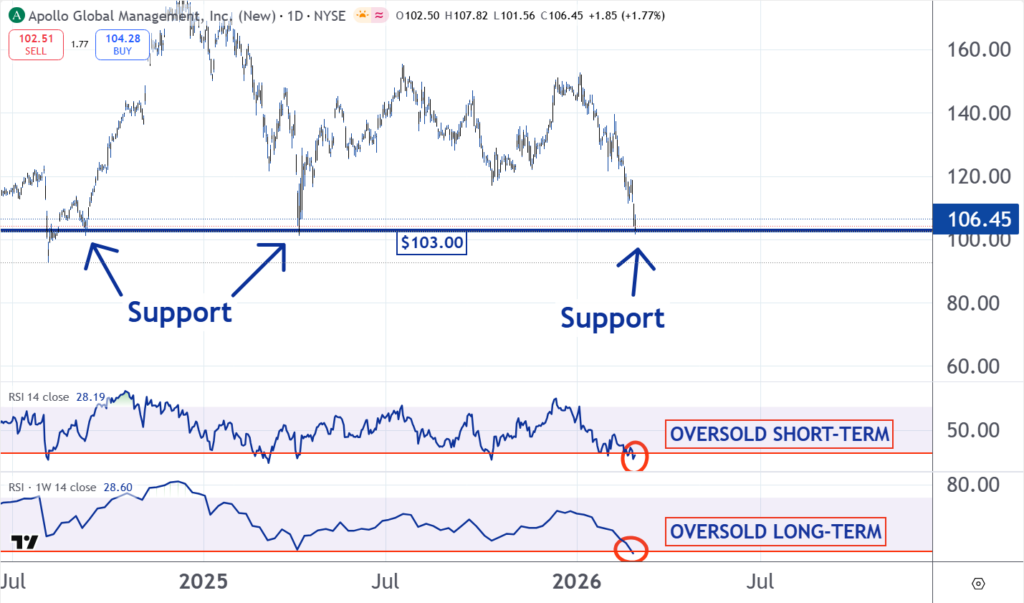
Stock Of The Day: Is This The Bottom For Apollo Global Management?
Trending news
MoreCrypto prices
More





