
AppLovin Achieves $1.76 Billion in Trading Volume, Placing 59th as Major Investors Differ on Earnings Beat and Strategic Changes

AppLovin Market Overview
On March 2, 2026, AppLovin (NASDAQ: APP) ended the trading session at $434.77, marking a decrease of 0.41% compared to the previous day. The stock recorded a trading volume of $1.76 billion, placing it 59th in daily market activity. Over the past year, AppLovin’s share price has fluctuated significantly, reaching a peak of $745.61 and a low of $200.50. The company’s market value is $146.64 billion, with a price-to-earnings ratio of 44.59 and a beta of 2.49, highlighting its status as a high-growth, high-volatility stock.
Main Influences on Performance
Institutional Investment Trends and Uncertain Sentiment
Recent disclosures show varied approaches among institutional investors regarding AppLovin. Geneva Partners LLC and Sierra Summit Advisors LLC both initiated new positions in the third quarter, with Sierra Summit Advisors LLC purchasing 11,585 shares worth $8.324 million. In contrast, 111 Capital, Cache Advisors, and Erste Asset Management significantly reduced their holdings by 63.5%, 40.6%, and 72.8%, respectively. This mixed activity points to uncertainty among major investors—some are leveraging AppLovin’s strong earnings, while others are withdrawing amid broader declines in the tech sector. Hedge funds and institutional investors collectively control 41.85% of AppLovin’s shares, indicating substantial but divided ownership.
Strong Earnings and Analyst Perspectives
AppLovin’s latest quarterly results have sparked optimism in the short term. The company posted earnings per share of $3.24, beating forecasts by $0.35, and reported $1.66 billion in revenue—a 66% increase year-over-year. Analysts generally remain positive, with 21 firms recommending a “Buy” and an average price target of $651.77. However, some price targets have been revised downward, such as Citigroup’s adjustment from $820 to $710 and Piper Sandler’s reduction to $650 from $800, reflecting more cautious expectations amid economic headwinds. Morgan Stanley and UBS Group continue to be upbeat, setting targets at $720 and $740, respectively, citing AppLovin’s robust data-driven strategies and AI-powered advertising solutions.
Insider Transactions and Strategic Adjustments
Recent insider sales have added complexity to AppLovin’s outlook. Victoria Valenzuela sold 7,609 shares for $5 million, and Director Dawson Alyssa Harvey sold 150 shares. These moves, along with the company’s gradual shift toward e-commerce advertising—which has progressed slower than anticipated—signal internal strategic changes. Wedbush Securities has commented on AppLovin’s measured approach to e-commerce, expecting a full recovery as the segment expands. Despite these insider sales, AppLovin’s 66% revenue growth and 245.64% return on equity demonstrate strong operational performance.
Market Challenges and Industry Trends
AppLovin’s recent decline mirrors broader challenges in the technology sector, where software stocks have experienced significant sell-offs due to economic uncertainty and skepticism about AI. Wedbush analysts believe the post-earnings drop is exaggerated, attributing the 8% decrease to heightened risk perceptions rather than underlying weaknesses. Lowered price targets and concerns about saturation in AI-driven advertising platforms—illustrated by Unity’s 37% drop—reflect ongoing sector-wide anxiety. AppLovin’s high beta and technical signals, including a bearish MACD and overbought stochrsi, underscore its sensitivity to market volatility.
Institutional Divergence and Future Outlook
The contrasting actions of institutional buyers and sellers highlight a lack of consensus regarding AppLovin’s short-term prospects. While Rafferty Asset Management LLC boosted its holdings by 203.6%, Allianz SE and American Century Companies Inc. reduced their positions. This split may persist until AppLovin’s e-commerce advertising efforts gain momentum or broader economic conditions stabilize. Analysts remain divided on valuation, with some emphasizing sustained earnings growth and others warning of potential overvaluation. The stock’s 50-day moving average of $539.46 and 200-day average of $571.47 suggest a possible recovery, but institutional sentiment will likely steer its near-term direction.
Disclaimer: The content of this article solely reflects the author's opinion and does not represent the platform in any capacity. This article is not intended to serve as a reference for making investment decisions.
You may also like
Dow Jones futures fall as investors turn more cautious
The dollar keeps gaining momentum as the week begins
Spot Bitcoin ETFs see $458M in inflows as Mideast conflict widens
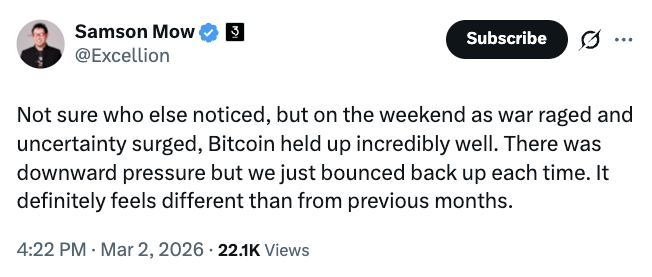
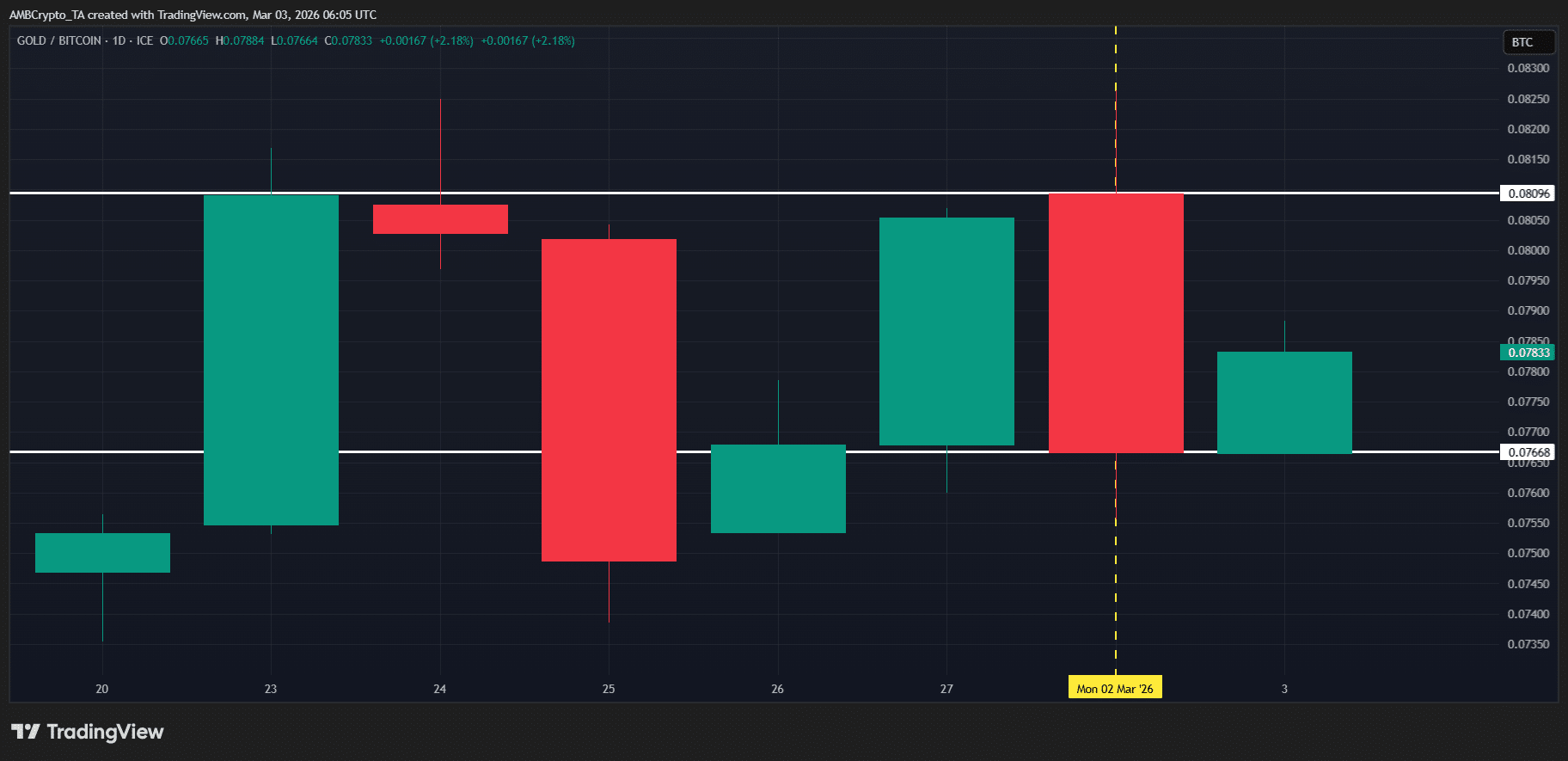
Why is crypto’s refusal to break under Iran-U.S. FUD bullish?
Trending news
MoreCrypto prices
More





