
Europe

Europe Faces Economic Uncertainty Amid Escalating Middle East Tensions
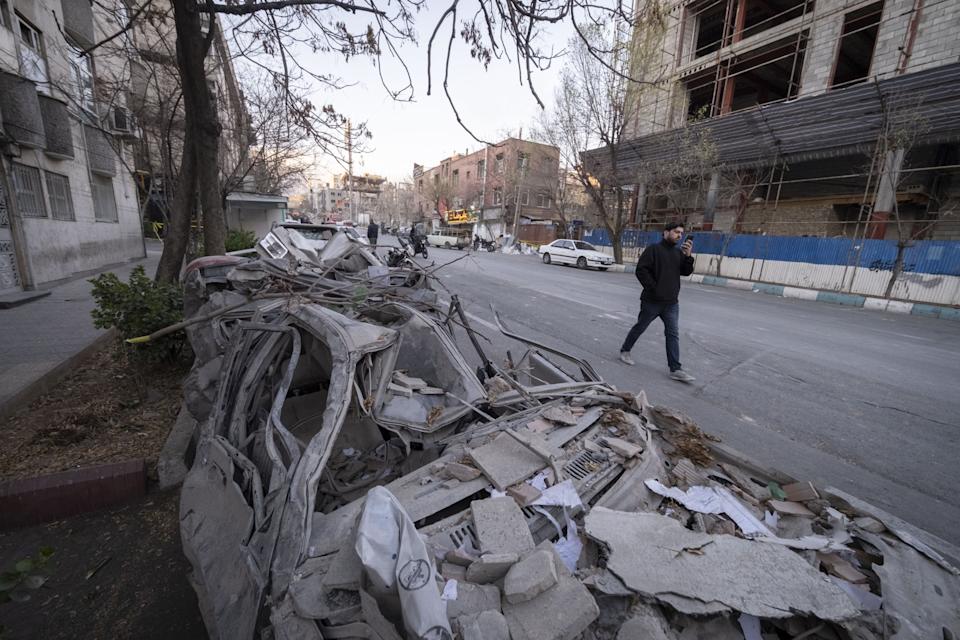
Photo Credit: Morteza Nikoubazl/NurPhoto/Getty Images
The coming month is set to be a pivotal period for Europe, as the region awaits to see if recent turmoil will trigger a new economic crisis or merely slow its ongoing recovery.
Top Stories from Bloomberg
Donald Trump has indicated that his military actions against Iran—which have resulted in the death of Ayatollah Ali Khamenei, sparked retaliatory attacks throughout the Middle East, and caused energy prices to soar—will continue for another month.
If the conflict drags on, it could derail the euro area’s fragile rebound and reignite inflation, a challenge the European Central Bank (ECB) has worked hard to suppress. According to Carsten Brzeski of ING, Europe’s dependence on regional oil and gas makes it especially vulnerable to fallout from the crisis.
“Should the conflict be brief and energy costs spike only temporarily, the impact will be limited,” note Antonio Barroso and Simona Delle Chiaie of Bloomberg Economics. “But a drawn-out war that keeps oil and gas prices high may force governments to increase spending to shield citizens from rising expenses, putting additional strain on current leaders.”
Europe’s Economic Outlook Before the Crisis
Earlier this year, prospects for Europe were improving, with increased government expenditure in Germany and elsewhere supporting moderate growth and inflation close to the ECB’s 2% target.
However, the escalation with Iran comes on the heels of renewed uncertainty over US tariffs, following the Supreme Court’s rejection of Trump’s initial measures.
Despite the turmoil, there is not yet widespread fear that the euro zone’s recovery is in jeopardy. Holger Schmieding, chief economist at Berenberg, maintains his forecast based on Brent crude averaging $65-$70 per barrel, even after prices briefly exceeded $80, which he considers a likely short-term surge.
“I anticipate Trump will do everything possible to avoid a sustained increase in energy prices that could damage his standing domestically,” Schmieding commented. “US voters already held him responsible for high living costs before the strikes on Iran.”
Iran also has strong reasons to avoid further escalation in the Strait of Hormuz, a vital passage for about 20% of the world’s seaborne oil and gas.
“China, alongside Russia, is Iran’s main international supporter and relies heavily on this shipping lane for its oil imports. Beijing will likely pressure Tehran to keep the route open,” said Edoardo Campanella, economist at UniCredit.
Bloomberg Economics Analysis
Bloomberg Economics reports that the US-Israeli strike on Iran and Tehran’s response have already pushed oil prices close to $80 per barrel, up from an average of $65 before the conflict. Should the Strait of Hormuz be closed, prices could exceed $100. European gas prices have also increased, with further rises possible if the situation worsens. Their models suggest that inflation will rise and GDP will fall across major advanced economies, creating complex challenges for central banks.
—Jamie Rush, Björn van Roye, and Ziad Daoud
While ECB officials Gabriel Makhlouf and Martin Kocher believe it’s too soon to predict the economic consequences of the latest attacks, Belgium’s Pierre Wunsch outlined the risks of a prolonged conflict.
“I wouldn’t rush to react to short-term energy price movements,” Wunsch stated. “But if high prices persist, we’ll need to reassess our models and projections.”
Wunsch also noted that, despite the likely negative impact on Europe’s economy, higher commodity prices would ultimately be inflationary. In fact, traders have already scaled back expectations for further ECB rate cuts this year.
Attention is now focused on European gas prices, which jumped by as much as 54% after Qatar suspended operations at the world’s largest export facility following an Iranian drone strike.
Challenges for Europe’s Energy Supply
This surge in prices comes at a difficult time for Europe, where gas reserves are unusually low. The region will need to import significant amounts of liquefied natural gas (LNG) over the summer to replenish stocks before winter.
Morgan Stanley estimates that a sustained $10 increase in oil prices would raise euro-area inflation by 0.4 percentage points and reduce economic growth by 0.15 percentage points.
The ECB’s latest forecasts suggest that inflation will remain below target until 2028, with growth expected to reach 1.4% in 2027, up from 1.2% in 2026.
Market Sentiment and Investor Response
Currently, most analysts do not view the recent oil price spike as a lasting change.
“Investors are proceeding with caution and expect the conflict to be relatively brief,” said Tobias Basse of NordLB, noting that Germany’s DAX index remains close to the psychologically significant 25,000-point level.
BlackRock shares a similar perspective. Karim Chedid, head of EMEA investment strategy, told Bloomberg Television, “Most market participants see this as a volatility event rather than a supply shock, which is an important distinction. Overall, it’s not expected to cause a dramatic surge in inflation.”
With contributions from Craig Stirling, Alexander Weber, Mark Schroers, and Francine Lacqua.
Most Popular from Bloomberg Businessweek
©2026 Bloomberg L.P.
Disclaimer: The content of this article solely reflects the author's opinion and does not represent the platform in any capacity. This article is not intended to serve as a reference for making investment decisions.
You may also like
Meta Experiments with AI Shopping Research Tool to Compete with ChatGPT and Gemini

Core Scientific's Colocation Expansion: An Analytical Perspective on the Strategic Shift
Dow Jones futures fall as investors turn more cautious
Trending news
MoreCrypto prices
More





