
Base metals tumble as Iran conflict triggers widespread market selloff

Global Metals Markets React to Escalating Middle East Conflict
As tensions in Iran intensify, copper prices in London dropped by over 2%, reflecting widespread declines across equities, bonds, and currencies. The ongoing conflict is sending shockwaves through global financial markets.
At the start of European trading, all major base metals on the London Metal Exchange saw losses. Regional stock markets opened sharply lower, with the dollar continuing to strengthen. Meanwhile, natural gas prices soared by more than 30%, and oil continued its upward trend, stoking fears that the conflict could trigger a new wave of inflation, impacting both consumers and manufacturers worldwide.
Top Stories from Bloomberg
Iran has intensified its retaliation against US and Israeli actions by targeting American allies. President Donald Trump has indicated that there is no set end date for US military operations. The US State Department has advised its citizens to leave several Middle Eastern countries, citing significant safety concerns due to the ongoing conflict.
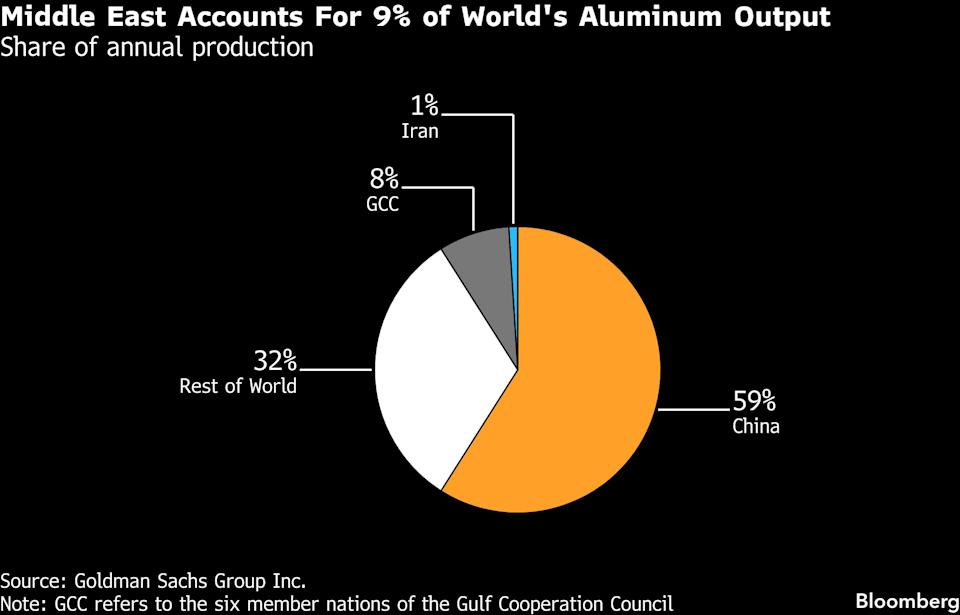
Aluminum prices, which initially spiked after the crisis escalated, later dropped by as much as 1.3%. Traders are now focused on possible disruptions to supply or production cuts in the Gulf region, which accounts for roughly 9% of the world’s aluminum output. On Tuesday, requests to withdraw aluminum from monitored warehouses more than doubled to 43,325 tons, highlighting growing supply pressures in markets reliant on Gulf producers.
Emirates Global Aluminum, the leading producer in the UAE, reported delays in exports and may need to use stockpiles outside the region to fulfill customer orders. Meanwhile, Rio Tinto Group withdrew its initial second-quarter supply offer to Japanese buyers as the conflict threatened to increase regional surcharges.
The US Midwest premium—a key indicator for American manufacturers—rose 1.4% to $1.055 per pound on Monday, just shy of its mid-February peak. Goldman Sachs predicts that European premiums, which recently hit their highest point since 2022, could climb even further, given Europe’s reliance on Gulf suppliers.
However, there is also concern that a prolonged conflict could damage major economies and dampen demand for metals.
“Current prices reflect a balance between short-term geopolitical risk premiums and worries that sustained energy-driven inflation could undermine global industrial activity,” analysts at CreditSights commented in a recent note.
Potential Impact of Extended Conflict
President Trump stated that the US had initially planned for four to five weeks of military operations, but the campaign could continue for a longer period. Defense Secretary Pete Hegseth dismissed the notion of an “endless war.” If the conflict drags on, aluminum smelters in countries like the UAE and Saudi Arabia could face shortages of raw materials, making it difficult to maintain exports.
The Middle East is responsible for about 20% of aluminum production outside China. Most Gulf-produced metal is exported, typically passing through the Strait of Hormuz, which has been largely closed to trade since the attacks. While smelters have reserves of bauxite and alumina, they may be forced to reduce output if the conflict persists and supplies dwindle.
Zhang Meng, an analyst at Shandong Aize Business Information Consulting, noted, “Even with about a month’s worth of feedstock, Middle Eastern smelters might have to cut production if the war lasts around two weeks. It’s crucial to plan ahead rather than wait until inventories are depleted.”
Shipping companies and insurers are increasingly hesitant to handle cargo bound for the Gulf, and many regional ports remain closed, Zhang added.
Goldman Sachs estimates that a full month of lost production, combined with soaring energy costs in Europe, could push aluminum prices as high as $3,600 per ton. The bank’s baseline forecast is for aluminum to average $3,150 per ton in the first half of the year.
Aluminum buyers were already facing tight supplies this year due to earlier production cuts and trade disruptions, as well as Chinese producers nearing government-imposed output limits. The planned closure of a major smelter in Mozambique is adding to supply worries for 2026, with prices now up 22% compared to last year.
Market Performance Snapshot
- Copper was down 2.3% at $12,804 per ton as of 9:54 a.m. in London.
- Aluminum slipped 0.6% to $3,177.50 per ton.
- Tin led the declines on the LME, dropping more than 6%.
Most Popular from Bloomberg Businessweek
©2026 Bloomberg L.P.
Disclaimer: The content of this article solely reflects the author's opinion and does not represent the platform in any capacity. This article is not intended to serve as a reference for making investment decisions.
You may also like


DA Davidson Cuts Criteo S.A. (CRTO) Price Target to $28.50 from $38

Plug Power Welcomes Jose Luis Crespo as Chief Executive Officer

Trending news
MoreCrypto prices
More





