
Gold has experienced strong growth throughout the year. Discover ways to minimize your tax burden.

Gold’s Remarkable Comeback
Once regarded as a niche investment for those preparing for worst-case scenarios, gold has surged back into the spotlight. On March 2, 2026, gold prices soared past $5,300 per ounce, surpassing even the most optimistic forecasts.
This dramatic rise followed a turbulent start to the year, fueled by escalating global conflicts, the ongoing U.S. and Israel-Iran war, and the repercussions of the Supreme Court’s recent decision regarding Trump’s tariff authority. These factors have driven more investors toward tangible assets like gold.
For those who have held onto gold, the returns have been impressive. Over the last five years, gold’s value has climbed by 200%. Looking back to 2006, the increase exceeds 830%, transforming the financial outlook for steadfast investors.
If you’re considering selling gold to take advantage of these gains, it’s important to understand the tax implications. Unlike Apple stock, gold sales can result in a much steeper tax bill.
Understanding Taxes on Gold
The IRS classifies gold as a capital asset, so any profit from its sale is taxable income. However, the tax rate depends on how long you’ve owned the gold before selling.
Taxation of Physical Gold
Physical gold is considered a collectible by the IRS, which means it’s taxed differently than stocks.
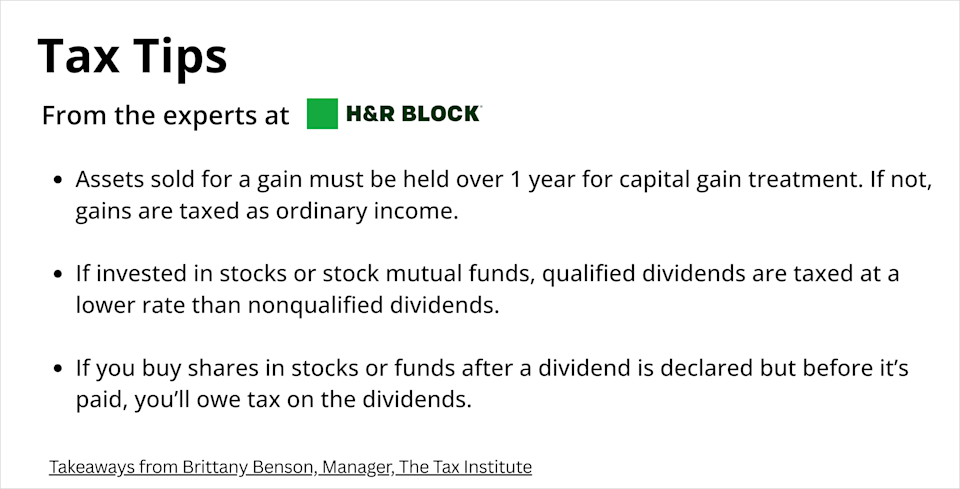
For short-term gains (gold held for one year or less), profits are taxed as ordinary income, just like short-term stock gains.
If you keep your gold for more than a year before selling, the profit is subject to the collectibles tax rate. This means your gain is taxed at your regular income tax rate, but with a cap at 28%.
- If your ordinary income tax bracket is 10%, 12%, 22%, or 24%, your long-term gain on gold is taxed at that same rate.
- If you fall into the 32%, 35%, or 37% bracket, your long-term gold gain is taxed at a maximum of 28%.
This is different from the long-term capital gains rates for stocks, which are 0%, 15%, or 20%.
Tax Rules for Gold ETFs
Many investors prefer gold exchange-traded funds (ETFs) like SPDR Gold Shares or iShares Gold Trust over storing physical gold. These ETFs are traded and held in brokerage accounts just like stocks, but their tax treatment is different.
Since popular gold ETFs such as GLD and IAU actually hold physical gold for investors, the IRS treats your investment as if you own the gold itself. Therefore, the collectibles tax rules apply:
- If you sell within a year, your profit is taxed as ordinary income—potentially as high as 37% in 2026.
- If you hold for more than a year, your gain is taxed at the collectibles rate:
- The same rate as your income tax if you’re in the 10%, 12%, 22%, or 24% bracket.
- 28% if you’re in the 32%, 35%, or 37% bracket.
Although ETFs may seem more convenient, they don’t offer a tax advantage over holding physical gold. Some gold ETFs, however, are structured differently and may hold futures or options, which are taxed under separate rules. Most major gold ETFs, including GLD and IAU, are grantor trusts and thus subject to the collectibles tax rate.
These tax rules apply only to gold ETFs in taxable accounts. If you hold gold ETFs in a tax-advantaged retirement account, such as an IRA, different tax rules apply.
Taxation of Gold Mining Stocks
Shares in gold mining companies—like Newmont Corporation or Agnico Eagle Mines—are taxed just like other stocks. The tax rate is determined by your holding period:
- Short-term capital gains (held for less than a year): Taxed at your ordinary income rate.
- Long-term capital gains (held for a year or more): Taxed at 0%, 15%, or 20%, depending on your adjusted gross income.
- 0%: Up to $48,350 for single filers; $96,700 for married couples filing jointly.
- 15%: Up to $533,400 for single filers; $600,050 for married couples.
- 20%: Above $533,400 for single filers; over $600,050 for married couples.
Keep in mind that mining stocks carry risks unique to the companies themselves, unlike physical gold, and are subject to the volatility of the commodities market.
Reporting Gold Sales to the IRS
Failing to report a gold sale can lead to more than just back taxes—you may also face penalties and interest charges.
Form 1099-B and Dealer Reporting
In certain situations, when you sell specific amounts or types of bullion to a dealer, the dealer must file Form 1099-B with the IRS.
The reporting requirements depend on the product and quantity sold. For instance, selling 25 or more 1-ounce Krugerrands or Maple Leafs may trigger reporting.
However, not every sale is automatically reported. According to Tommy Lucas, a certified financial planner, dealers don’t file tax forms for every transaction—it’s largely up to individuals to self-report.
That said, if you fail to report a significant sale, you could face substantial penalties. Even if a dealer doesn’t issue a 1099-B, you are still legally obligated to report your gains. The IRS may scrutinize your return if something appears unusual, especially during an audit.
Structured Transactions and Form 8300
Dealers are required to report any cash transaction over $10,000 using Form 8300.
Attempting to split large sales into smaller amounts to avoid reporting—known as structuring—is risky. Financial institutions monitor for suspicious activity, and such transactions can draw attention.
Lucas advises erring on the side of caution: “I wouldn’t risk it; it’s better to be safe than sorry.”
Strategies to Reduce or Defer Taxes on Gold
When you sell gold for a profit in a taxable account, the IRS expects its share. Fortunately, there are legitimate ways to defer or minimize taxes on gold gains, especially by choosing the right type of account.
Consider a Gold IRA
A self-directed IRA, often called a gold IRA, allows you to defer taxes on gold gains.
There are two main types of gold IRAs:
- Traditional gold IRA: Taxes are postponed until you withdraw funds in retirement, at which point withdrawals are taxed as ordinary income.
- Roth gold IRA: Contributions are made with after-tax dollars, and qualified withdrawals in retirement are completely tax-free.
Self-directed IRAs let you hold physical gold and other alternative assets, but they come with strict rules regarding storage and purity.
While deferring taxes can be beneficial, it depends on your tax bracket. For example, if you’re in a high bracket and withdraw gold from an IRA, you could face rates of 32%, 35%, or 37%. If you sold the same gold outside a retirement account, the maximum rate would be 28%.
In short, a traditional gold IRA doesn’t always guarantee lower taxes—it just changes when and how you pay them. Roth accounts can be more advantageous, as gains can be withdrawn tax-free in retirement.
However, gold IRAs are more complex and costly compared to simply buying ETFs in a brokerage account.
Offset Gains with Tax-Loss Harvesting
If you realize significant profits from gold sales, you can sell other investments at a loss in the same year to offset those gains. This technique, known as tax-loss harvesting, is a common tax strategy.
Losses from various investments are combined before your final tax bill is calculated. For example, if you have a $100,000 gain from gold and a $10,000 loss from stocks, your net gain is $90,000.
This approach applies to gains from physical gold, gold ETFs, or other capital assets. However, the remaining gain retains its original tax character. So, if your gain is from physical gold and taxed at the collectibles rate, the net gain after offsetting losses will still be taxed accordingly.
Increase Your Cost Basis by Deducting Expenses
You can lower your taxable profit from selling physical gold by including costs such as dealer premiums, commissions, shipping, and insurance in your cost basis.
These expenses raise your cost basis, reducing the amount of profit subject to tax when you sell.
For example:
- Purchase price: $2,000 per ounce
- Premiums and fees: $100
- Sale price: $5,300
Your taxable gain per ounce would be $3,200 ($5,300 - $2,100), not the full sale price. Keeping thorough records of all expenses and transactions ensures accurate reporting at tax time.
Frequently Asked Questions About Gold Taxes
Is gold subject to taxes?
Yes. Any profit from selling gold—whether it’s bullion, coins, or a physically backed ETF—counts as a capital gain and must be reported to the IRS.
Can you avoid paying taxes on gold?
While you can’t completely avoid taxes on a standard sale, you may be able to reduce or defer them by holding gold for more than a year, using retirement accounts, offsetting gains with losses, or employing advanced charitable strategies.
Do you have to report gold sales on your tax return?
Absolutely. Capital gains from gold sales must be reported on your federal tax return, usually on Schedule D of Form 1040. Even if your dealer doesn’t provide a 1099-B, you are still responsible for reporting the income.
Disclaimer: The content of this article solely reflects the author's opinion and does not represent the platform in any capacity. This article is not intended to serve as a reference for making investment decisions.
You may also like
AI sets odds of XRP hitting $5 in 2026

Why Are Bitcoin, Ethereum, and XRP Prices Crashing Today? US‑Iran War Fears Drive Sell‑Off

XRP Domino Theory Activated: Crypto CEO Explains How Global Oil Shock Could Trigger XRP Surge

Ripple ETFs Bleed Out Weekly as XRP Was Rejected at $1.45

Trending news
MoreCrypto prices
More





