u.today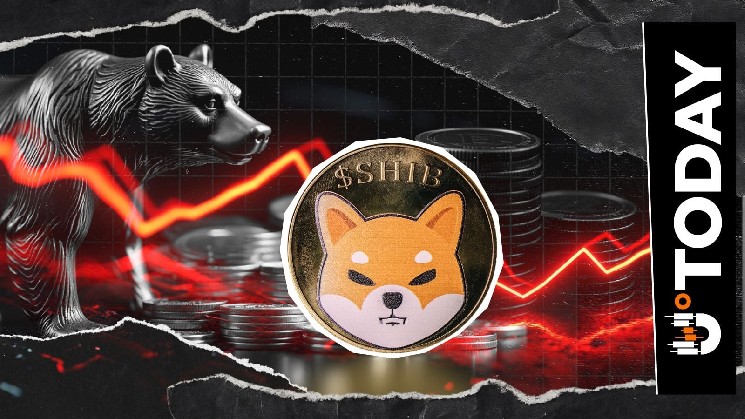
With about 414 billion $SHIB leaving exchanges in less than a day, Shiba Inu recently experienced a notable on-chain shift. The recent bearish pressure that usually results from growing exchange reserves is effectively reset by the negative netflow figure, which indicates that more tokens are being withdrawn than deposited.
Exchange metrics show that while total exchange netflow has gone negative, reserves have somewhat decreased. In general, this combination suggests that holders might be transferring assets into private wallets instead of getting them ready for liquidation.
Market complicated
$SHIB is still trading below all significant moving averages and is stuck in a steady decline. The asset keeps printing lower highs and lower lows, and every small attempt at a recovery is swiftly sold. The price is being pushed toward new local lows, and the larger bearish structure is being reinforced by recent candles that show acceleration to the downside.
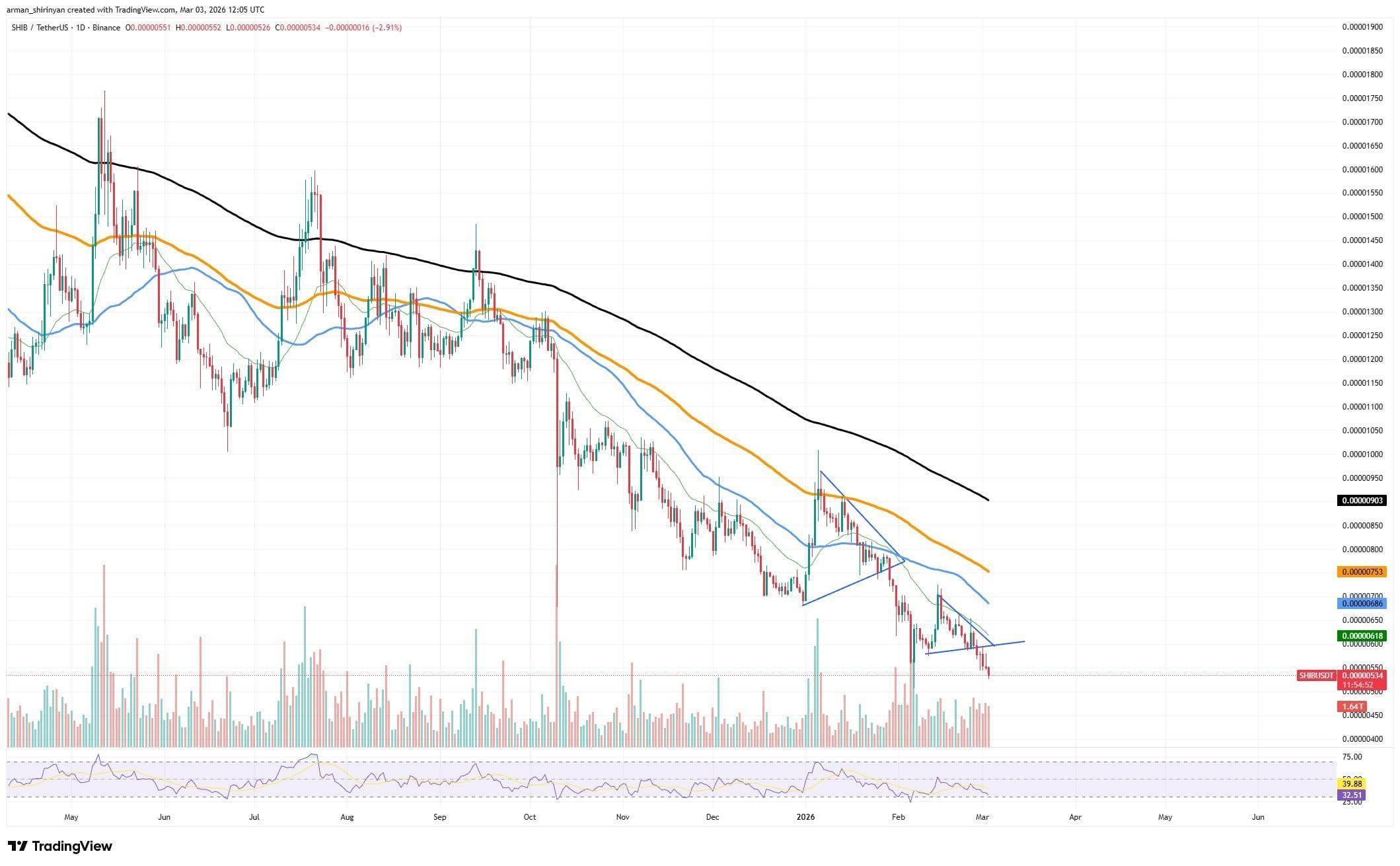
An important dynamic is created by the divergence between price weakness and on-chain improvement. Large exchange outflows do not always result in buying demand, but they do lessen short-term supply pressure.
Market players must intervene forcefully enough to recover broken resistance levels in order for $SHIB to enter recovery mode. Technical structure continues to be the prevailing factor until that occurs.
What should investors expect?
Stabilization is more likely than an instant breakout in the near future. If overall sentiment toward cryptocurrencies improves, the negative netflow may slow further downward momentum and set the stage for a relief bounce. In such cases, a technical recovery from oversold territory of 10-20% would not be out of the ordinary.
Confirmation is crucial, though. Genuine accumulation, as opposed to transient short covering, would be indicated by sustained higher lows and rising volume on upward movements.
$SHIB may continue to decline, even in the face of improved exchange metrics, if those components do not show up. Shiba Inu is currently in a difficult situation. Although there is less sell pressure, according to on-chain data, the price action is still structurally weak.