
A small liquidity crisis (scramble) occurred today

I. Market Performance
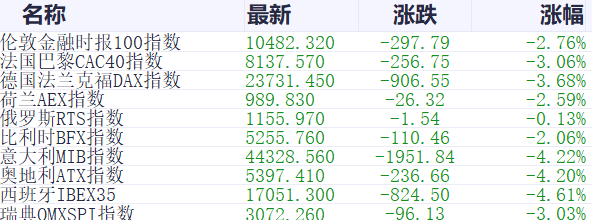
Following today’s sharp decline in the Asia-Pacific stock markets, European stock markets also experienced a significant drop (see chart below, not yet closed at press time).
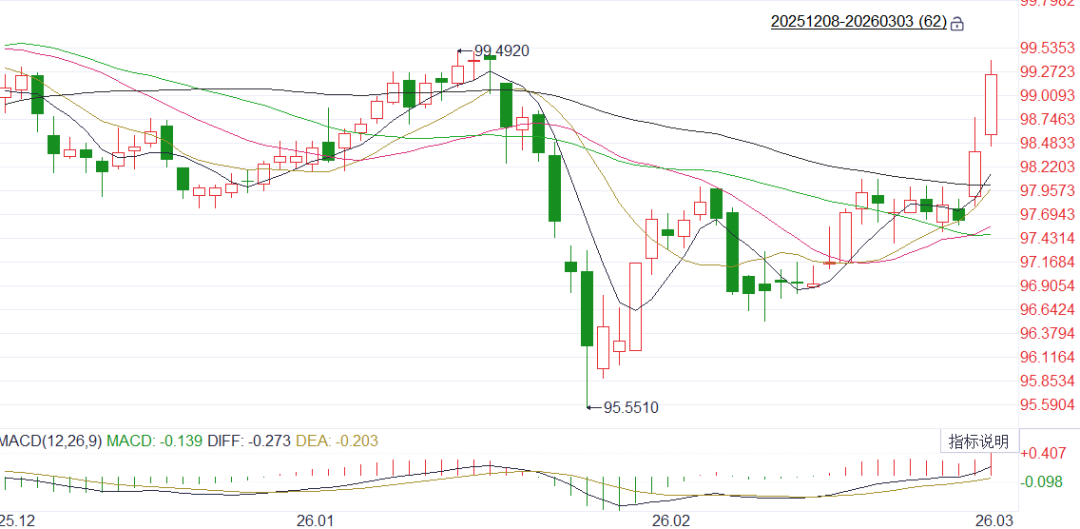
Meanwhile, the US Dollar Index rose rapidly from March 2 to 3 (see below), indicating a significant flow of capital into the dollar, likely due to risk aversion. As a result, the Japanese yen, Korean won, and RMB have all depreciated against the US dollar.
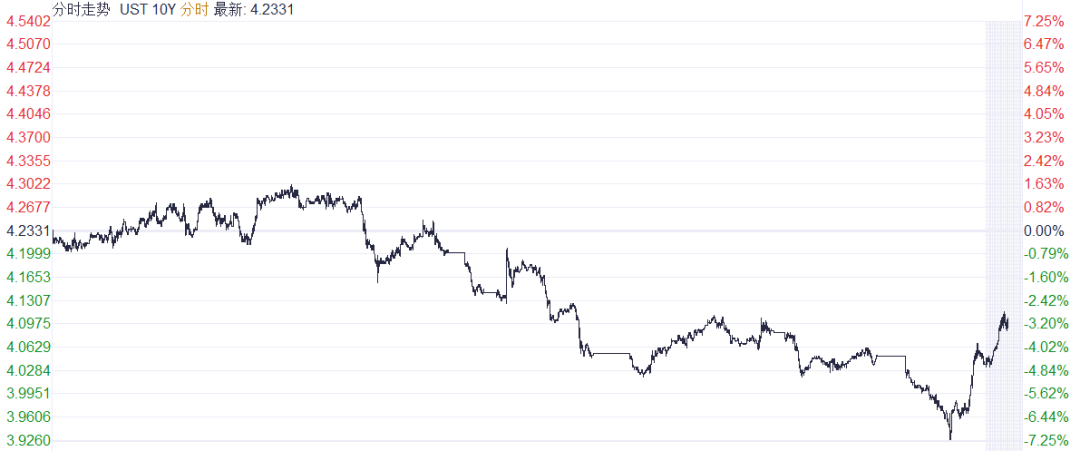
The yield on the US 10-year Treasury bond (see Figure 3) had previously been declining, dropping to 3.93% on February 28. In the past two days, it has rebounded and is now back to 4.1%. Evidently, investors are concerned about rising oil prices leading to higher inflation in the US, though such concerns are not yet very strong.
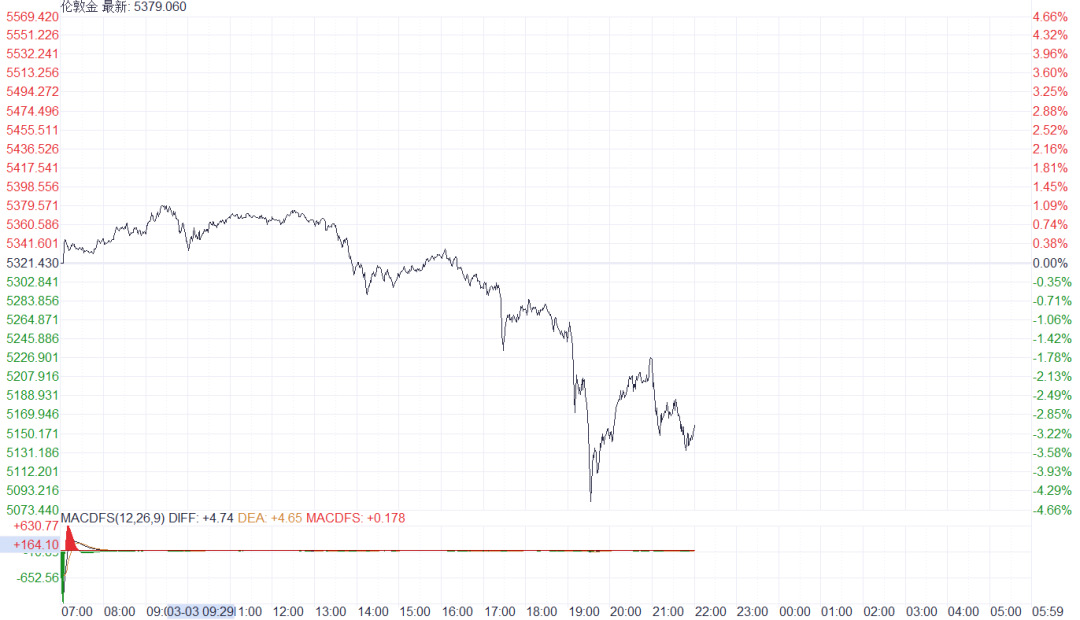
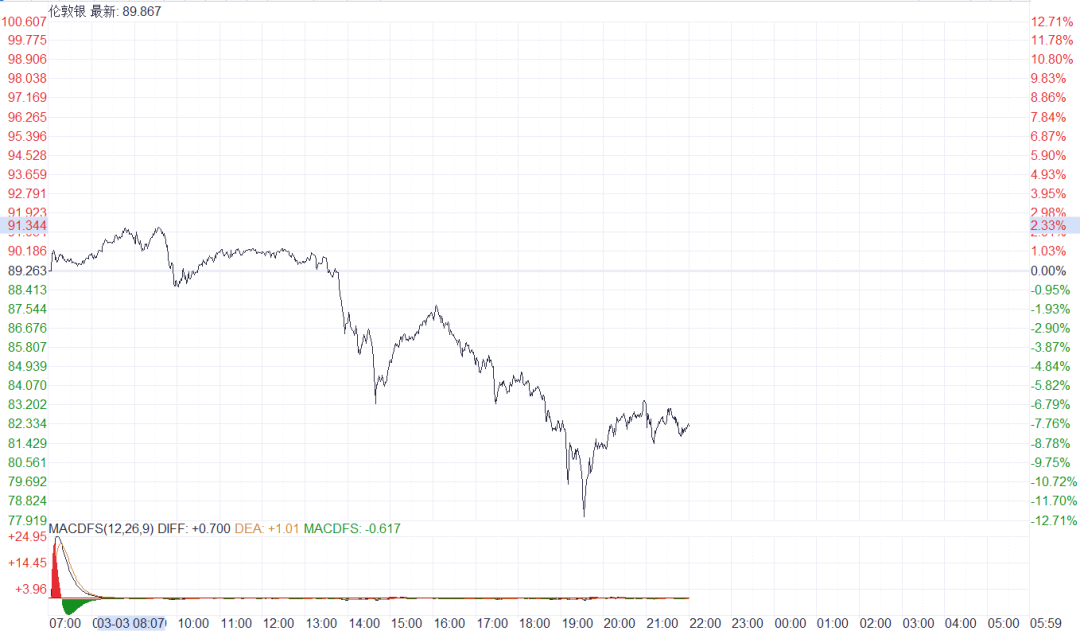
Interestingly, precious metals declined today. Gold saw a sharp dip starting from 2pm in the afternoon (Figure 4), the magnitude was not large but enough to be noticed.
Below is the London silver intraday chart; it fell over 12% at one point, dropping to $77/oz.
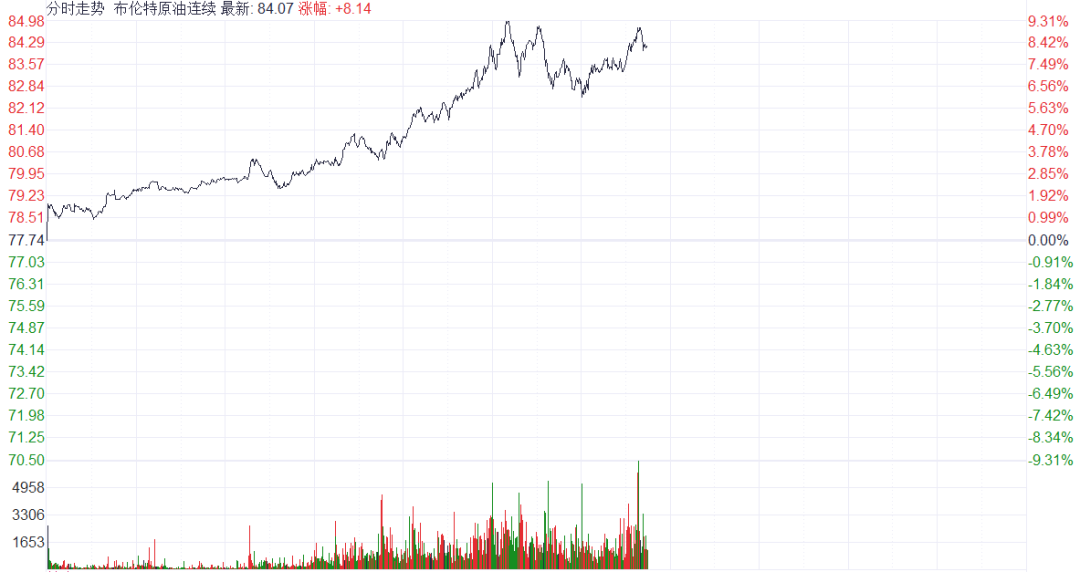
In addition, base metals also saw a slight decline, while oil prices surged (see chart below). Currently, Brent crude oil has risen to $84/barrel.
II. A Minor Liquidity Crisis (Scramble) May Have Occurred
Normally, if the market is worried about an escalation of war, precious metals should be rising. Why did they not rise this afternoon and instead sharply decline?
I believe the reason is that a small-scale liquidity crisis, or liquidity scramble, most likely occurred in the international market today.Specifically, some investment institutions might have: [1] worried about an escalation of war and wanted to reduce risk exposure; [2] wanted to raise funds to make major bets on crude oil; [3] received margin calls due to losses and thus needed to raise significant cash. As a result, they quickly sold off risk assets (including bonds, precious metals, and base metals) to scramble for cash,causing global stocks, precious metals, base metals, and bond markets to decline.
Such a situation also occurred once in mid-March 2020 when the pandemic began spreading in the US.Between March 9 and 19, 2020,institutional investors, fearing an economic collapse, desperately sought cash, rapidly selling stocks, bonds, precious metals, crude oil, and base metals, causing them all to decline sharply and quickly,while the US Dollar Index soared. The Federal Reserve had to quickly cut rates to zero, inject liquidity into the market, and promise unlimited QE to calm the market.
What happened today is very similar to mid-March 2020, but much less intense.I tend to think all three reasons [1][2][3] above are involved, mainly betting on crude oil, resulting in oil prices surging while other asset prices fell quickly. The decline in stocks, bonds, gold, silver, and base metals triggered margin calls for some investors, which further fueled the sell-off.
This shows there are still many market participants concerned about the war escalating, broadening, and dragging on. Whether such sentiment will grow needs to be closely monitored. If it does, the stock market could be in trouble.
If the same situation happens again tomorrow, it will be bad.
Disclaimer: The content of this article solely reflects the author's opinion and does not represent the platform in any capacity. This article is not intended to serve as a reference for making investment decisions.
You may also like
Paraguay’s 30,000 Miner Strategy: Examining ANDE’s Cash Flow Dynamics
Wartime Overview: The Valuation of the Iran Crisis in Prediction Markets
Gold.com EVP Carol Meltzer sells $112k in shares
The S&P 500’s 2026 advance disappears amid widespread market downturn
Trending news
MoreCrypto prices
More





