
Trump Fears Iran’s Leadership Could Remain ‘Equally Problematic’ Following Conflict

Escalating Tensions: Trump Voices Concerns Over Iran Strikes
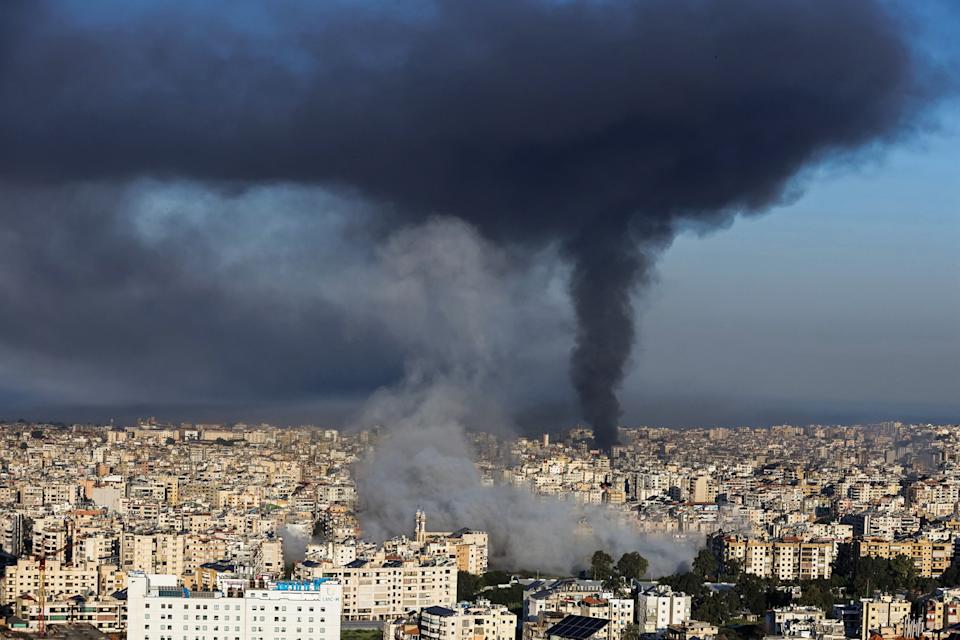
Photo Credit: Ibrahim Amro/AFP/Getty Images
President Donald Trump has raised alarms about the potential consequences of ongoing military actions against Iran, warning that a change in leadership could result in a government just as problematic for the United States and Israel as the current regime.
Trump's remarks come as the conflict enters its fourth day, with Iran retaliating against Saudi Arabia and fears mounting that the violence could spread further throughout the region. His statements have intensified questions about the administration’s long-term objectives.
Top Stories from Bloomberg
“The worst outcome might be that after all this, someone just as bad takes over. That’s a real possibility,” Trump told reporters in the Oval Office on Tuesday. “You could go through all of this, and five years later realize the new leadership is no improvement.”
Speaking alongside German Chancellor Friedrich Merz, Trump reiterated his hope for a more moderate Iranian leader. However, he noted that his preferred candidates were reportedly killed in recent strikes, and a second group of officials may have also perished, according to available information.
“So, it seems a third group will soon step in,” he added.
Earlier on social media, Trump commented that “wars can go on indefinitely,” emphasizing that the US possesses a vast arsenal of nuclear weapons and long-range missiles—the very capabilities it seeks to prevent Iran from acquiring. He also claimed that Iran’s air defenses, military leadership, and key forces had been neutralized.
Despite uncertainty about the duration of military operations, Trump assured that oil and gas prices would eventually stabilize. “If energy prices are elevated for a short period, I believe they’ll drop to record lows once this is over,” he said.
Later that day, Trump announced that the US would offer insurance guarantees and naval escorts to protect oil tankers and other ships passing through the critical Strait of Hormuz, which has been largely closed. The US International Development Finance Corporation will provide insurance at competitive rates to support the continued flow of energy and trade in the Gulf region.
Following this announcement, global oil prices retreated sharply, with Brent crude settling near $80 per barrel.
Regional Developments and Global Reactions
On Tuesday, Israel launched new airstrikes on Tehran and targeted a building in Qom where Iranian clerics were reportedly meeting to select a successor to Supreme Leader Ayatollah Ali Khamenei, according to Kan News. Iran’s Mehr news agency confirmed the building was hit but stated it was unoccupied at the time.
Addressing speculation about whether the US acted at Israel’s request, Trump responded, “I might have compelled them to act.”
Iran retaliated by launching missiles at several countries hosting US military bases, including Qatar, Bahrain, and Oman. Qatari officials noted that the strikes were not limited to military targets. Both Qatar and Iraq halted operations at major energy facilities, raising concerns about supply disruptions and price volatility.
China, Iran’s largest oil customer, called on all parties to ensure the safe movement of ships through the Strait of Hormuz. Meanwhile, the United Arab Emirates and Qatar are reportedly urging allies to help persuade Trump to seek a diplomatic resolution to the conflict.
QatarEnergy suspended production of certain chemicals after Iranian attacks forced the closure of its main liquefied natural gas plant. Iraq began shutting down output at the massive Rumaila oil field, operated by BP, due to limited storage and difficulties moving tankers out of the Persian Gulf.
Debris from a downed drone sparked a significant fire at the UAE’s Fujairah oil-trading hub.
According to Iran’s Red Crescent, 787 people have died since the conflict began. The US reported six military personnel killed, while Israel has seen about a dozen fatalities.
Israeli forces entered southern Lebanon, targeting Hezbollah positions and launching strikes in Beirut. Lebanon’s health ministry reported over 50 deaths from the offensive.
The US military announced on X that it had destroyed Iranian command centers, air defenses, missile and drone launch sites, and military airfields. Iran confirmed that its Natanz nuclear facility had been attacked.
Travel Warnings and Evacuations
The US State Department urged Americans to leave the Middle East, citing significant safety risks due to the ongoing conflict. Citizens in more than a dozen countries—including Israel, Saudi Arabia, Qatar, and the UAE—were advised to depart using available commercial flights.
This advisory caused confusion, as the State Department’s website did not reflect the same guidance for all countries. As of Tuesday morning, only Iraq, Syria, Lebanon, and Gaza were listed as “Do Not Travel” zones, while other nations had less severe warnings.
Dylan Johnson, Assistant Secretary of State for Global Public Affairs, stated on X that the department is arranging military and charter flights for Americans wishing to leave the region and has contacted nearly 3,000 citizens abroad.
Departures remain difficult, as most civilian flights across the Gulf are suspended after Dubai’s main airport was struck over the weekend. Emirates and Etihad Airways plan to resume limited service to help alleviate congestion.
Further Regional Impact
Iranian Foreign Minister Abbas Araghchi, speaking on national television, said Tehran has no dispute with neighboring countries but is targeting US forces stationed in the region. Saudi Arabia and the UAE have strongly condemned Iran for expanding the conflict onto their soil.
Two drones exploded near the US embassy in Riyadh overnight, causing minor damage. The US also reported that three fighter jets crashed in Kuwait due to a suspected friendly-fire incident, with all crew members ejecting safely.
Additional Reporting
Reporting contributed by Eric Martin, Devika Krishna Kumar, Christine Burke, John Bowker, Mike Cohen, and Jennifer A. Dlouhy.
(Story updated with Trump’s announcement on shipping insurance and market data.)
Most Read from Bloomberg Businessweek
©2026 Bloomberg L.P.
Disclaimer: The content of this article solely reflects the author's opinion and does not represent the platform in any capacity. This article is not intended to serve as a reference for making investment decisions.
You may also like
Asia stocks slump as markets brace for energy shock
Price Rallies 8.18% but Technical Signals Stay Bearish
Planet Labs Stock Plummets 4.02% Despite $151B Defense Contract Ranks 493rd in Trading Volume
QSR Shares See Modest Rise Following Strategic Shift and Analyst Upgrades, Even as Trading Volume Ranks 463rd
Trending news
MoreCrypto prices
More





