
As Oil Climbs to $80, China’s Reserves Turn Into a Strategic Advantage

China’s Strategic Oil Stockpiling and Its Global Impact
For almost a year, China has been steadily building up its crude oil reserves—both strategic and commercial—helping to support global oil prices throughout 2025, despite a slowdown in its own demand growth.
As 2026 began with significant upheaval in the oil markets—driven by the U.S. operation to capture Venezuela’s Nicolas Maduro and joint U.S.-Israel strikes on Iran—China’s earlier efforts to accumulate oil reserves are proving advantageous during the initial stages of the volatile and disruptive Middle East conflict.
Industry experts note that China’s approach of purchasing large quantities of crude at relatively low prices over the past year is now providing a buffer, allowing the world’s largest oil importer to weather the immediate fallout from severely disrupted Middle Eastern oil flows.
By aggressively acquiring discounted crude, including sanctioned barrels, China has strengthened its energy security. This strategy is helping to shield its economy from short-term supply shocks as the conflict involving Iran and retaliatory actions in the Gulf escalate.
In the short run, China is also positioned to absorb Iranian and Russian oil that has been stored offshore for weeks.
China’s Approach to Crude Accumulation
Beijing is believed to have been stockpiling crude in both commercial and strategic reserves for nearly a year, capitalizing on lower global prices and even deeper discounts on sanctioned oil from Iran, Venezuela, and Russia.
With Venezuela’s oil now back on the official market under U.S. oversight, China has shifted to purchasing record amounts of Russian crude, especially as India has reduced its imports.
Although China does not publicly disclose its crude inventory levels, analysts estimate that at least one million barrels per day were sent into storage last year, thanks to low prices and expanded storage capacity.
Unlike the United States, China does not release official inventory data. Analysts rely on total supply figures (domestic production plus imports) and refinery throughput to gauge how much crude is being stored versus processed into fuels.
Despite increased supply from the Americas, ongoing flows of sanctioned oil, and the relaxation of OPEC+ production cuts, oil prices remained stable last year.
Throughout most of 2025, international crude prices hovered around $60 per barrel—a level China deemed attractive enough to purchase more oil than immediately needed, diverting the surplus into storage.
Record Imports Amid Global Uncertainty
In the past year, China’s crude oil imports reached an all-time high, even as domestic fuel demand remained soft and the economy faced challenges from shifting U.S. tariffs and turbulent global commodity markets.
Stockpiling Proves Beneficial
China’s decision to build up inventories when oil was inexpensive is now paying dividends, especially as the Middle East crisis intensifies and energy supplies are severely disrupted.
“China made a smart move by stockpiling significant crude last year, giving itself a cushion to manage the current turmoil,” said Jorge León, head of geopolitical analysis at Rystad Energy, in a recent interview with Bloomberg Television.
China’s independent refiners, known for their willingness to buy sanctioned oil, have the option to tap into Russian and Iranian crude stored offshore—much of which is located near Asian ports, away from the Strait of Hormuz.
As of February 27, 2026, just before the U.S. and Israeli strikes on Iran, Kpler estimated that roughly 191 million barrels of Iranian crude were afloat worldwide. Of this, about 25 million barrels were in the Mideast Gulf, with the majority—127 million barrels—stationed in eastern waters such as the Malacca Strait, Singapore Strait, South China Sea, East China Sea, and Yellow Sea. Another 39 million barrels were in the Arabian Sea and Gulf of Oman, possibly heading east as well.
Kpler’s Amena Bakr noted that both China and India are motivated to increase Russian crude imports. “China also holds substantial strategic reserves accumulated during periods of global oversupply. This not only provides short-term protection but could enable Beijing to re-export oil if the supply crunch worsens,” Bakr explained in a recent report.
With oil prices climbing toward $80 per barrel—and potentially surpassing $100 if the Strait of Hormuz remains closed to tankers—China’s incentive to absorb surplus sanctioned oil grows. These barrels are not only less expensive but are also stored in waters near China, outside the Middle East.
Further Reading
Stay Ahead with Oilprice Intelligence
Oilprice Intelligence delivers expert market insights before they make headlines. Trusted by seasoned traders and policy advisors, this free, twice-weekly analysis keeps you informed about the forces shaping the energy market.
Subscribers gain access to exclusive geopolitical updates, inventory trends, and market intelligence that influence billions in capital flows. Plus, receive $389 worth of premium energy analysis at no cost—join over 400,000 readers and get instant access here.
By Tsvetana Paraskova for Oilprice.com
Disclaimer: The content of this article solely reflects the author's opinion and does not represent the platform in any capacity. This article is not intended to serve as a reference for making investment decisions.
You may also like
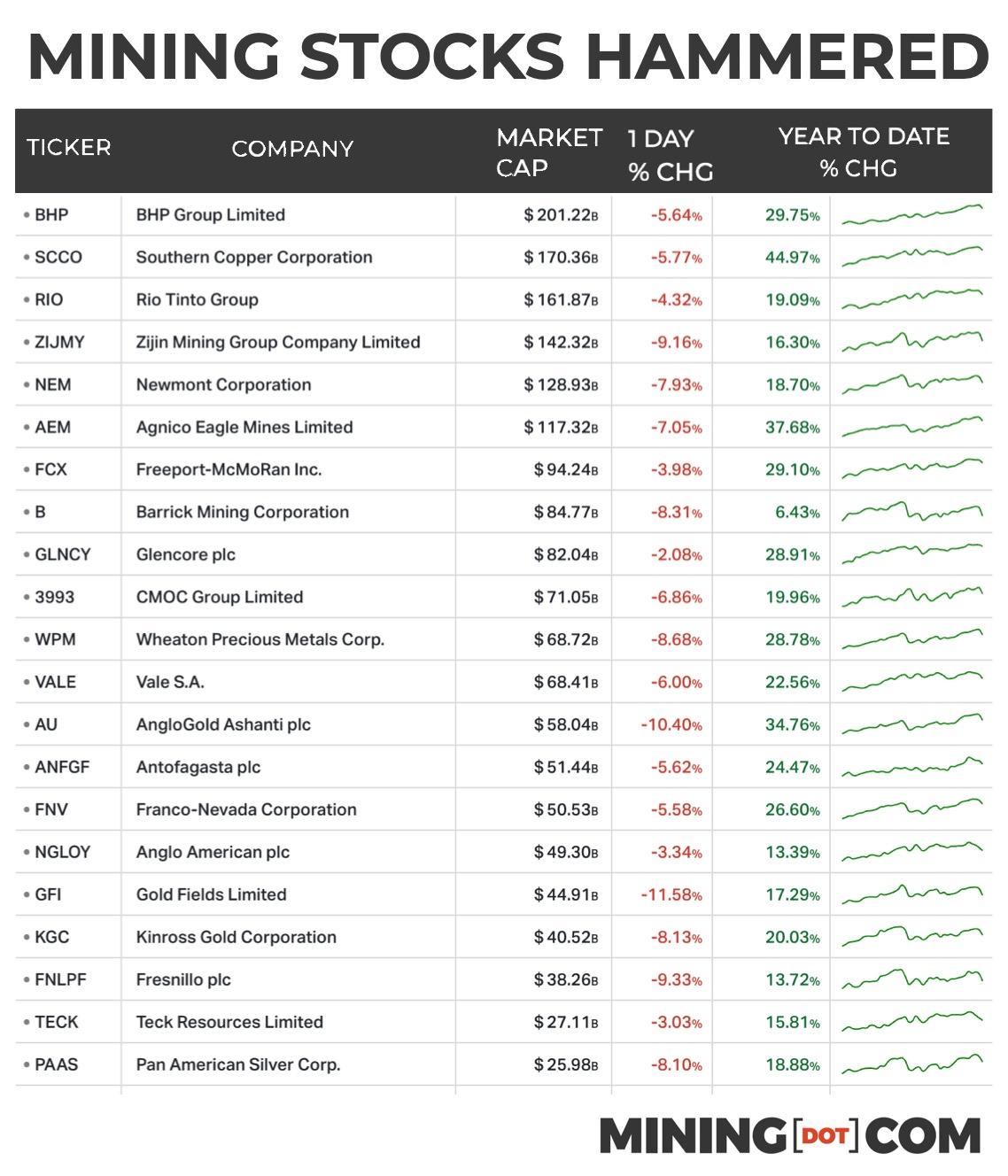
CHART: Mining stocks hammered as Iran war escalates
Cattle Prices Show Mixed Results on Tuesday
Soybeans Surge Late in Tuesday’s Session
Soybean prices surged late Tuesday
Trending news
MoreCrypto prices
More





