
Old Dominion Freight Gains 0.09% Despite 42.5% Volume Drop Ranks 417th in Market Activity Amid Mixed Operational Results and Insider Sales

Market Snapshot
Old Dominion Freight (ODFL) edged higher by 0.09% on March 3, 2026, despite a 42.49% decline in trading volume to $0.34 billion, the lowest level in recent days. The stock ranked 417th in trading volume across the market, reflecting diminished short-term liquidity. The muted price movement contrasts with broader market volatility, though the sharp drop in volume suggests reduced investor activity or sentiment shifts.
Key Drivers
The company’s recent operational performance and management commentary have shaped investor perceptions. Old DominionODFL+0.09% reported a 3.3% decline in February 2026 daily revenue compared to February 2025, driven by a 6.8% drop in less-than-truckload (LTL) tons per day. This decline stemmed from a 7.0% reduction in LTL shipments per day, partially offset by a 0.2% increase in weight per shipment. However, LTL revenue per hundredweight rose 3.5% year-to-date, excluding fuel surcharges, and climbed 4.1% when including them. The mixed results highlight the company’s ability to extract higher pricing despite volume challenges, a key strength in its business model.
Management’s cautious optimism further influenced sentiment. CEO Marty Freeman emphasized confidence in the company’s capacity to handle incremental demand as the domestic economy stabilizes. The firm’s disciplined yield management and best-in-class service were cited as competitive advantages, reinforcing long-term growth expectations. However, Freeman acknowledged risks, including inflationary pressures, customer relationship dynamics, and regulatory challenges, which could constrain near-term profitability.
Insider selling activity added a layer of uncertainty. Over the past three months, insiders sold 80,134 shares worth $15.64 million, including significant transactions by executives Bradley R. Gabosch and Earl E. Congdon. Such sales may signal reduced confidence in short-term prospects or liquidity needs, though the company’s institutional ownership remains robust at 77.82%. The recent dividend increase to $0.29 per share (0.6% yield) and a 5.6% year-over-year revenue decline also underscore the tension between shareholder returns and operational challenges.
The earnings report for the quarter, which showed a $1.09 EPS beat against expectations of $1.06, provided a modest boost. Despite a 5.7% drop in quarterly revenue, the firm’s net margin of 18.62% and return on equity of 24.03% highlighted operational efficiency. Analysts, however, remain divided, with a “Hold” average rating and a $189.88 price target, reflecting skepticism about the sustainability of recent pricing gains in a competitive LTL market.
Institutional activity further complicated the narrative. Aster Capital Management slashed its stake by 94% in Q3 2025, while other funds like Mitsubishi UFJ and TD Asset Management increased holdings. This divergence underscores divergent views on Old Dominion’s strategic positioning amid macroeconomic headwinds. The company’s focus on capacity management and yield optimization positions it to capitalize on improving demand, but execution risks and broader industry pressures remain critical watchpoints for investors.
Disclaimer: The content of this article solely reflects the author's opinion and does not represent the platform in any capacity. This article is not intended to serve as a reference for making investment decisions.
You may also like
Lumentum’s OFC Catalyst: A Strategic Move Riding the Wave of AI Infrastructure Growth
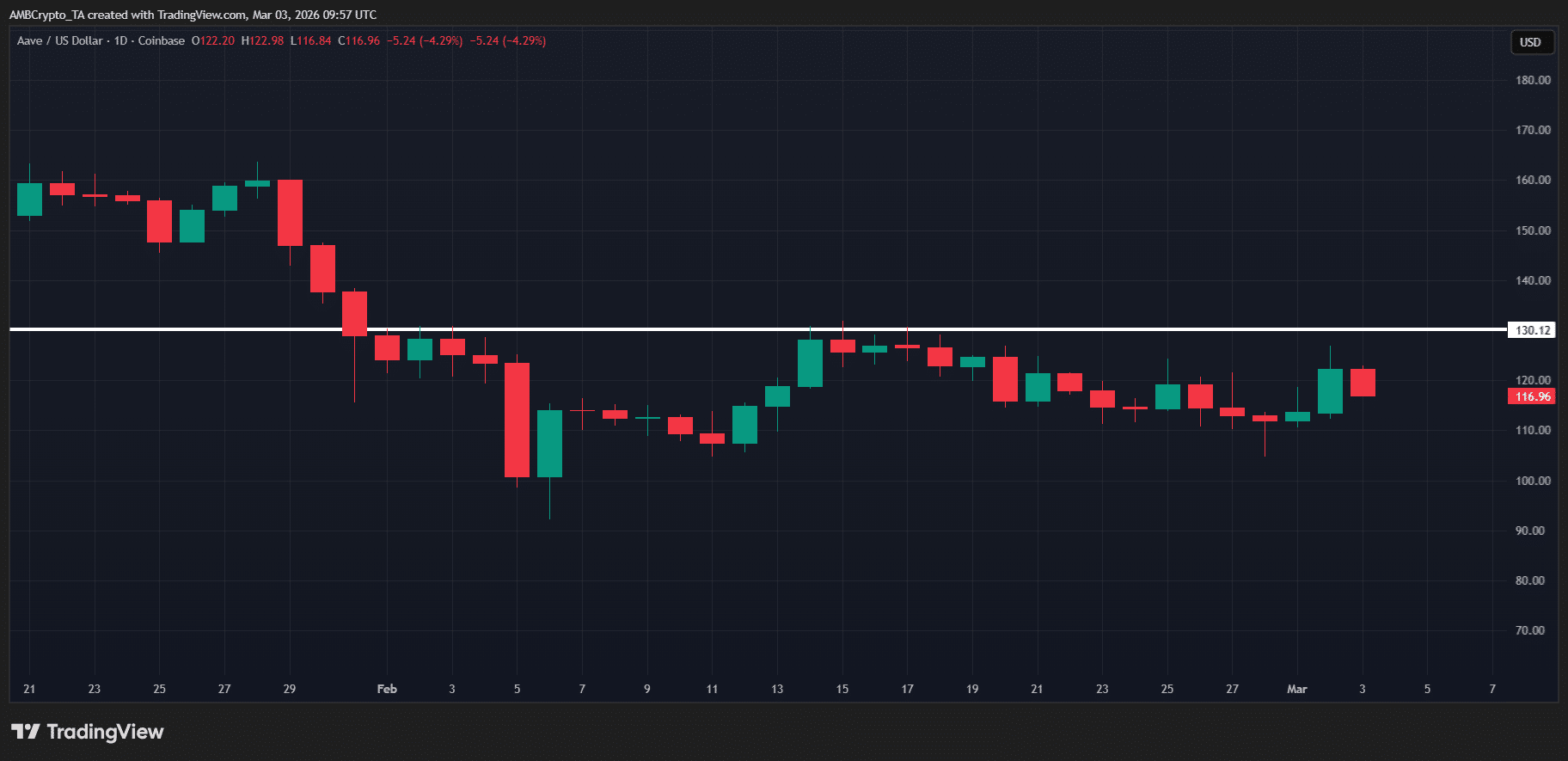
AAVE jumps 7% on $42.5 mln governance boost – Can it break $130?
Trump’s ex-crypto advisor: US government must go beyond 'liking Bitcoin'

Trending news
MoreCrypto prices
More





