
US Lawmakers Seek Answers Amid Surging Energy Costs

US Leaders Take Action as Electricity Prices Surge
Photographer: Kyle Grillot/Bloomberg
As electricity costs continue to climb, US lawmakers are urgently seeking solutions to prevent these increases from impacting the upcoming congressional elections.
The Department of Energy has issued a record $26.5 billion in loans to a major utility in the Southeast, aiming to lower the expenses of constructing new power facilities in Georgia and Alabama. At the same time, the country’s largest grid operator is considering limits on wholesale electricity prices, and some state governors are exploring freezing utility rates to help consumers manage their bills.
Top Stories from Bloomberg
Concerns over affordability have prompted the White House to convene a meeting with technology industry leaders. Former President Trump is urging these companies to formally agree to cover the electricity costs for their energy-intensive data centers, which are widely seen as a major factor behind rising power prices. According to a White House official, representatives from Amazon, Meta, Microsoft, and Google’s parent company Alphabet are expected to attend.
Many Americans are increasingly resistant to the idea of subsidizing the energy needs of large tech firms. Traditionally, utilities have distributed the costs of new, large-scale electricity users—such as factories—across all customers. However, this approach is being challenged by the rapid expansion of AI data centers.
Efforts to slow down utility rate increases may only temporarily ease the burden on consumers, who have already seen their electricity bills rise by over 30% since 2020. Moreover, commitments from tech companies, similar to those previously made by OpenAI and Microsoft, are often not legally binding.
“This issue has become highly politicized, with companies assuring the public that they won’t pass on costs,” said Paul Patterson, an analyst at Glenrock Associates. “However, the specifics are complex and remain a topic of intense debate.”
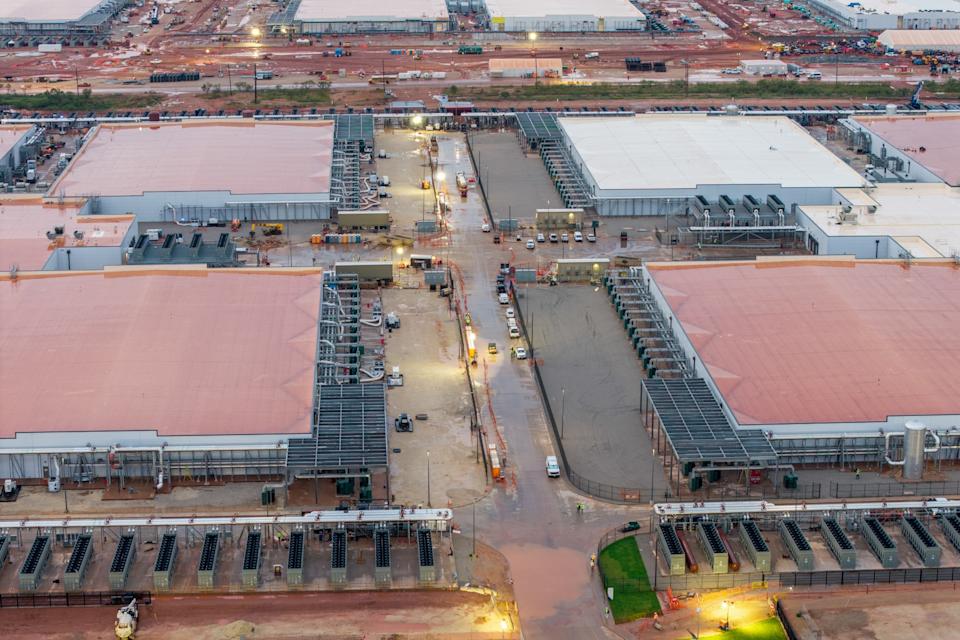
Modern data centers under development are projected to consume as much electricity as entire cities, with associated costs reaching billions of dollars. Connecting these facilities to local power grids often requires costly upgrades. A Bloomberg News investigation last year revealed that electricity bills in regions with significant data center growth have soared by 267% compared to five years ago.
“The traditional utility model, which spreads the costs of the power system across all users, is outdated when serving a single customer can require billions in investment,” explained Ari Peskoe, director of the Electricity Law Initiative at Harvard Law School.
Policy Responses and Industry Commitments
In the second quarter of 2025 alone, Data Center Watch reported that $98 billion worth of US data center projects were stalled or canceled—more than in all previous quarters since 2023.
During his recent State of the Union address, Trump stated, “We’re making it clear to major technology companies that they must meet their own energy needs.”
Meta, Amazon, and OpenAI have confirmed their participation in the White House event and their intention to sign the pledge. Google declined to comment, and Microsoft did not respond to requests for comment.
“President Trump’s pledge to protect ratepayers will help deliver more affordable, reliable, and secure energy for Americans, and curb the electricity price increases that began under the previous administration,” said Energy Secretary Chris Wright. “This initiative will reinforce US energy leadership and support the nation’s competitiveness in AI.”
Determining which costs should be covered by data center developers—such as building new transmission lines—remains a challenge. In wholesale markets like PJM Interconnection, which serves 65 million people in the Midwest and Mid-Atlantic, these capital expenses are still shared among all consumers unless significant regulatory changes are made. PJM is also planning to extend caps on future wholesale market auctions, though these limits are set high.
The administration is also leveraging federal resources to lower the financing costs of power infrastructure. The Energy Department’s loan to Southern Co. is expected to reduce the company’s interest expenses by $300 million, accelerating lower electricity costs for customers.
Some utilities in states such as Ohio, Michigan, and Virginia are now requiring data center developers to pay for grid upgrades or enter into take-or-pay contracts, obligating them to cover the costs of their projected electricity use even if actual demand falls short. However, these agreements are new and do not address all expenses.
“The aim is to ensure consumers receive some protection upfront,” said Derrick Flakoll, an analyst at BloombergNEF.
In Texas, data centers must now reduce their electricity consumption during periods of grid stress to prevent spikes in wholesale prices. Federal regulators are considering a similar approach for the PJM market.
Other states are adopting more populist measures. In New Jersey, Governor Mikie Sherrill, who campaigned on making power bills more affordable, issued an executive order in January to freeze utility rate increases. That same month, New York Governor Kathy Hochul introduced a plan to protect ratepayers by increasing oversight of utility rate hike requests.
Additional Reporting
With contributions from Carmen Arroyo, Matt Day, Riley Griffin, Rachel Metz, and Jennifer A. Dlouhy.
More from Bloomberg Businessweek
© 2026 Bloomberg L.P.
Disclaimer: The content of this article solely reflects the author's opinion and does not represent the platform in any capacity. This article is not intended to serve as a reference for making investment decisions.
You may also like
GSR withdrew 3000 ETH from an exchange 3 hours ago

Olenox Industries Shares Positive Field Reports as Production Stabilizes

Vail Resorts Set to Announce Q2 Results: What Could This Mean for the Stock?
Trending news
MoreCrypto prices
More





