
MicroStrategy's Bounce: A Tactical Sector Rotation Play for Institutional Portfolios

By:101 finance
In the dynamic world of trading, strategies are the backbone of every successful trader's approach. One such strategy is the MACD Crossover, which is known for its versatility and precision in capturing market trends. The MACD (Moving Average Convergence Divergence) indicator is a powerful tool in a trader's arsenal, combining moving averages to identify momentum and potential entry and exit points in the market. This strategy is especially popular among those who trade the SPDR S&P 500 ETF Trust (SPY), a benchmark for the U.S. equity market. The MACD strategy involves monitoring the convergence and divergence of moving averages, specifically the 12-day and 26-day Exponential Moving Averages (EMAs), along with the 9-day signal line of the MACD. When the faster 12-day EMA crosses above the slower 26-day EMA and the MACD line crosses above its 9-day signal line, this is considered a bullish signal. Conversely, when the 12-day EMA crosses below the 26-day EMA or the MACD line crosses below its 9-day signal line, it is seen as a bearish sign. Traders employing this strategy often incorporate additional risk management rules to refine their entries and exits. These can include time-based exits, such as closing positions after a fixed number of trading days, or profit and loss targets to lock in gains or limit losses. By implementing such rules, traders can create a disciplined and systematic approach to trading that can be tested and refined using historical data.
Backtesting is a crucial step in developing any trading strategy. It allows traders to assess the historical performance of a strategy without risking real money. By using tools like Python or specialized trading platforms, traders can simulate their strategies over past market data to evaluate metrics such as profitability, drawdown, and trade frequency. This process not only helps in identifying strengths and weaknesses in a strategy but also in optimizing parameters to align with market conditions and personal risk tolerance. When implementing the MACD Crossover strategy for SPY, it's important to consider the broader market context and the behavior of the S&P 500 over the past five years. This period has seen a variety of market conditions, from sharp declines during crises to strong bull runs, providing a comprehensive dataset for testing. Traders should also be mindful of transaction costs, slippage, and other real-world trading factors that can affect the strategy's performance in live markets. Ultimately, while the MACD Crossover strategy can be effective, it is not a magic formula for success. It requires discipline, continuous evaluation, and adaptation to changing market dynamics. By combining technical analysis with sound risk management, traders can develop robust strategies that stand the test of time.
0
0
Disclaimer: The content of this article solely reflects the author's opinion and does not represent the platform in any capacity. This article is not intended to serve as a reference for making investment decisions.
PoolX: Earn new token airdrops
Lock your assets and earn 10%+ APR
Lock now!
You may also like
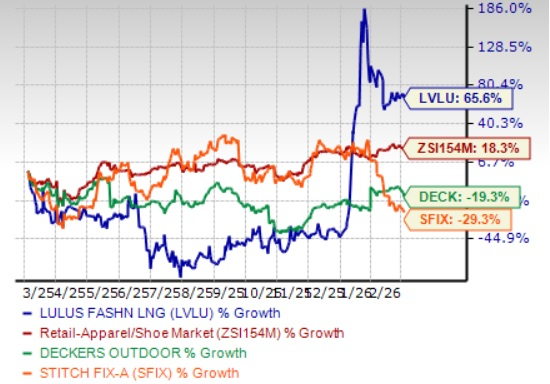
Lulus Stock Surges 66% Over the Past Year: Is Now the Time to Invest?
101 finance•2026/03/04 18:27
A $2 Billion Motive to Invest in Lumentum Shares Today
101 finance•2026/03/04 18:27
SHIB Surges +5% as Meme Coins Catch a Bid: What’s Next for Shiba Inu?
Coinspeaker•2026/03/04 18:18

Shares Bolstered by Expectations of a Quick Resolution to the Iran Conflict
101 finance•2026/03/04 18:18
Trending news
MoreCrypto prices
More
Bitcoin
BTC
$73,403.34
+7.17%

Ethereum
ETH
$2,155.66
+8.46%

Tether USDt
USDT
$1
+0.01%

BNB
BNB
$659.64
+3.78%

XRP
XRP
$1.45
+5.54%

USDC
USDC
$0.9999
-0.04%

Solana
SOL
$92
+7.65%

TRON
TRX
$0.2869
+2.16%

Dogecoin
DOGE
$0.1019
+13.07%

Cardano
ADA
$0.2801
+4.37%
How to buy BTC
Bitget lists BTC – Buy or sell BTC quickly on Bitget!
Trade now
Become a trader now?A welcome pack worth 6200 USDT for new users!
Sign up now