
BofA optimistic about Tesla, refers to it as the 'present frontrunner' in self-driving technology and soon in robotaxi services

Bank of America Resumes Tesla Coverage With Optimistic Robotaxi Forecast
Bank of America has resumed its analysis of Tesla (TSLA), assigning a Buy rating and expressing strong confidence in the company's advancements in autonomous driving and robotaxi technology.
In a comprehensive report, analyst Alexander Perry set a price target of $460 for Tesla, using a sum-of-the-parts valuation. Perry has taken over coverage of Tesla and the bank's automotive sector following the departure of previous analyst John Murphy.
Following this announcement, Tesla's stock climbed by 3% during early trading.
Tesla Positioned as Leader in Autonomous Mobility
Perry described Tesla as the frontrunner in consumer-focused autonomous technology, predicting the company will rapidly dominate the robotaxi sector thanks to its ability to scale operations more efficiently than rivals.
He anticipates that autonomous vehicles and robotaxis will drive the next major transformation in transportation, with Tesla leading the charge in this new era of mobility.
Technical and Structural Advantages
Tesla stands out both technologically and structurally. Unlike competitors such as Waymo, which rely on costly multi-sensor systems (including LiDAR, radar, and cameras), Tesla uses a vision-only camera setup. This approach is more technically challenging but offers significant cost savings and leverages a unique data network from its consumer fleet.
This strategy allows Tesla to expand its robotaxi business with greater profitability. The camera-based system is also more energy-efficient than multi-sensor alternatives, resulting in longer range for Tesla's electric vehicles. According to Bank of America, producing a Waymo robotaxi costs around $150,000, while a Tesla Model Y costs just $40,000.
Structurally, Perry believes that as robotaxis become more prevalent, customers will increasingly prefer them over traditional ride-hailing services like Lyft and Uber, citing improved privacy, safety, and overall ride quality.
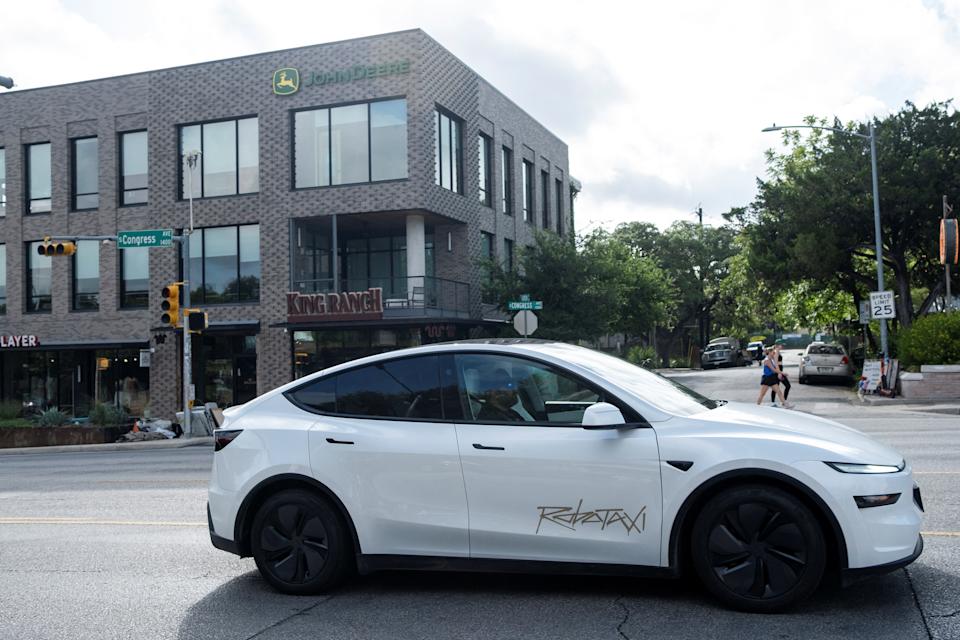 A Tesla robotaxi travels down South Congress Avenue in Austin, Texas, on June 22, 2025. REUTERS/Joel Angel Juarez
Cost Benefits and Expansion Plans
Should Tesla scale up its robotaxi operations, its cost advantage over human-driven ride-hailing services will be substantial. While fleet maintenance and infrastructure expenses are similar for both robotaxis and traditional rideshare, nearly half the cost of a typical $20 ride goes to the driver (about $9.60). With robotaxis, this expense is eliminated, giving Tesla and similar operators a significant edge.
Perry expects Tesla to rapidly increase its robotaxi presence, expanding into seven more major metropolitan areas by 2026.
Safety and Regulatory Considerations
Perry notes that Tesla's internal safety data indicates its robotaxis experience seven times fewer accidents than the national average when Full Self-Driving (FSD) is active. However, recent data from the National Highway Traffic Safety Administration suggests Tesla's robotaxi crash rate may actually be three times higher than that of human drivers, raising questions about the true safety of the service.
Additionally, Tesla has been cautious about removing safety drivers from its Austin operations, and in California, where it offers ride-hailing, the company has yet to file for full autonomy, requiring drivers to remain present in vehicles.
Valuation Breakdown and Future Prospects
Perry's valuation estimates that Tesla's robotaxi business, both in the U.S. and internationally, could be worth $844 billion, representing 52% of Tesla's total equity value of $1.625 trillion.
According to Perry and Bank of America, Tesla's core automotive segment accounts for 21% of its value, Full Self-Driving (FSD) for 19%, the Optimus robot project for 2%, and the energy division for 6%. There is also potential for further growth from Optimus, FSD monetization, and energy solutions.
Tesla is anticipated to unveil an updated version of the Optimus robot in the first quarter, though the timeline is becoming tight.
Disclaimer: The content of this article solely reflects the author's opinion and does not represent the platform in any capacity. This article is not intended to serve as a reference for making investment decisions.
You may also like
Middle East Tensions Set to Advantage American Chemical Producers
New Cryptos With Big Upside in 2026 Include BREV and ROBO, but the One With Truly Explosive 100x Upside Potential Is DeepSnitch AI

XRP Doesn’t Move Long Term on Hype, It Moves on Structure: Finance Coach

Crypto Rally Alert: BTC Breaks 73K, ETH and XRP Join Amid War Tensions
Trending news
MoreCrypto prices
More





