Veteran traders are rarely rattled by prolonged market slumps—history has taught them that bear markets can open the door to outsized gains. While today’s challenges differ from the past, the lesson endures: even unprecedented shocks, from the pandemic to unexpected global events, haven’t derailed eventual recoveries. With this perspective, we examine updated market signals and expert commentary to evaluate where Bitcoin, Ethereum, and the broader cryptocurrency landscape could head next.
Market Metrics Point to Potential Crypto Bottom
Patterns repeat in financial markets, and the crypto sector is no exception. Analysts often turn to historical metrics to identify major trend reversals; one such tool is the MVRV (Market Value to Realized Value) ratio. Michael Poppe highlights current readings, noting that Bitcoin is once again trading below its fair value—a situation witnessed at least four times before, including the second-half 2022 crash, the market turmoil triggered by Covid in 2020, the final quarter of 2018, and the deep bear market of 2015.
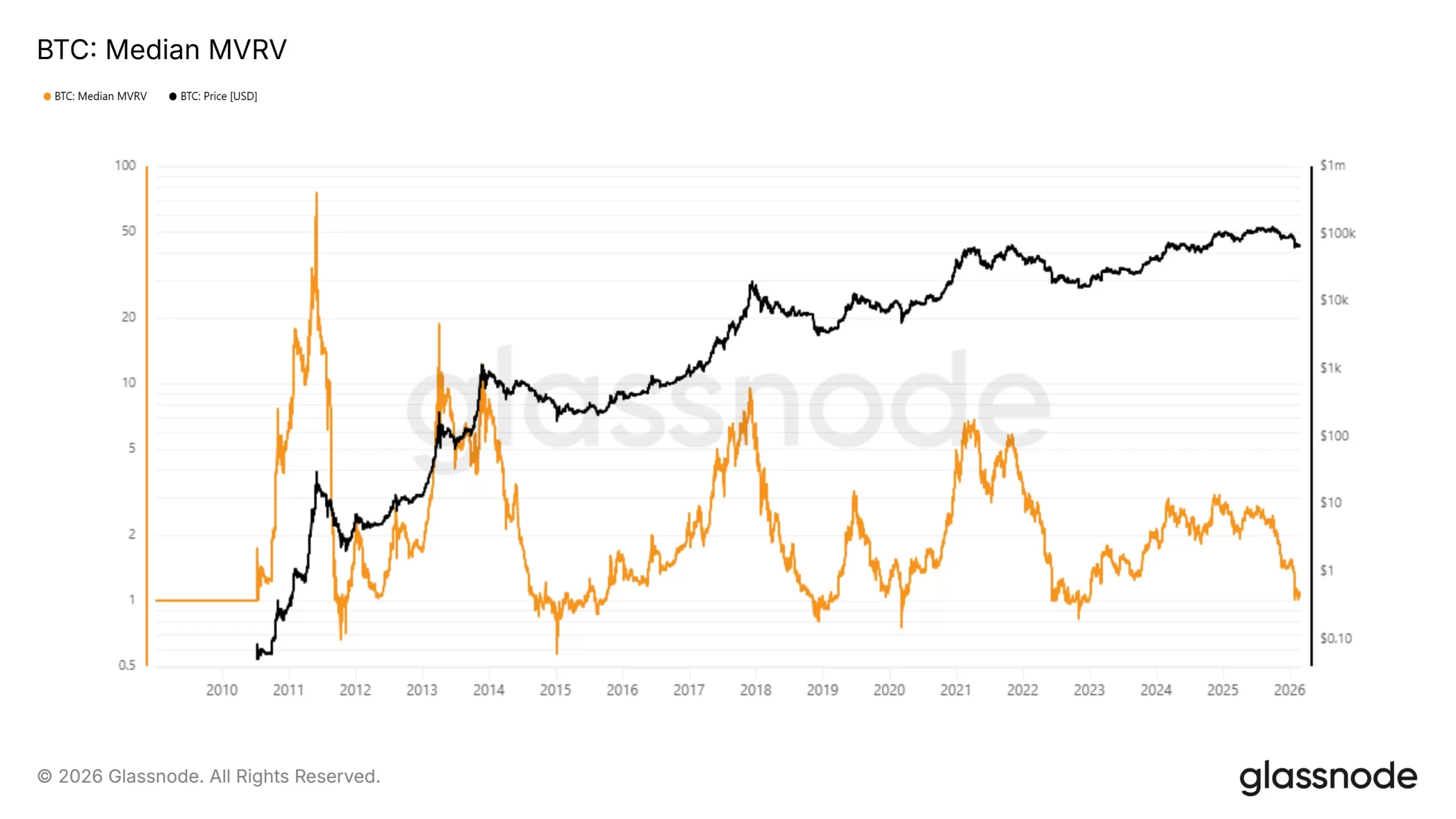
Poppe explains, “The MVRV score compares the current price of Bitcoin to the median price at which coins last changed hands.” He adds, “When prices fall, holders sell at a loss, sparking a cycle where low prices attract new buyers. Over time, this rotation fuels a trend reversal. The charts illustrate points in time—2011, 2013, 2017, and 2021—when Bitcoin was sharply overvalued or undervalued, closely matching investor sentiment during those peaks and troughs.”
Unlike previous cycles, Poppe notes that the MVRV ratio has not spiked to extreme highs. This, he argues, indicates a shallow bull market driven by institutional accumulation rather than widespread fear of missing out (FOMO) among retail participants.
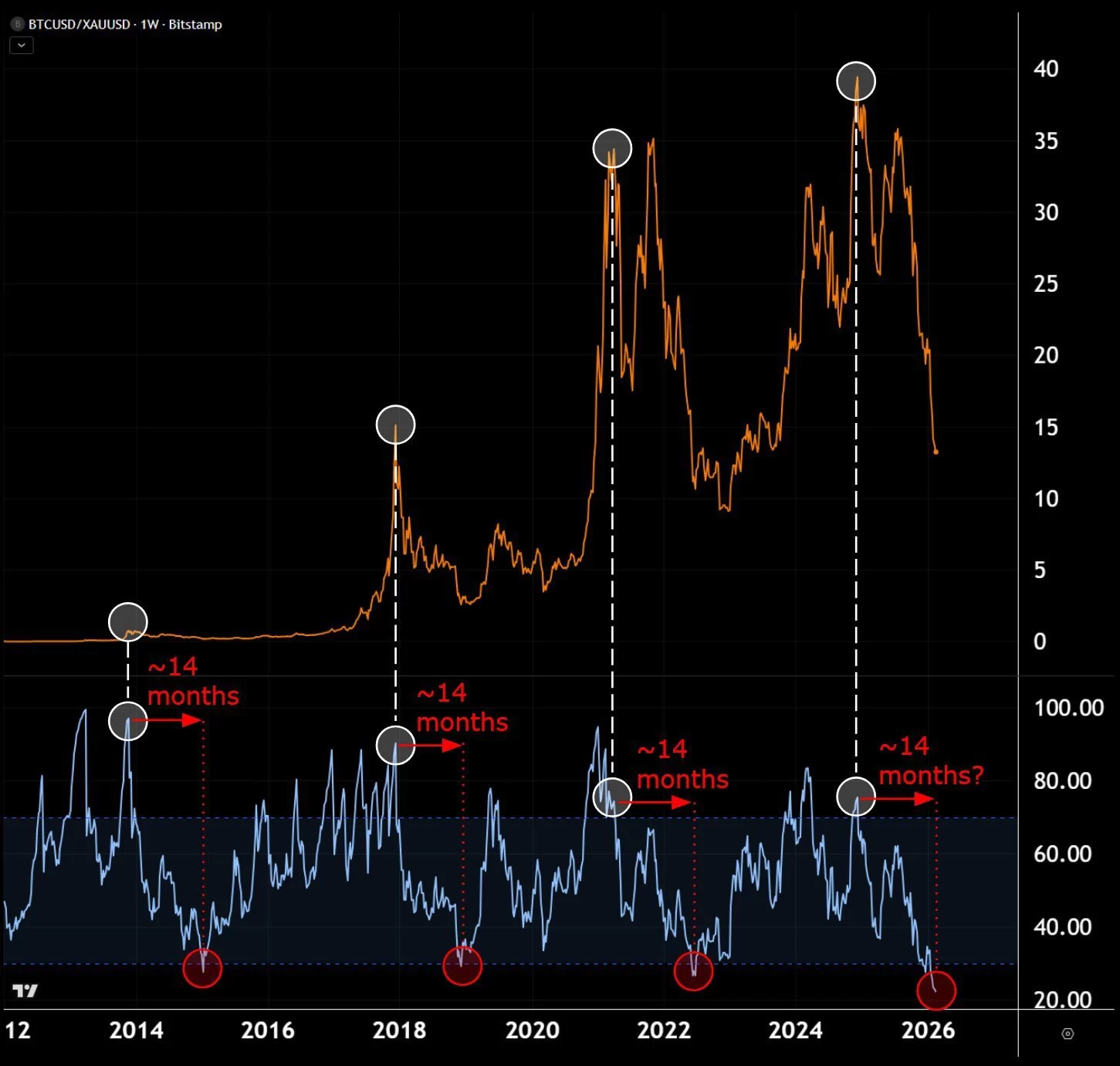
Technical patterns from past cycles persist: the relative strength index (RSI) for Bitcoin repeatedly surges past 70 before settling into bottoming phases. The current 14-month RSI cycle hints that a market bottom may already be in place, echoing previous turning points.
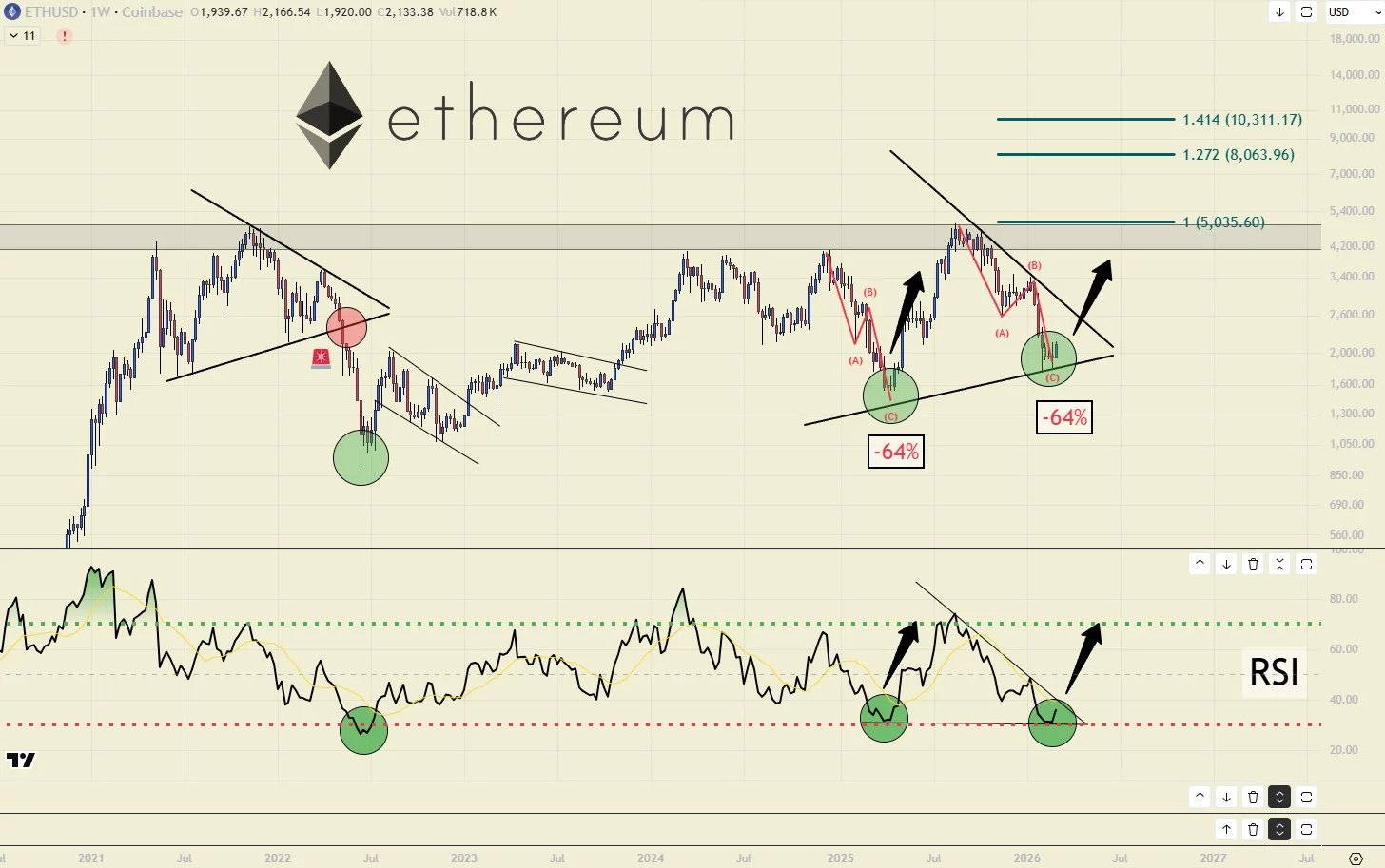
Ethereum is signaling its own recovery. According to analyst BACH, the cryptocurrency’s recent ABC corrective wave—a classic chart pattern—has run its course after a 64% drawdown, paving the way for a stronger rally. Historically, Ethereum’s momentum has been essential for sustainable rebounds in the broader altcoin market.
Bitcoin Faces Crucial Test of Resilience
At press time, Bitcoin was rallying above the $72,000 mark, even briefly touching $74,000. Maintaining daily closes above $72,000 could prevent opportunistic short selling from derailing the upward trend. Beyond price action, market observers see this as a pivotal moment for Bitcoin to prove its resilience. For months, geopolitical developments—from tensions in Iran to U.S. Supreme Court headlines—were quickly factored into Bitcoin’s price, but the latest dual shocks have triggered a renewed surge.
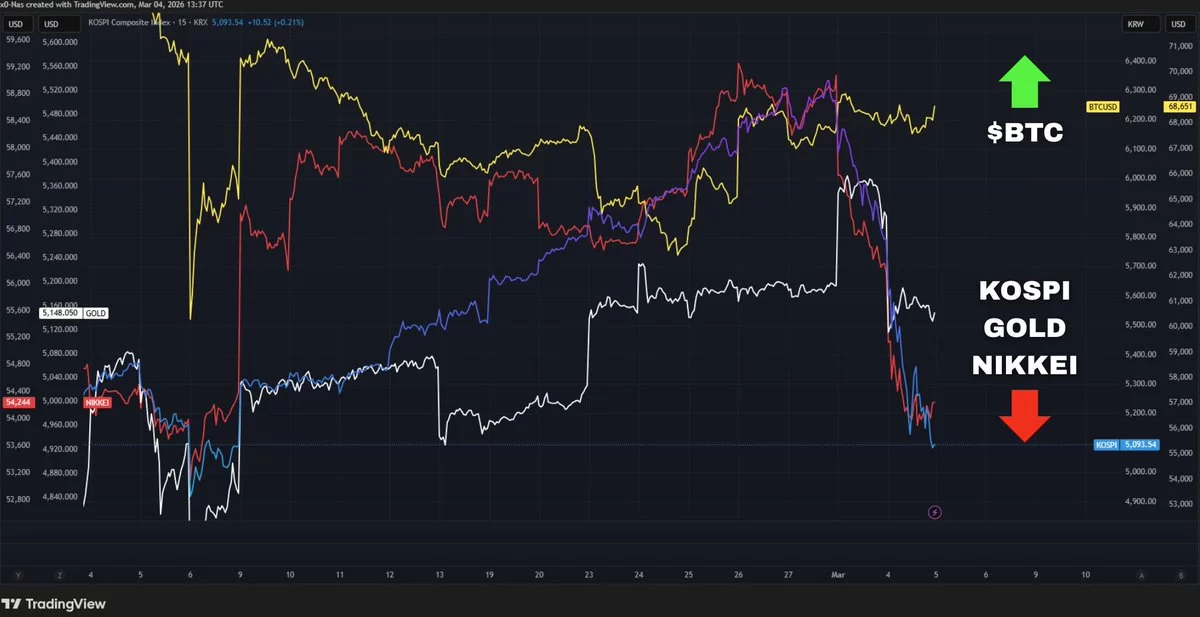
Prominent crypto commentator Ran Neuner describes the recent rally as a timely chance for Bitcoin to validate its status as a store of value in times of global uncertainty.
“A few days ago, I pointed out: If Bitcoin ever had a moment to establish itself as a true store of value, it’s now. This was a critical test—with escalating conflict, spiking oil prices, a weakening U.S. dollar, and Asian markets tumbling (Korea seeing its worst drop since 2008), all the risk alarms were flashing red. Of all the major markets, only Bitcoin stayed open during the attack. It slid to $63,000, then rebounded sharply, climbing above $71,000. While everything else rallied for months, Bitcoin dropped—until a geopolitical shock flipped the script. If this trend continues, the narrative could change quickly.”