
Copart Stock Slides 3.08% on Mixed Earnings and 297th-Ranked Trading Volume as Inventory Woes Weigh on Investor Confidence

Market Snapshot
Copart (CPRT) closed 3.08% lower on March 4, 2026, as its stock fell $0.54 to $37.94. The decline followed mixed earnings results, with the company reporting Q1 2026 earnings per share (EPS) of $0.41—2.5% above estimates—but revenue of $1.16 billion, a 1.69% miss relative to forecasts. Trading volume for the day reached $420 million, ranking 297th in market activity. Despite strong liquidity—$6.5 billion in total, including $5.2 billion in cash—the stock reflected investor caution amid a 6.7% decline in global unit sales and a 17% drop in U.S. inventory.
Key Drivers
The company’s mixed earnings report highlighted divergent trends in profitability and revenue. While CopartCPRT-1.40% exceeded EPS estimates, driven by a 11.5% year-over-year increase in net income to $404 million, revenue fell short of analyst expectations. This discrepancy underscored operational challenges, including a decline in global vehicle unit sales and a 17% drop in U.S. inventory. The revenue miss, coupled with investor concerns over inventory trends, contributed to the stock’s 1.40% decline. Analysts noted that the company’s ability to maintain profitability despite lower volumes could be a positive sign, but the revenue shortfall raised questions about pricing pressures and market saturation.
Inventory dynamics played a central role in shaping investor sentiment. Copart’s U.S. inventory decline of over 17% signaled reduced supply in its core market, which could limit auction volumes and revenue growth. CEO Jeff Liaw acknowledged these challenges, emphasizing that the company remains “positioned to benefit” from an industry-wide rise in total loss frequency, which has surged from 4–5% in the 1980s–90s to over 22% today. This long-term trend, driven by aging vehicle fleets and higher accident rates, is expected to offset near-term inventory declines. However, the immediate impact of reduced stock availability appears to have dampened confidence, with the stock reflecting a 0.17% aftermarket decline.
Management’s strategic focus on technology and capacity expansion further shaped the earnings narrative. Copart reiterated its commitment to investing in tools like IntelliSeller, a data-driven platform to optimize auction decisions, and expanding its global footprint. These initiatives align with the company’s goal of maintaining a 10–15% annual growth rate in vehicle remarketing services. For FY2026, Copart projected quarterly EPS between $0.42 and $0.46 and $1.71 annually, reflecting confidence in its ability to navigate current headwinds. However, the absence of a dividend or share repurchase program—despite $5.2 billion in cash—raised questions about capital allocation priorities among investors.
The broader industry context also influenced the stock’s performance. Copart operates in a sector characterized by cyclical demand and competitive pricing pressures. While the company’s strong liquidity position—$6.5 billion in total—provides flexibility, it must contend with rivals leveraging digital platforms to capture market share. Liaw’s emphasis on the 22% total loss frequency as a tailwind highlights the sector’s structural opportunities, but near-term execution risks remain. Analysts noted that Copart’s ability to innovate in areas like salvage recycling and online auction technologies will be critical to sustaining growth, particularly as traditional vehicle remarketing faces margin compression.
Ultimately, the stock’s decline reflects a balance between optimism about long-term industry trends and skepticism over short-term execution. While Copart’s liquidity and strategic investments position it to capitalize on the rising demand for vehicle remarketing services, the recent revenue miss and inventory challenges have tempered immediate investor enthusiasm. With FY2026 forecasts anchored to a $1.71 annual EPS, the company’s success will hinge on its ability to translate strategic initiatives into measurable revenue growth amid a competitive landscape.
Disclaimer: The content of this article solely reflects the author's opinion and does not represent the platform in any capacity. This article is not intended to serve as a reference for making investment decisions.
You may also like
Loar's M&A Surge: Is the Deal Story Already Priced In?
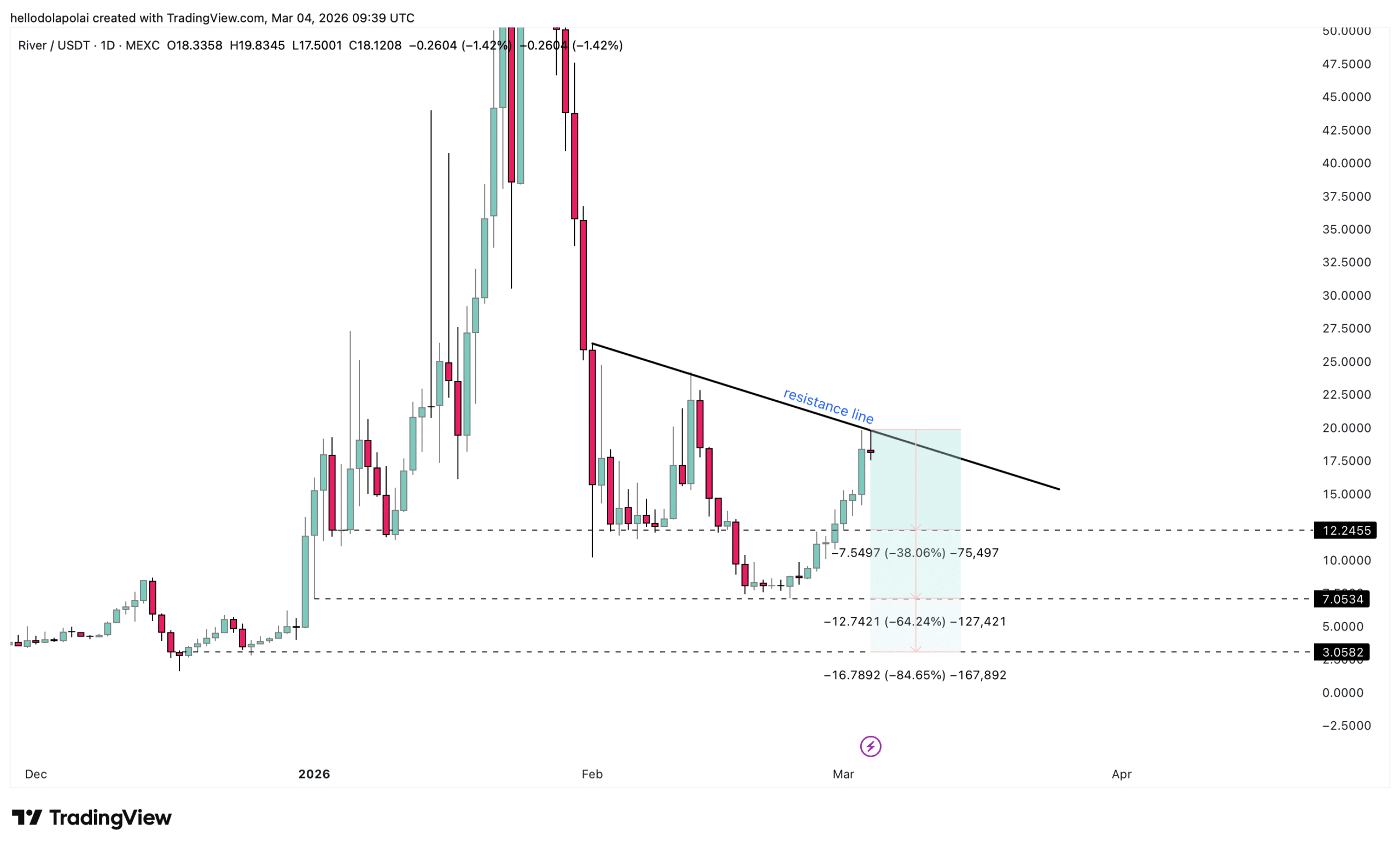
RIVER tops crypto gains with 34% surge – But ONE zone could end it fast
Trending news
MoreCrypto prices
More





