
CPKC Stock Dips 1.11% Amid $1.2B Debt Offering Trailing 464th in $280M Volume

Market Snapshot
Canadian Pacific Kansas City (CP) closed on March 4, 2026, with a 1.11% decline to $86.81, marking its weakest performance in a week. The stock traded with a volume of $280 million, ranking 464th in market activity for the day. Despite a strong year-to-date return of 16.85%, the decline followed the company’s announcement of a $1.2 billion debt offering. The move raised concerns about increased leverage, with the stock’s 52-week range (66.49–89.42) and trailing P/E ratio of 26.31 reflecting mixed investor sentiment. The drop came amid a broader market rally, as the S&P 500 rose 0.78%, highlighting CP’s underperformance relative to broader indices.
Key Drivers Behind the Decline
Canadian Pacific Kansas City’s $1.2 billion debt offering, announced on March 4, emerged as the primary catalyst for its 1.11% stock decline. The company issued $600 million in 4% notes due 2029 and $5.5% notes due 2056, with proceeds earmarked for refinancing existing debt and general corporate purposes. While refinancing is a common strategy to manage liabilities, the scale of the offering—nearly 1.5% of CP’s $78.76 billion market cap—sparked concerns about overleveraging. Analysts noted that the use of long-term bonds (particularly the 2056 issuance) signals a potential shift toward extended debt maturities, which could increase future interest costs and reduce financial flexibility.
The market’s reaction also reflected skepticism about the timing of the offering. With CP’s total debt-to-equity ratio already at 50.40% (as of March 3, 2026), the additional borrowing may strain the company’s credit profile. While the firm emphasized that unused proceeds would be invested in short-term, investment-grade securities, investors appeared wary of the immediate dilutive effect on earnings. The offering’s closing date of March 6, just two days after the announcement, further amplified short-term volatility as traders adjusted positions ahead of the capital infusion.
Another layer of concern stemmed from CP’s operational context. The railroad operator, which spans 20,000 route miles across North America, has been navigating a competitive landscape marked by rising commodity transport costs and regulatory pressures. The debt issuance, while framed as a routine refinancing effort, may be perceived as a response to near-term liquidity needs rather than a strategic growth initiative. This contrasts with peers like Union Pacific and Norfolk Southern, whose recent performance has been bolstered by infrastructure investments and rate optimization. CP’s reliance on debt for general corporate purposes, rather than targeted expansion, could dampen investor confidence in its ability to capitalize on long-term industry trends.
The offering’s structure also drew scrutiny. The 5.5% coupon on the 2056 bonds, significantly higher than the 4% rate on the 2029 notes, suggests a deliberate effort to lock in lower borrowing costs for shorter-term obligations. However, this strategy may expose CP to refinancing risks in a rising interest rate environment. The company’s debt management approach—prioritizing refinancing over capital expenditures—raises questions about its balance sheet resilience, particularly as North American rail demand faces headwinds from shifting trade patterns and energy sector fluctuations.
Despite the decline, CP’s stock has outperformed the broader market year-to-date, reflecting underlying confidence in its transcontinental network and diversified freight portfolio. The debt offering, while a near-term drag, may ultimately stabilize its capital structure by extending maturities and reducing refinancing pressures. However, the market’s muted response underscores the delicate balance between debt management and growth expectations in a sector where operational efficiency and financial prudence are paramount.
Strategic Implications
The debt issuance aligns with CP’s broader strategy of maintaining a robust balance sheet to support its role as a critical infrastructure provider. The railroad’s ability to secure financing at relatively favorable rates (4% for 2029) highlights its creditworthiness, yet the 5.5% long-term bonds may limit future flexibility. Investors will closely monitor how the proceeds are allocated, particularly whether the funds will be used to modernize aging infrastructure or address regulatory compliance costs. For now, the stock’s decline reflects a precautionary stance, with the market weighing the trade-off between short-term debt management and long-term strategic investment.
Disclaimer: The content of this article solely reflects the author's opinion and does not represent the platform in any capacity. This article is not intended to serve as a reference for making investment decisions.
You may also like
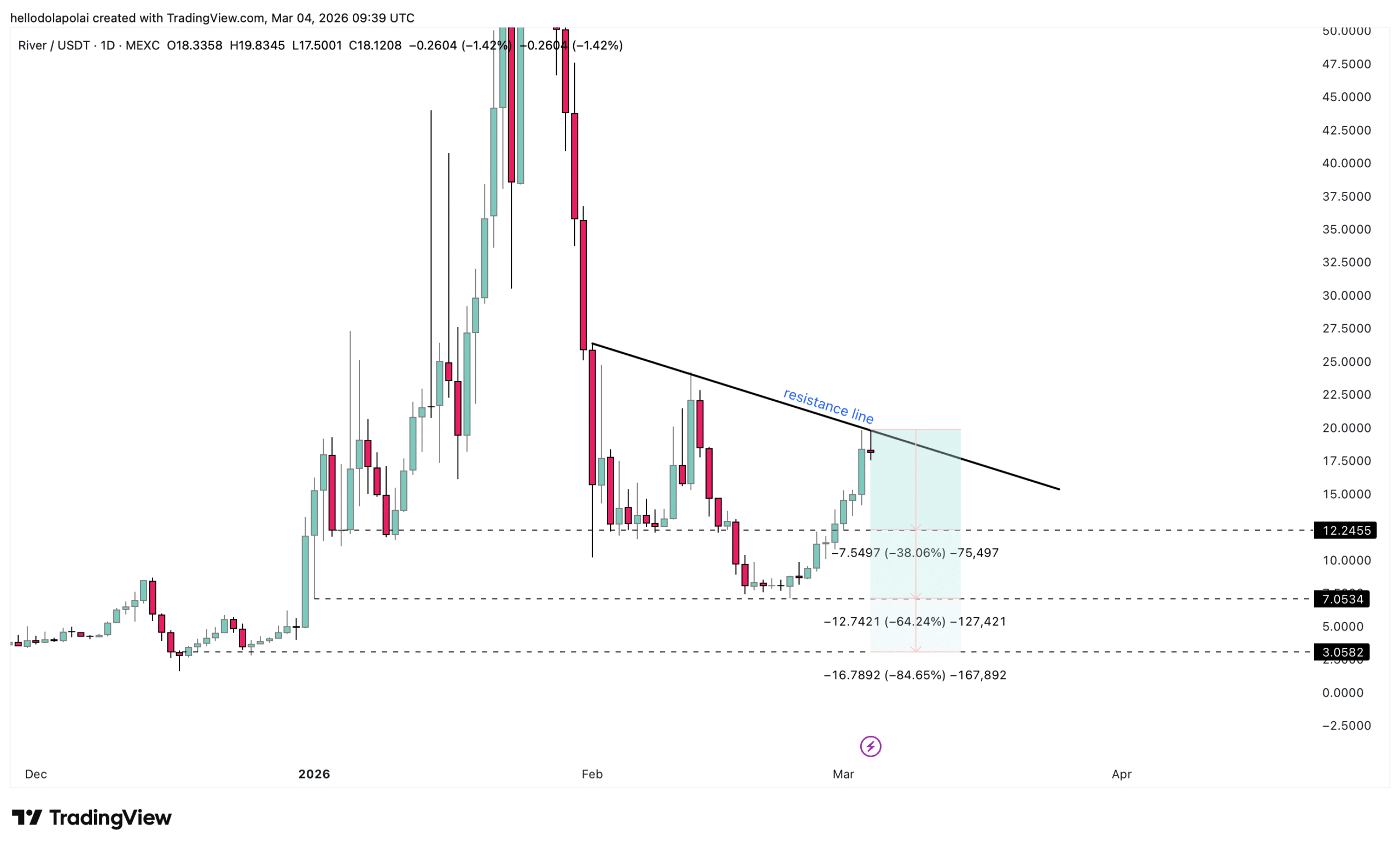
RIVER tops crypto gains with 34% surge – But ONE zone could end it fast
TCI's $53.6B Whale Wallet: What the 13F Reveals About the Smart Money's Skin in the Game
MSTY's Nightmare ETF: The 67% Yield That's Actually a 14.65% Return of Capital Trap
Trending news
MoreCrypto prices
More





