
Iran Conflict Disrupts LNG Industry and Sends Gas Prices Soaring

Global LNG Market Faces Unprecedented Disruption
Only a month ago, Europe was the primary destination for most spot LNG shipments, thanks to robust demand and rapidly shrinking gas reserves, which pushed prices above those in Asia, where appetite for LNG remained subdued.
However, in the current volatile geopolitical climate, the global gas market has experienced a dramatic upheaval, reversing established supply and demand patterns in just a few weeks.
The recent suspension of LNG production in Qatar and the effective closure of the Strait of Hormuz have sent shockwaves through both Asian and European gas markets, evoking memories of the 2022 energy crisis.
Although Asia is the main recipient of Qatari LNG, the current crisis in the Strait of Hormuz is impacting Europe just as severely. With global supplies tightening, the price gap between Asian and European LNG has widened sharply, drawing available spot cargoes toward Asian buyers.
Claire Jungman, Director of Maritime Risk & Intelligence at Vortexa, highlighted the severity of the situation earlier this week, telling that, “With no spare capacity in the LNG market, the impact of this disruption could be both swift and significant.”
Following QatarEnergy’s announcement of a production halt at its Ras Laffan facility and the cessation of tanker traffic through the Strait, LNG exports from both Qatar and the UAE—together responsible for roughly one-fifth of global LNG supply—have been removed from the market.
With the Strait of Hormuz essentially blocked, Asia is experiencing an immediate supply shock, while Europe is also feeling the effects as 20% of global LNG supply is sidelined.
This disruption has driven Asian spot LNG prices and Europe’s TTF benchmark gas prices to their highest levels in years.
Since 85% of Qatar’s LNG exports are destined for Asia, the immediate supply crunch is most acute there, according to Florence Yu, Associate LNG Market Analyst at Vortexa.
Yu further noted, “China, India, and Taiwan are among the countries most vulnerable to these supply risks.”
Historically, Europe has received only about 12% of Qatari LNG, a much smaller share compared to Asia’s reliance.
Nonetheless, the knock-on effects for Europe are substantial. As Asian buyers outbid Europe for alternative spot cargoes, the price premium for Asia has soared, providing a strong incentive for traders to divert LNG shipments eastward—the most pronounced arbitrage opportunity since late 2022.
On Tuesday, the spread between Asian spot LNG prices (JKM) and Europe’s TTF benchmark surged to over $6 per MMBtu, marking a multi-year high.
Freight Rates and Further Market Tightening
LNG shipping costs have also spiked, with Spark Commodities reporting the largest single-day increase on record. The arbitrage in favor of Asia is now at its strongest since December 2022.
Additional regional disruptions, such as the shutdown of Israel’s offshore gas fields and halted exports to Egypt, are further straining the global gas market, intensifying the scramble in both Asia and Europe for any available spot LNG.
The competition between Asia and Europe for LNG is expected to become even fiercer in the coming weeks. With U.S. LNG exports already running at full capacity before the Middle East conflict, there is no single alternative source capable of replacing the 20% global supply loss until the Strait of Hormuz reopens.
Amena Bakr of Kpler pointed out in a recent analysis that, “U.S. LNG export facilities are already near their maximum output, limiting the ability of American suppliers to bridge the gap.”
Massimo Di Odoardo, Vice President of Gas and LNG Research at Wood Mackenzie, explained that, “Any interruption to LNG flows will reignite fierce competition between Asia and Europe for available shipments, especially as European gas storage is currently below average for this time of year—about 10% lower than last year, following a harsh January cold snap,” as he recently stated.
Wood Mackenzie estimates that each week the Strait of Hormuz remains closed puts around 1.5 million tonnes (or 2.2 billion cubic meters) of LNG exports at risk.
Given the scale of the current disruption, Di Odoardo added that both Asian and European markets will need to rely more heavily on existing storage and will face increased pressure to replenish stocks over the summer months.
“These conditions will keep the market tight long after trade through the Strait resumes,” he concluded.
Further Reading
- China Pressures Iran to Keep Strait of Hormuz Open to Oil and Gas Flows
- Inside North America’s First Fully Integrated Rare Earth Facility
- European Gas Prices Soar 30% as Qatar Halts LNG Output
Stay Ahead with Oilprice Intelligence
Oilprice Intelligence delivers expert market analysis before it hits the headlines. Join over 400,000 readers and receive exclusive insights, including geopolitical updates, inventory trends, and market signals that influence billions. Subscribe for free and receive $389 worth of premium energy intelligence—just for signing up. Get instant access here.
Disclaimer: The content of this article solely reflects the author's opinion and does not represent the platform in any capacity. This article is not intended to serve as a reference for making investment decisions.
You may also like
Rates Spark: Poised for Potential Breakouts
Nvidia's throat

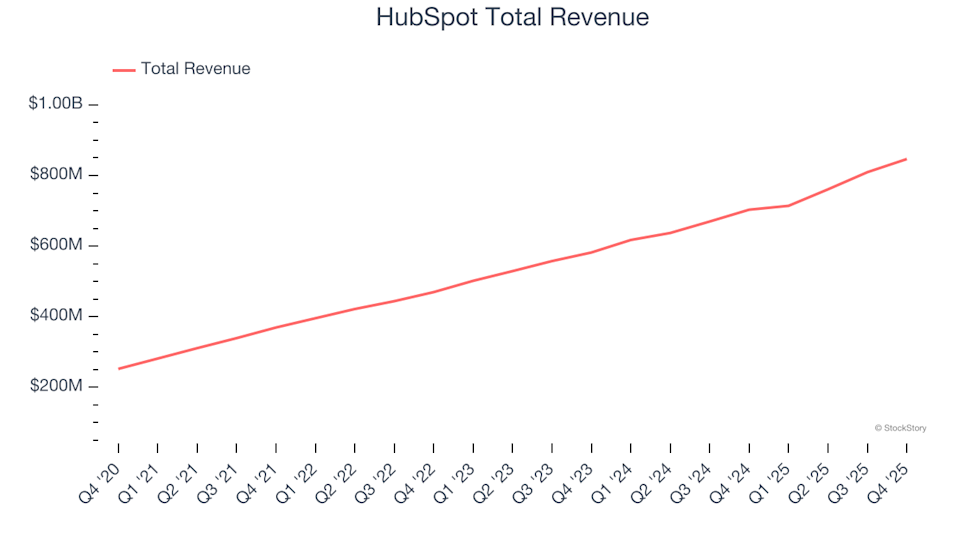
Sales Software Stocks Q4 Results: HubSpot (NYSE:HUBS) Delivers Strong Performance Across the Board
Trending news
MoreCrypto prices
More





