
Oil Market Turmoil: Price Movements Contradict Official Reassurances

Oil Market Turmoil: Strait of Hormuz Closure Sparks Immediate Price Surge
The recent upheaval in oil prices is primarily due to a major physical bottleneck: the closure of the Strait of Hormuz. This vital passage, responsible for transporting over a fifth of the world’s oil supply, has been shut off to most large tankers. The resulting supply interruption—not just geopolitical uncertainty—has become the main catalyst behind the market’s sharp reaction.
Oil prices responded with dramatic speed. On Sunday, Brent crude soared by 10% to nearly $80 per barrel in off-market trading, even briefly surpassing $82 as markets opened. This rapid escalation highlights how central the Strait’s closure is to current price movements.
Industry experts point to the supply shock as the decisive factor. With the Strait blocked, projections indicate a potential daily shortfall of 8 to 10 million barrels if the situation continues. This tangible disruption, rather than diplomatic developments or OPEC+ production tweaks, has driven the recent price spike.
Diplomatic Signals and Market Volatility
Diplomatic developments have added to the market’s volatility. On Wednesday, oil prices dropped sharply after a New York Times report suggested Iran had approached the US to discuss ending hostilities. However, prices rebounded within hours when Iran dismissed the report as entirely false. This rapid reversal illustrates how sensitive the market is to any hint of de-escalation or renewed conflict.
Iran’s official position remains uncompromising. The nation’s UN ambassador explicitly ruled out negotiations, emphasizing a stance focused solely on defense. This hardline approach eliminates hopes for a quick resolution, reinforcing expectations that the crisis will persist. As a result, the denial itself triggered another surge in prices by confirming the ongoing nature of the conflict.
Ultimately, the market is now factoring in how long the disruption might last. While prices remain elevated, they are still well below the $100-per-barrel levels anticipated if the Strait remains closed for weeks. The sharp swings following diplomatic headlines reflect the market’s ongoing uncertainty about the duration of both the closure and the broader hostilities.
Responses from OPEC+ and the United States
OPEC+ was the first to respond with a supply adjustment, announcing a modest increase of 206,000 barrels per day starting in April. While this move demonstrates some coordination, it represents less than 0.2% of global demand and is vastly overshadowed by the estimated 8–10 million barrel daily deficit caused by the Strait’s closure. The measure, though technical, is insufficient to significantly alleviate the immediate supply shock.
The United States has focused on political measures, offering naval escorts and insurance for oil tankers. However, these steps have done little to reassure investors. The market remains fixated on the physical supply constraints and the potential length of the conflict, rather than diplomatic efforts to reduce risk. The limited impact of these initiatives underscores skepticism toward solutions that do not directly address the supply disruption.
Looking ahead, the broader outlook for oil remains cautious. Despite the recent surge, J.P. Morgan projects Brent crude will average around $60 per barrel in 2026, citing expectations of a soft supply-demand balance. This forecast assumes the current turmoil is a temporary event rather than a lasting shift. The gap between current elevated prices and these long-term projections highlights the market’s struggle to assess the impact of a potentially prolonged crisis amid anticipated global oil surpluses.
Disclaimer: The content of this article solely reflects the author's opinion and does not represent the platform in any capacity. This article is not intended to serve as a reference for making investment decisions.
You may also like
Oculis to Participate in Upcoming Investor Conferences

Oculis Publishes 2025 Consolidated Financial Statements

America’s crypto future in 2026: The signal investors are missing

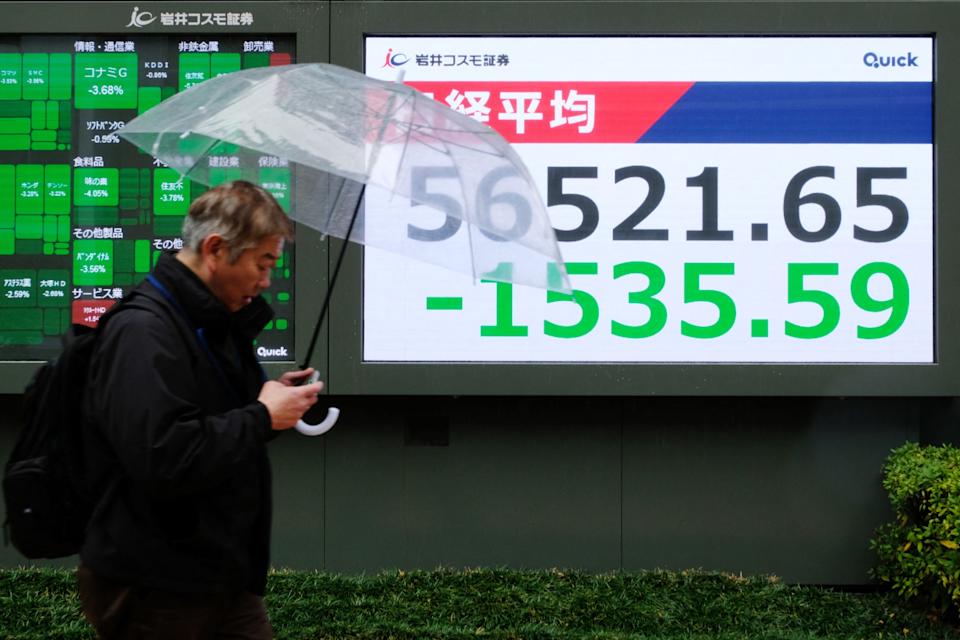
Japanese shares recover following market downturn after Iran assault
Trending news
MoreCrypto prices
More





