
Why Leopold Aschenbrenner’s AI investment fund is making significant wagers on energy firms and cryptocurrency mining operations to drive the competition for ‘superintelligence’

Leopold Aschenbrenner: From OpenAI to Billion-Dollar Hedge Fund
In October 2025, Fortune published a profile of Leopold Aschenbrenner, a former OpenAI researcher who was dismissed after about a year and previously worked with FTX’s Future Fund. At the time, he was recognized for his self-published 165-page treatise, Situational Awareness: The Decade Ahead, released in 2024. In this work, Aschenbrenner warned governments and investors about the imminent arrival of artificial general intelligence (AGI) and the risks if the United States failed to keep pace.
Launching a Hedge Fund Built on AGI Predictions
Just under two years after the essay’s publication, Aschenbrenner established a multibillion-dollar hedge fund inspired by the ideas in his monograph. According to the fund’s latest filings from February, his investment strategy is focused on large-scale power generation, a critical component for AGI to become feasible.
Vision for the Future of AI
In the opening of his essay, Aschenbrenner described a future visible only to a select group—primarily those in San Francisco and AI research labs. He counted himself among those with “situational awareness,” suggesting most people were unaware of the profound changes ahead. While many saw AI as hype or a technological shift similar to the internet, Aschenbrenner argued that large language models (LLMs) were advancing exponentially, rapidly approaching AGI and eventually “superintelligence.” He emphasized that the mathematical scaling curves—showing AI capabilities rising with increased data and computing power—pointed to a transformative trajectory with significant geopolitical and economic implications for early movers.
Situational Awareness LP: The Fund and Its Backers
The essay became the foundation for Situational Awareness LP, a hedge fund centered on AGI. Unlike many tech funds, it invests in publicly traded companies rather than private startups. The fund received backing from prominent Silicon Valley figures, including Nat Friedman (Meta AI product lead), Daniel Gross (Meta Compute co-lead), and Stripe cofounders Patrick and John Collison.
Rapid Growth and Investment Strategy
By 2025, only four years after graduating from Columbia, Aschenbrenner managed over $1.5 billion in assets and was regarded as a leading voice in the AI era, engaging privately with tech executives, investors, and policymakers. The fund’s approach is straightforward: it invests in global stocks poised to benefit from AI—such as semiconductor, infrastructure, and power companies—while shorting sectors likely to fall behind.
Expanding Holdings and Investor Base
Recent disclosures show that Aschenbrenner, now 25, has significantly increased his bets, with Situational Awareness reporting about $5.5 billion in U.S. equity exposure across nearly 30 companies. He has invested nearly all his personal wealth in the fund, which attracts West Coast founders, family offices, institutions, and endowments.
Focus on AI Infrastructure and Power Generation
As of last October, the fund’s publicly available holdings reflected a broad focus on AI infrastructure. Major investments included semiconductor giants like Intel and Broadcom, the VanEck Semiconductor ETF, and leading power producers such as Vistra and Constellation Energy.
The fund also began acquiring stakes in data infrastructure and crypto-mining companies like Core Scientific, IREN, and Applied Digital. These firms operate large, energy-intensive computing centers originally designed for bitcoin mining, but increasingly repurposed for AI workloads. Many mining operators are transitioning their facilities to serve as AI hosting hubs, shifting their focus from bitcoin hashrate to access to electricity and data center capacity in the emerging AI compute economy.
Sharpening the Investment Thesis
Recent filings indicate the fund is doubling down on electricity generation and companies with substantial computing resources. Notable new or expanded positions include Bloom Energy (a fuel-cell power company and the fund’s largest holding), CoreWeave (an AI cloud infrastructure provider), and Cipher Mining (a major crypto-mining firm).
Betting on Power and Compute, Not Just Algorithms
As with most hedge funds, public filings only reveal long positions in U.S.-listed stocks, while short positions, derivatives, and international investments remain undisclosed. Nevertheless, the portfolio signals a clear strategy: Aschenbrenner is wagering that the most valuable assets in the AI era will be electricity and computing power, rather than the algorithms themselves. Instead of focusing on companies developing AI models—like OpenAI, Anthropic, or Google—Situational Awareness is betting that the real constraints in the AI boom will be power generation and compute capacity.
AI Data Centers and the Race for Power
This thesis is becoming increasingly evident: the rapid growth of AI data centers across the U.S. is putting pressure on power grids and intensifying competition for electricity and computing resources. Investors in Silicon Valley and Wall Street are closely monitoring whether Aschenbrenner’s strategy will prove successful.
This article was first published on Fortune.com
Disclaimer: The content of this article solely reflects the author's opinion and does not represent the platform in any capacity. This article is not intended to serve as a reference for making investment decisions.
You may also like
Berkshire’s Abel Commits Entire Salary to Purchasing Company Shares

ITV maintains that the Sky sale remains in progress despite a decline in advertising income

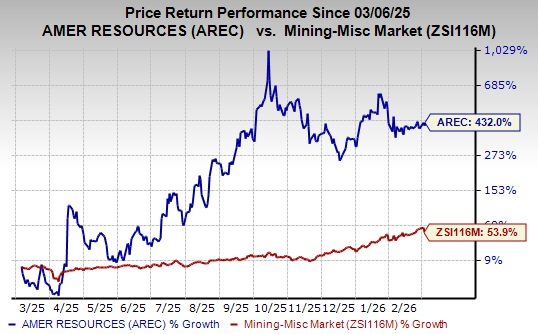
AREC's ReElement Increases Advanced Rare Earth Lab Capabilities
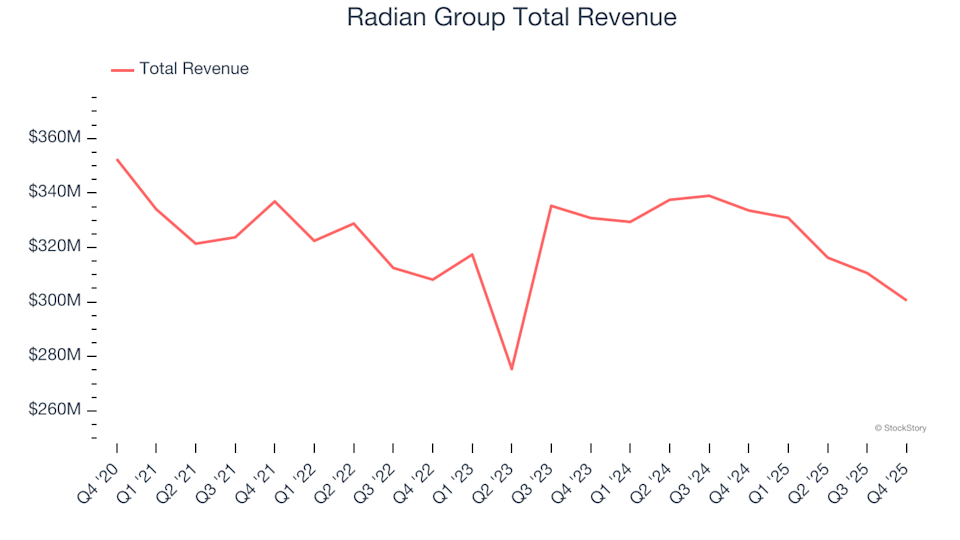
Q4 Overview: Comparing Radian Group (NYSE:RDN) with Other Property & Casualty Insurance Equities
Trending news
MoreCrypto prices
More





